
These bespoke artworks were conceived as personal royal gifts, designed specifically for His Majesty King Hamad bin Isa Al Khalifa and His Royal Highness Prince Salman bin Hamad Al Khalifa, Crown Prince and Prime Minister of the Kingdom of Bahrain. Each portrait reflects the cultural legacy, symbolic identity, and artistic innovation of Bahrain, translating centuries of Gulf heritage into a contemporary visual language that honors both tradition and progress.
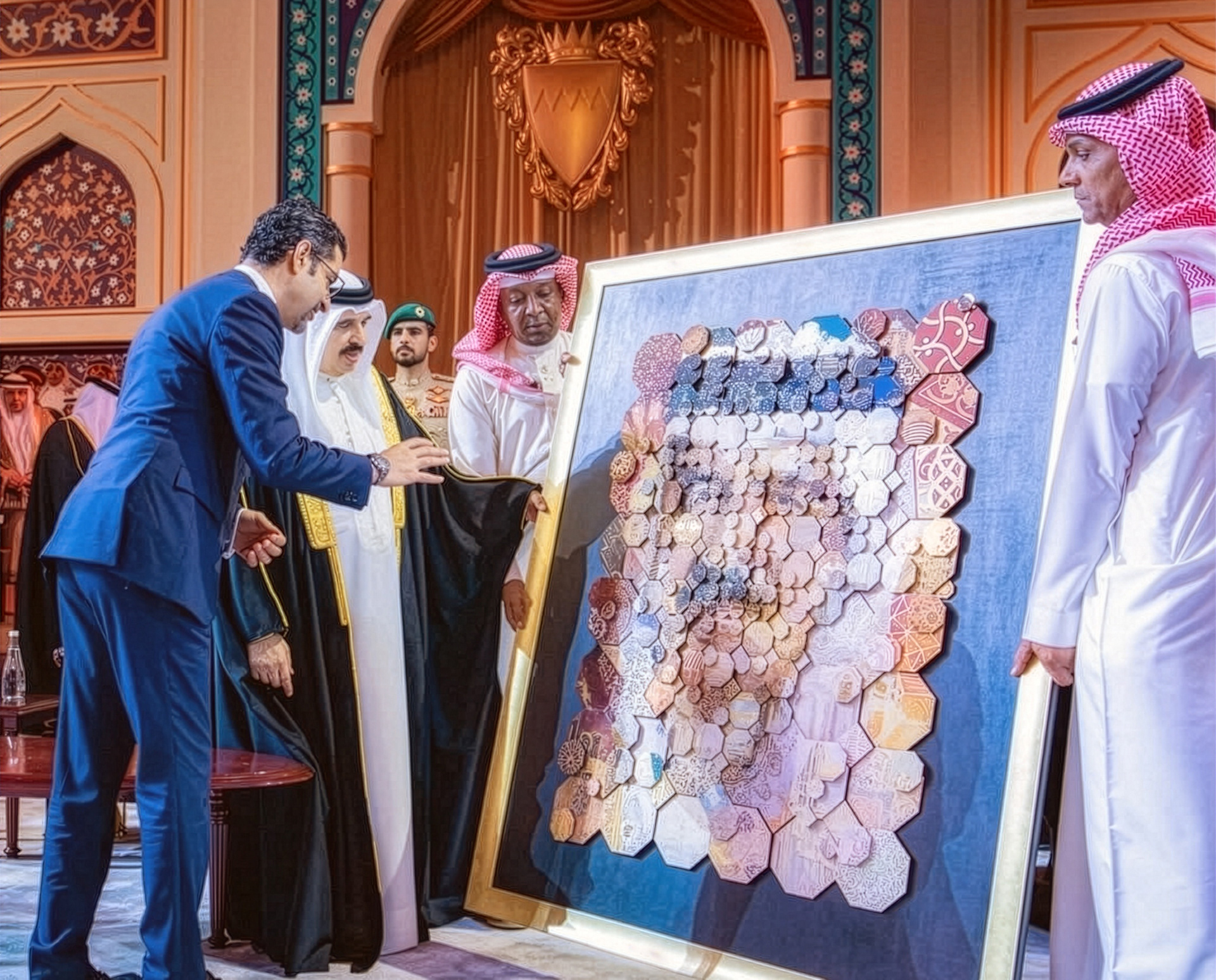
The Unveiling: A Royal Portrait Commission for the Kingdom of Bahrain.
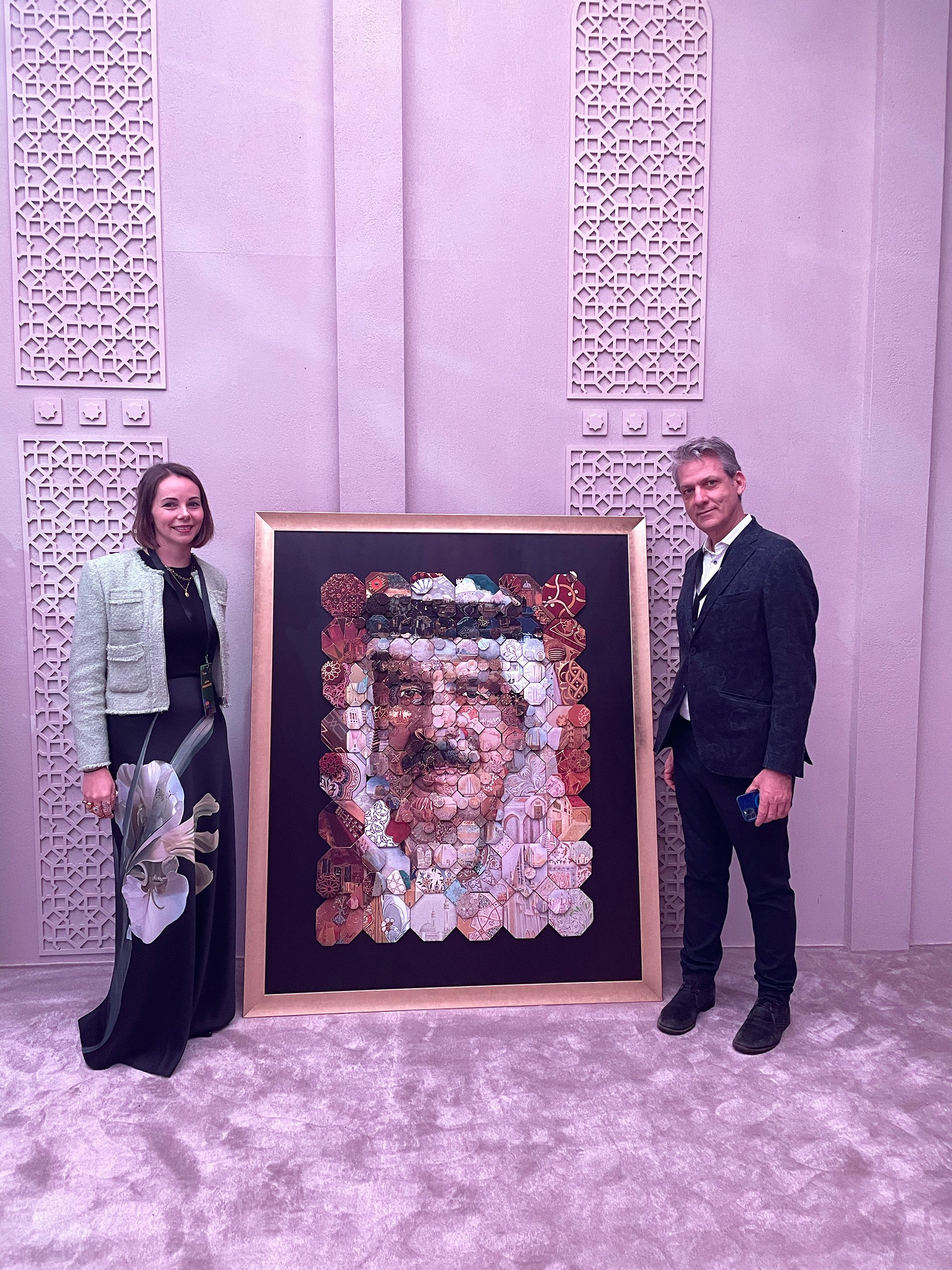
In a moment of cultural and artistic significance, artist Charis Tsevis presents his bespoke computational mosaic portrait to His Majesty King Hamad bin Isa Al Khalifa. This museum-grade artwork, created through a revolutionary hybrid process of AI-assisted design and three weeks of meticulous hand-finishing, embodies centuries of Bahraini heritage translated into a contemporary visual language. It stands as a testament to the power of responsible technology and human artistry, designed as a diplomatic gift that honors tradition while embracing innovation.
Commission Type: Royal Portrait Commission | Diplomatic Art | Cultural Heritage Art commissioned by the Ministry of Interior and Agriculture of the Kingdom of Bahrain and Pico Bahrain.
Location: Kingdom of Bahrain, Republic of Cyprus.
Technique: Computational Digital Design, Analog Mosaic Art, Paper Sculpture, Painting, Mixed Media Finishing.
Format: Museum-Grade Hybrid Mosaic (Digital Conception + Hand-Crafted Execution)
Location: Kingdom of Bahrain, Republic of Cyprus.
Technique: Computational Digital Design, Analog Mosaic Art, Paper Sculpture, Painting, Mixed Media Finishing.
Format: Museum-Grade Hybrid Mosaic (Digital Conception + Hand-Crafted Execution)
The Artistic Vision: A New Hybrid Art Form
Computer vision, machine learning, and perceptual computing do not replace the artist's hands here. They inform them. The algorithms see; the craftsman builds.
These portraits are constructed through perceptual computing and computer vision algorithms calibrated to human visual responses. The Mozaix engine (proprietary digital mosaic system) analyzes images in CIELab color space, where mathematical distances correspond to actual perceived differences. Structural Similarity Index calculations preserve form across tile boundaries. Adaptive weighting responds to luminance conditions the way human vision does.
The algorithms calculate for physical reality: dimensional surfaces, light behavior, and shadow depth between tiles. What follows is where my collaboration with Vira becomes essential. Her domain is the biological side of art, how materials expand color space, how surfaces reflect and absorb light, how an artwork breathes in physical space. While I build the computational architecture, she studies varnish viscosities, paper fiber responses, and edge treatments that make a tile catch light like ceramic. Her hours at the workbench transform algorithmic output into something that lives.
Each of the 450 tiles in a portrait exists because perceptual metrics determined it should be there, in that form, at that scale, and because the analog technique gave it physical presence. This is the philosophical core of the work: algorithmic precision and material intuition operating as one system.
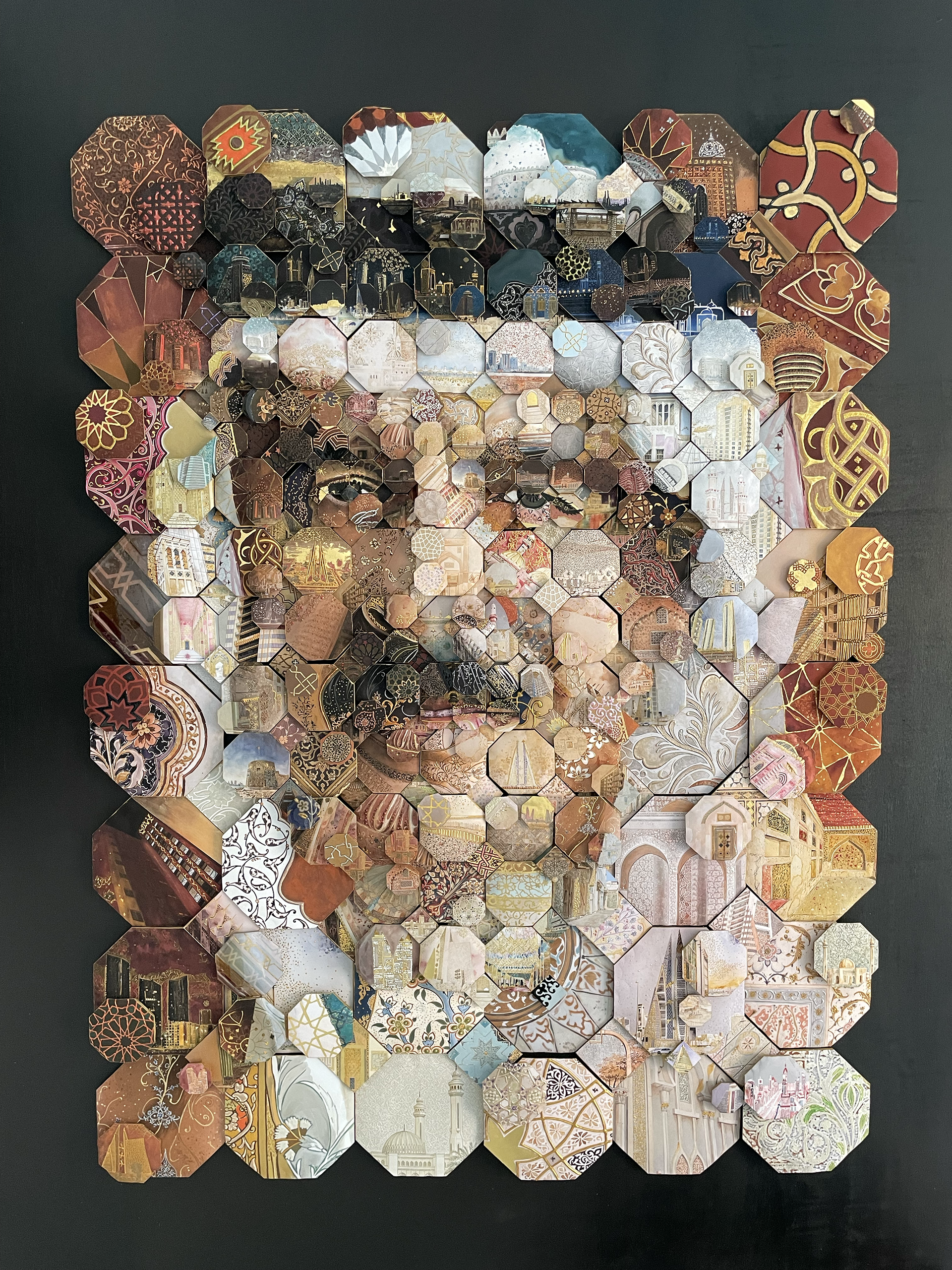
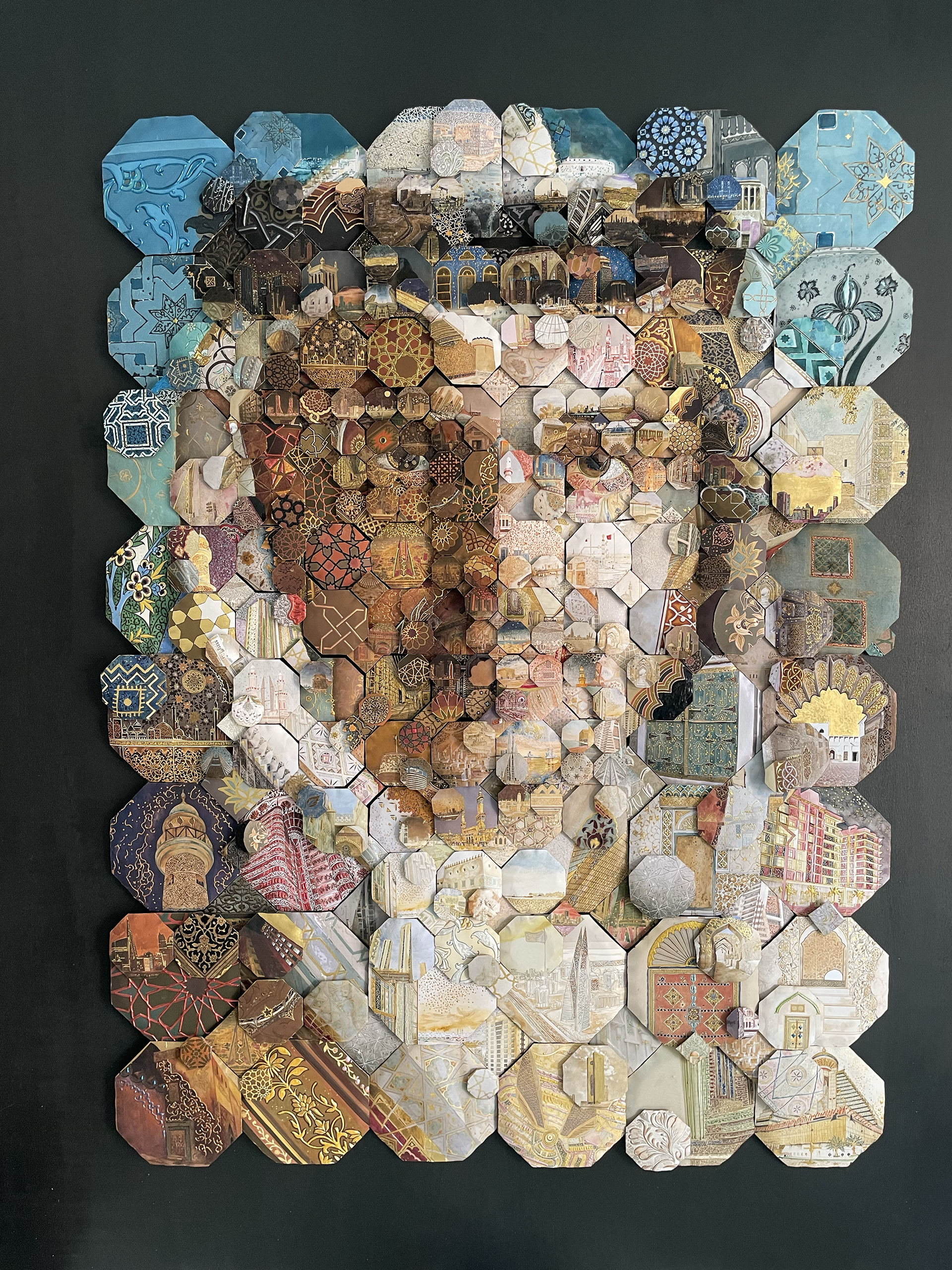
Here are the final analog mosaics:
Cultural Research: Building a Visual Language of Bahrain
The Foundation of Authenticity
Before a single pixel was placed or a single tile was cut, months of intensive cultural research established the visual vocabulary for these royal portraits. This research encompassed:
Architectural Heritage
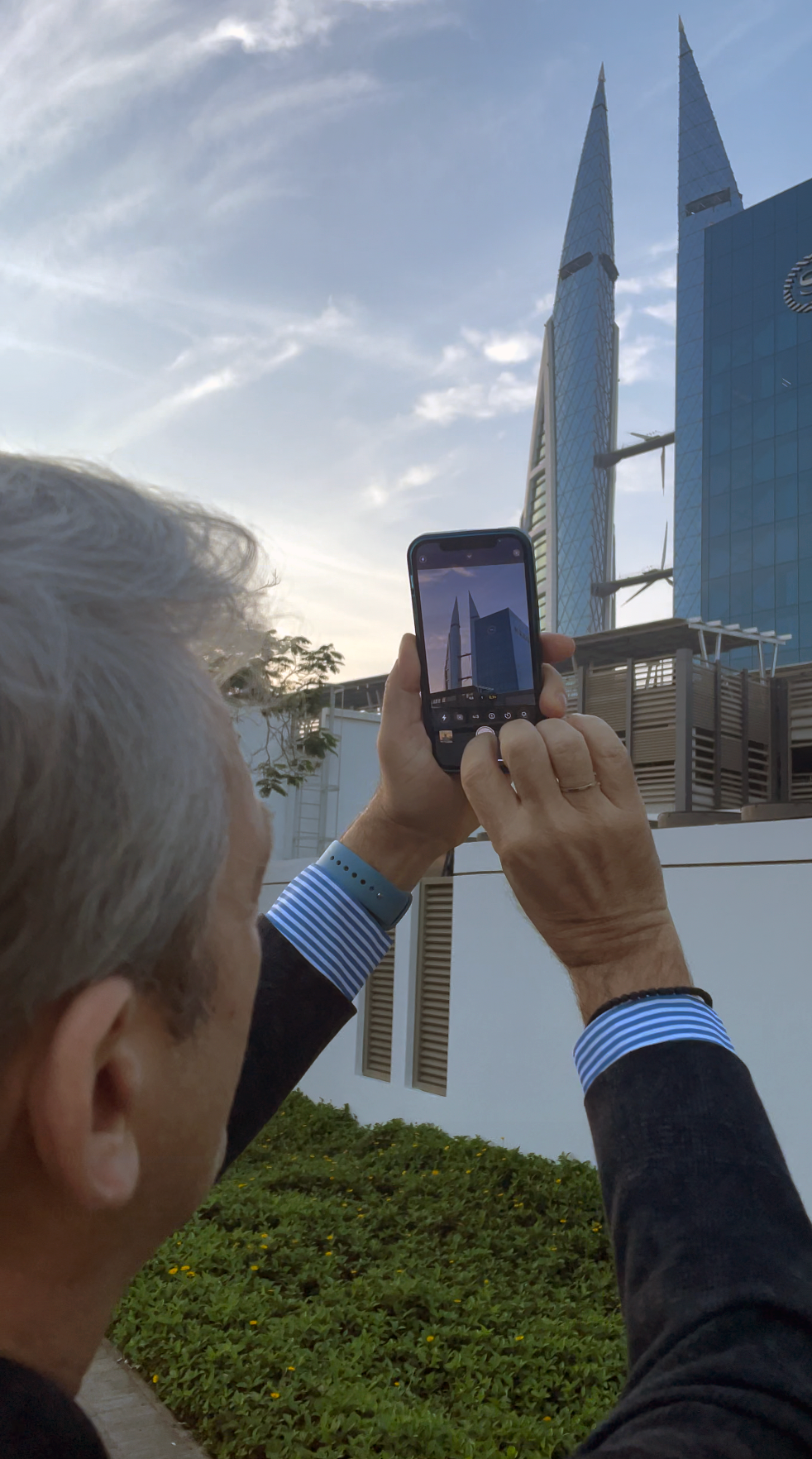
Photogrammetric documentation of Bahraini landmarks
Study of traditional souq ornamental systems
Analysis of mosque architectural motifs and geometric principles
Examination of historical palace decorative programs
Craft Traditions
Al-Sadu Bedouin weaving patterns and their symbolic meanings
Traditional textile color palettes and their cultural significance
Metalwork and jewelry motifs from Bahraini heritage
Pearl diving iconography and maritime cultural elements
Geometric Systems
Girih geometric grids from Islamic mathematical tradition
Arabesque patterns and their underlying mathematical structures
Calligraphic forms adapted for visual integration
Royal heraldic symbolism and its contemporary applications
Natural Landscape
Desert color gradients and earth tones
Sea and pearl-related chromatic references
Date palm and garden iconography
Architectural materials and their color profiles
These studies led to a unified color and design language that is deeply connected to Bahraini identity but adapted for modern computational mosaics. This cultural base became a large library of hundreds of unique small artworks, each made just for this commission.
The Micro-Artwork Library: AI-Assisted Cultural Translation
Each small part of these mosaics—such as tiny paintings, textures, patterns, and decorative pieces acts as a symbolic tile with meaning beyond its size. This collection was created by combining traditional art skills with AI-assisted generative methods.
Custom-Trained AI Models for Cultural Pattern Generation
A key innovation in this project was the development of a custom-trained LoRA (Low-Rank Adaptation) model specifically designed for Islamic geometry and Arabesque motif generation. This model was trained on curated examples of authentic Bahraini and Gulf decorative arts, enabling the generation of culturally appropriate ornamental elements that maintain the mathematical precision and spiritual significance of traditional Islamic geometric patterns.
The AI-Human Creative Loop:
Generation Phase: The custom LoRA model produces candidate patterns based on cultural parameters
Curation Phase: Each generated element undergoes rigorous artistic evaluation for authenticity and aesthetic quality
Refinement Phase: Selected elements are manually repainted, digitally tuned, or geometrically reshaped
Integration Phase: Refined elements become unique mosaic tiles, ready for algorithmic placement
This process shows how generative AI can be used responsibly and creatively. Here, AI is not the creator but a powerful tool that supports human artistic vision and respects cultural heritage.
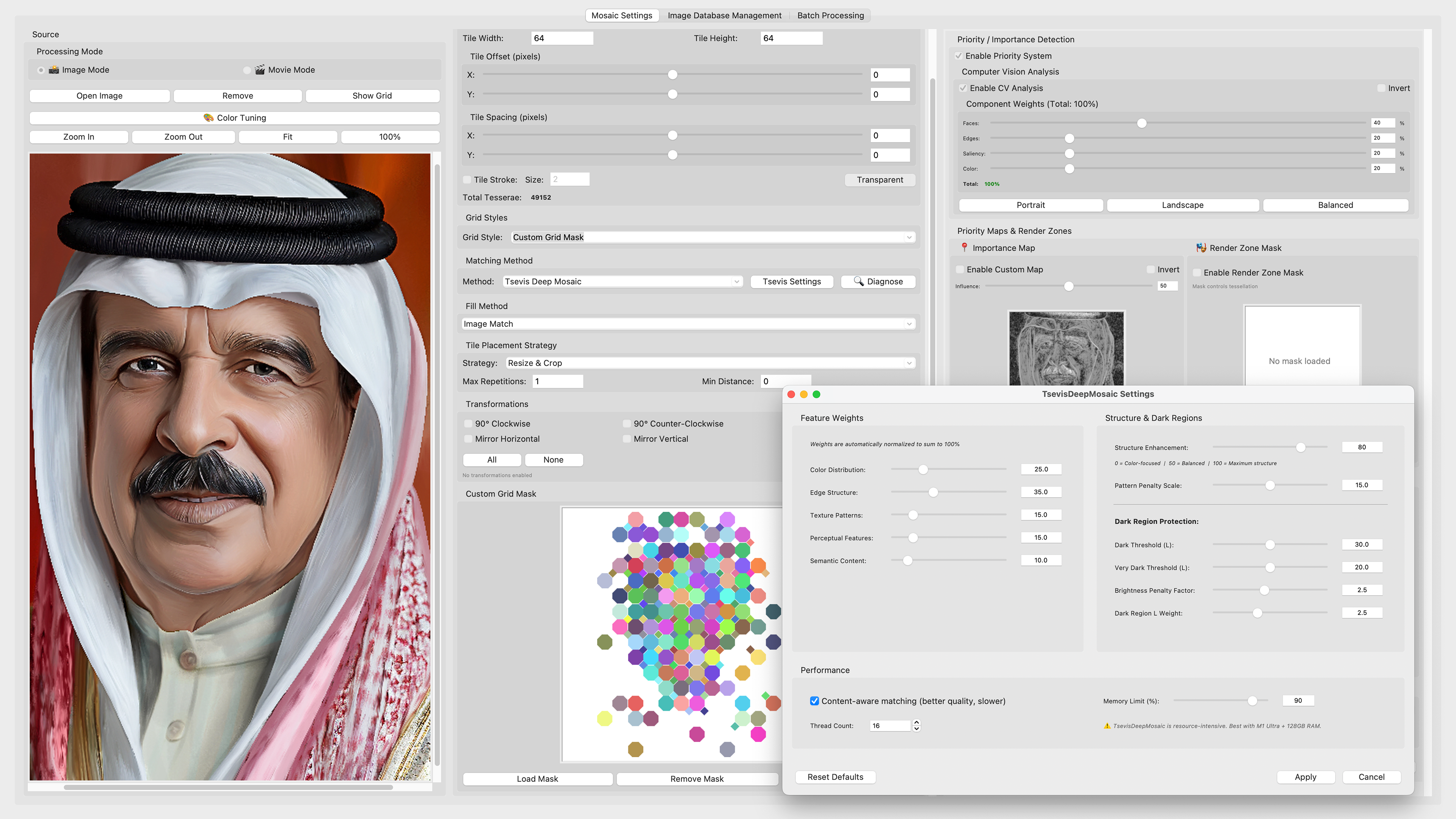
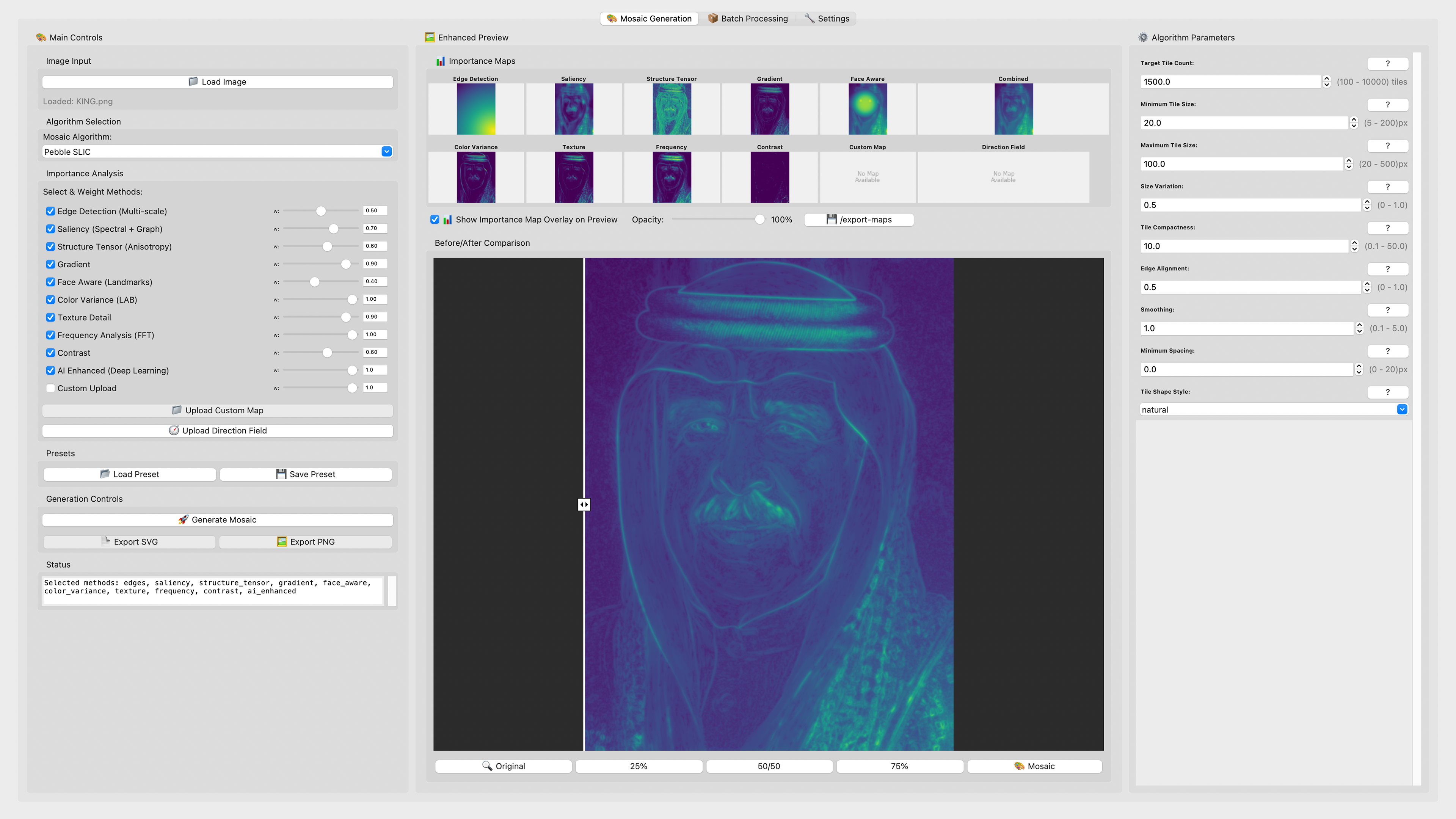
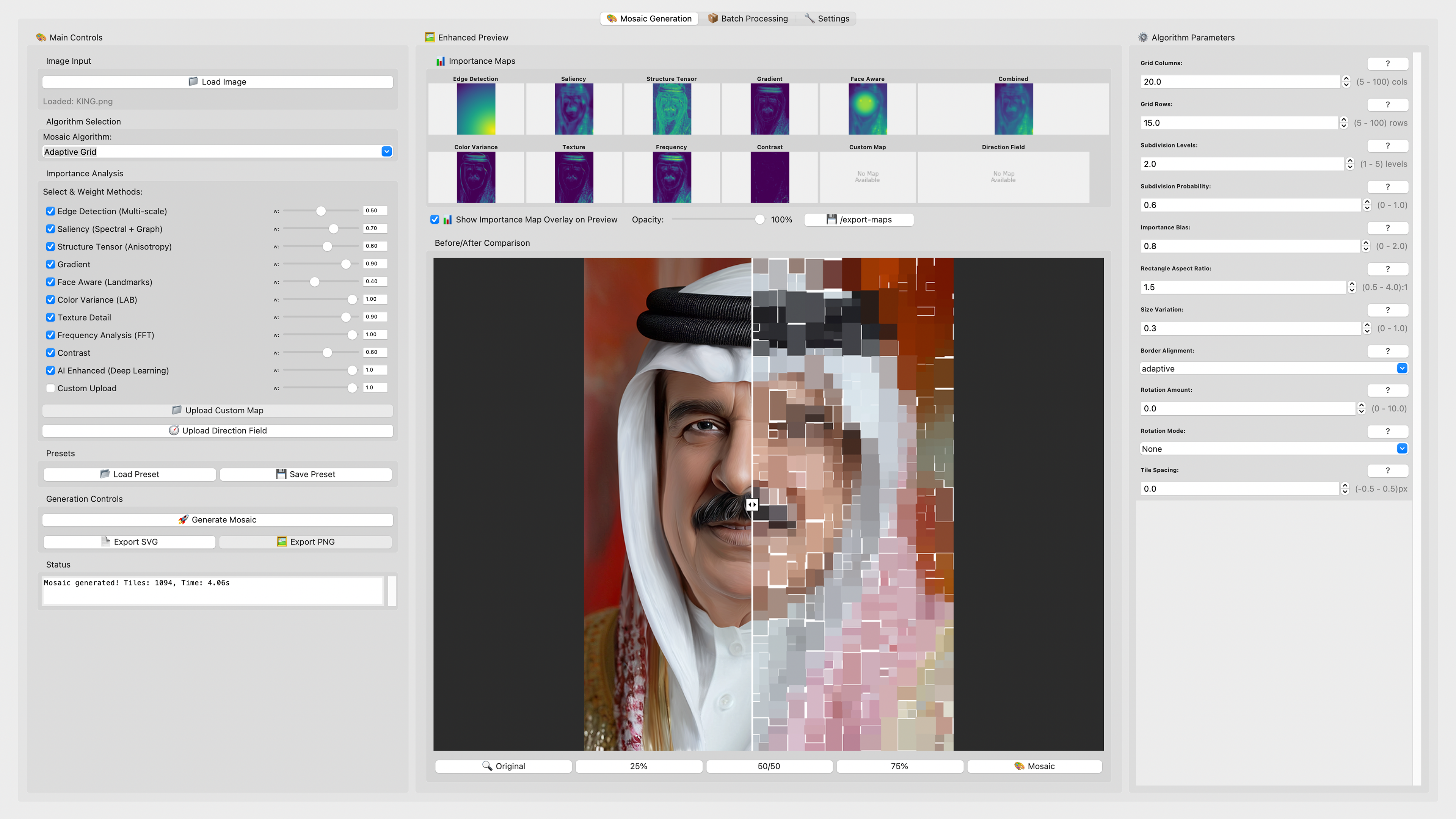
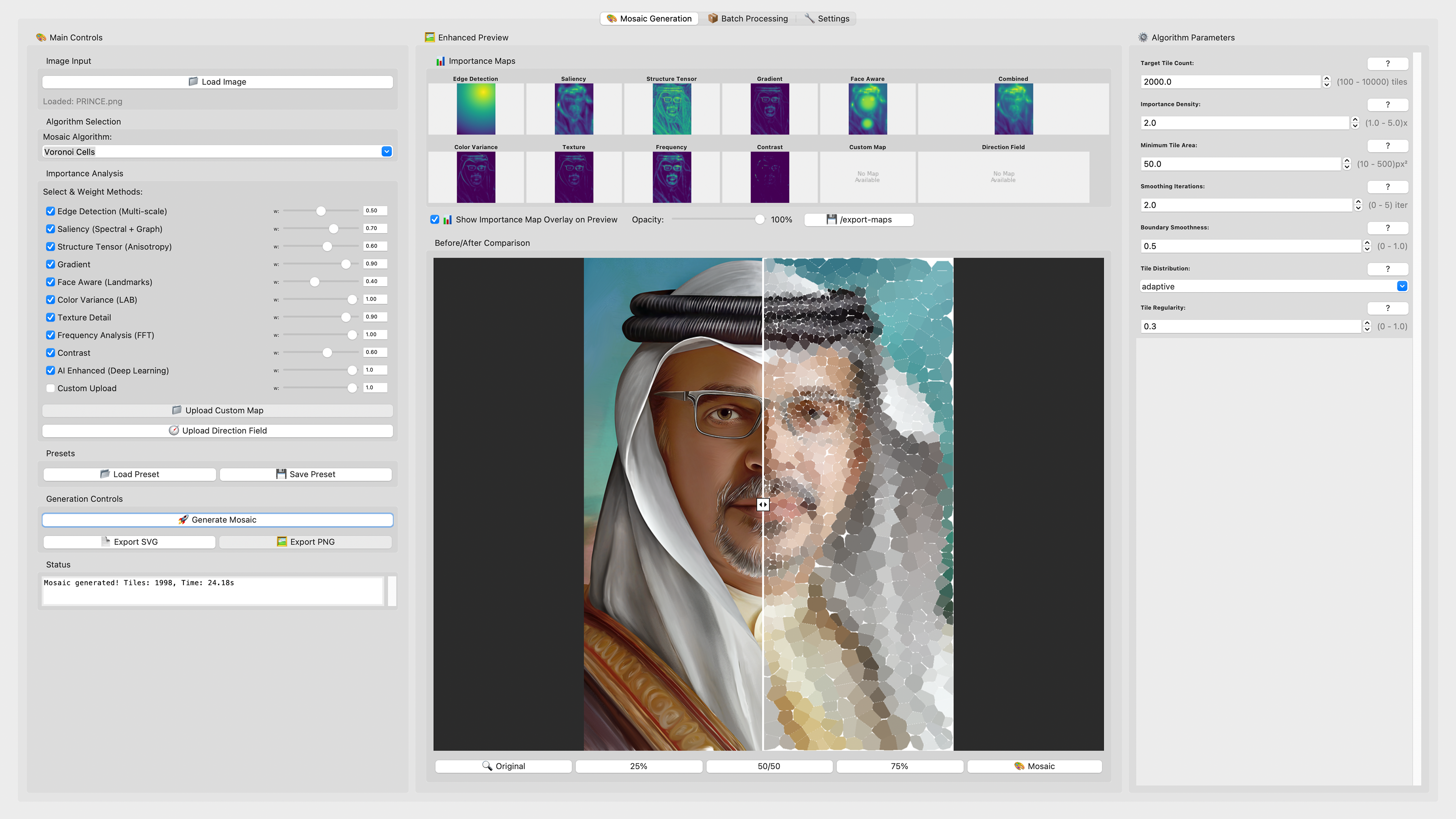
The Algorithmic Heart of Royal Portraiture. This screenshot reveals the sophisticated computational engine, Mozaix, at work. The software meticulously analyzes facial features, color, and texture using perceptual algorithms to construct the portrait from thousands of unique tiles. It’s where science meets artistry, ensuring every pixel placement honors the subject’s dignity and cultural context—a core pillar of this Bahrain royal commission.
Mozaix: The Computational Mosaic Engine
The core of this project is Mozaix, my own computational mosaic engine, which I developed over years of research into algorithmic design and image perception. Unlike standard photomosaic software that just matches colors, Mozaix uses a flexible system that combines geometric patterns with advanced ways of analyzing images.
The Seven-Algorithm Framework
Human vision is not a single system. We perceive color differently than brightness, structure differently than texture, transparency differently than solid form. A single matching algorithm, no matter how sophisticated, cannot address all these channels simultaneously.
Mozaix operates through seven distinct algorithms, each handling a different dimension of visual perception: color matching in perceptually uniform space, adaptive luminance analysis for light and shadow, color cast correction across multiple color models, structural pattern recognition based on Gestalt psychology, multi-modal feature fusion balancing color, texture and structure, efficiency-optimized matching for large-scale consistency, and transparency-aware processing for layered elements.
Different regions of a portrait demand different approaches. Skin tones require precise color perception. Fabric needs texture analysis. Eyes and facial structure depend on edge detection. Shadows call for luminance-adaptive matching. By deploying specialized algorithms to appropriate regions, each tile placement reflects how that specific area will be perceived—not a generalized average.
The result: artwork that functions correctly at every viewing distance, from intimate examination to gallery scale.
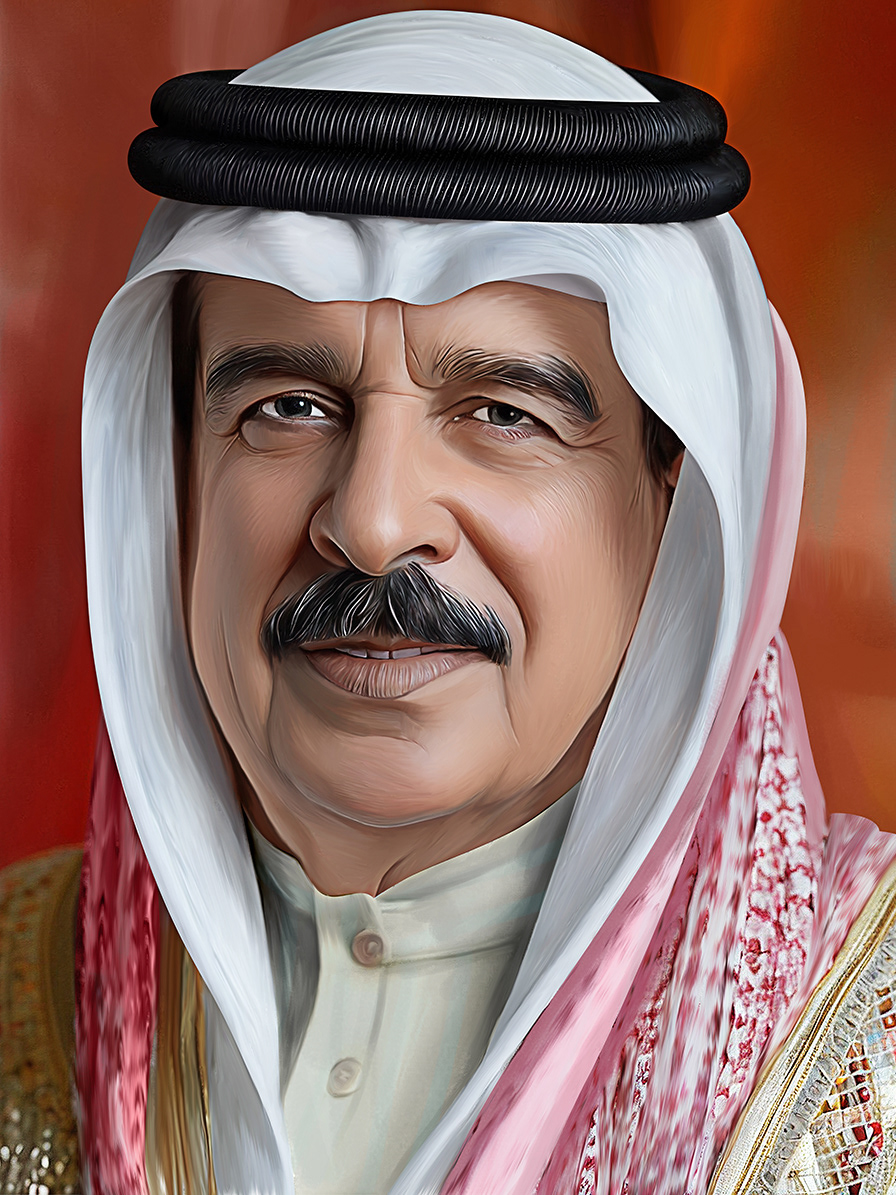

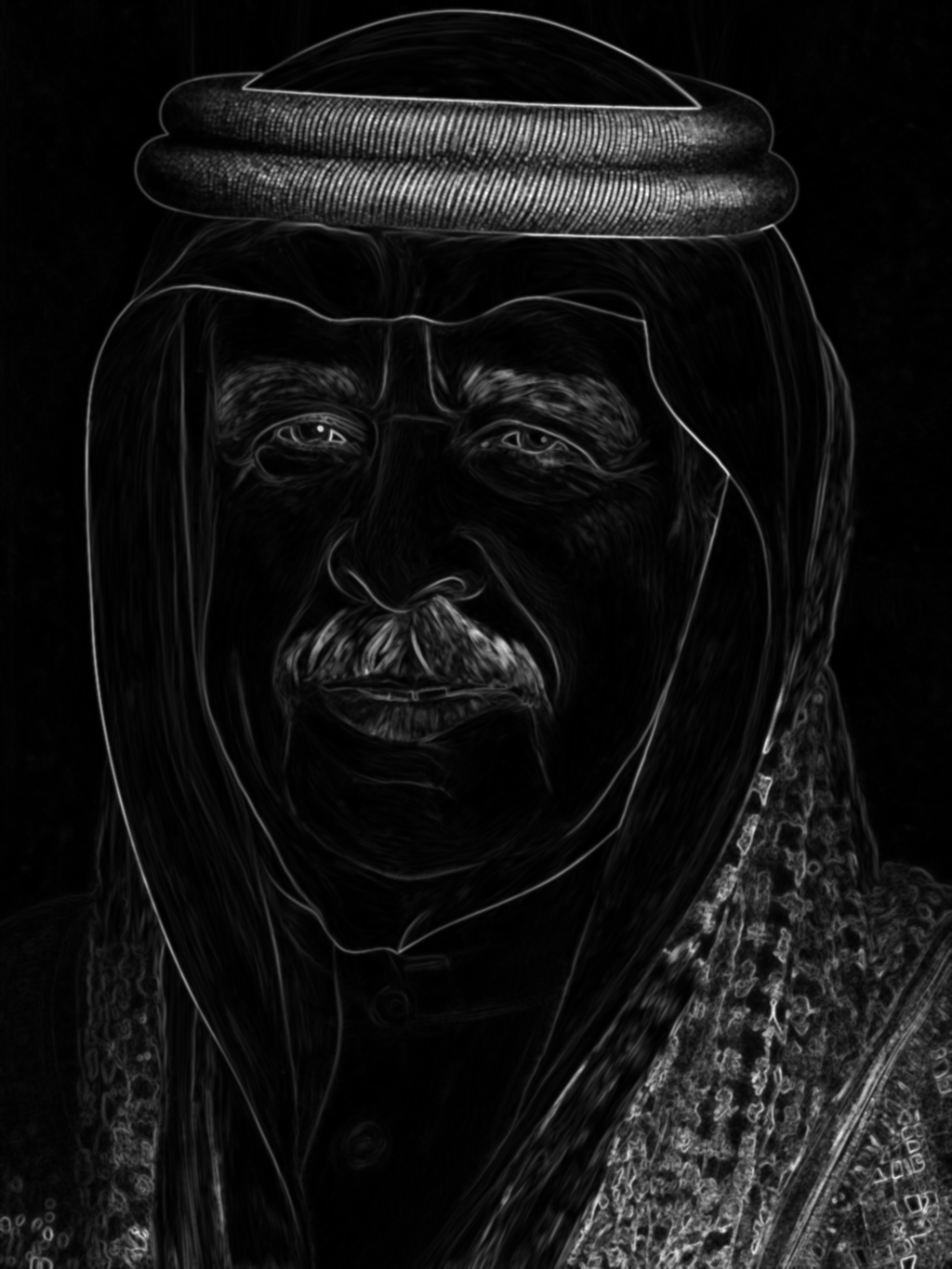
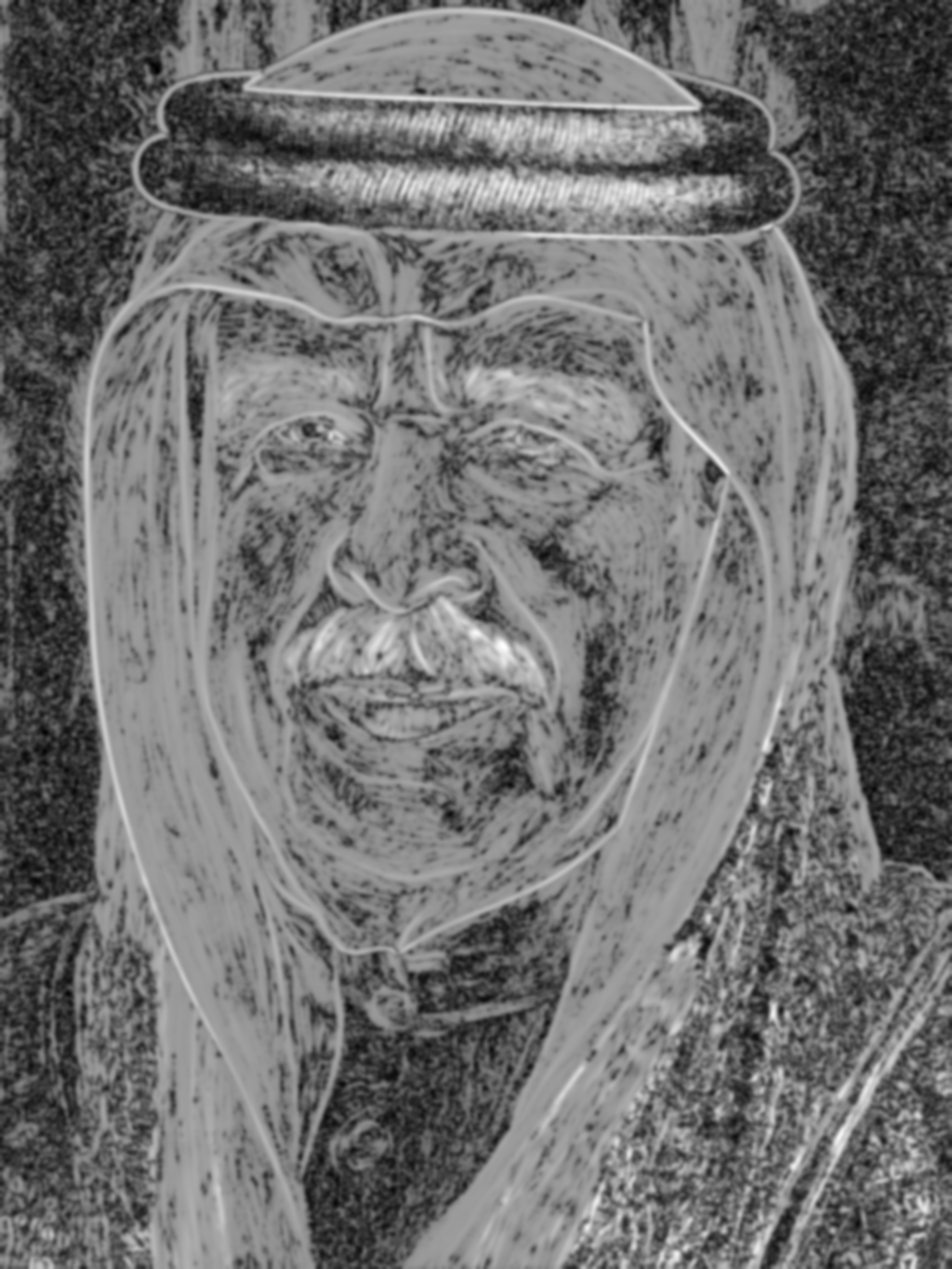

CGMCreator: Precision Control Through Computer Vision
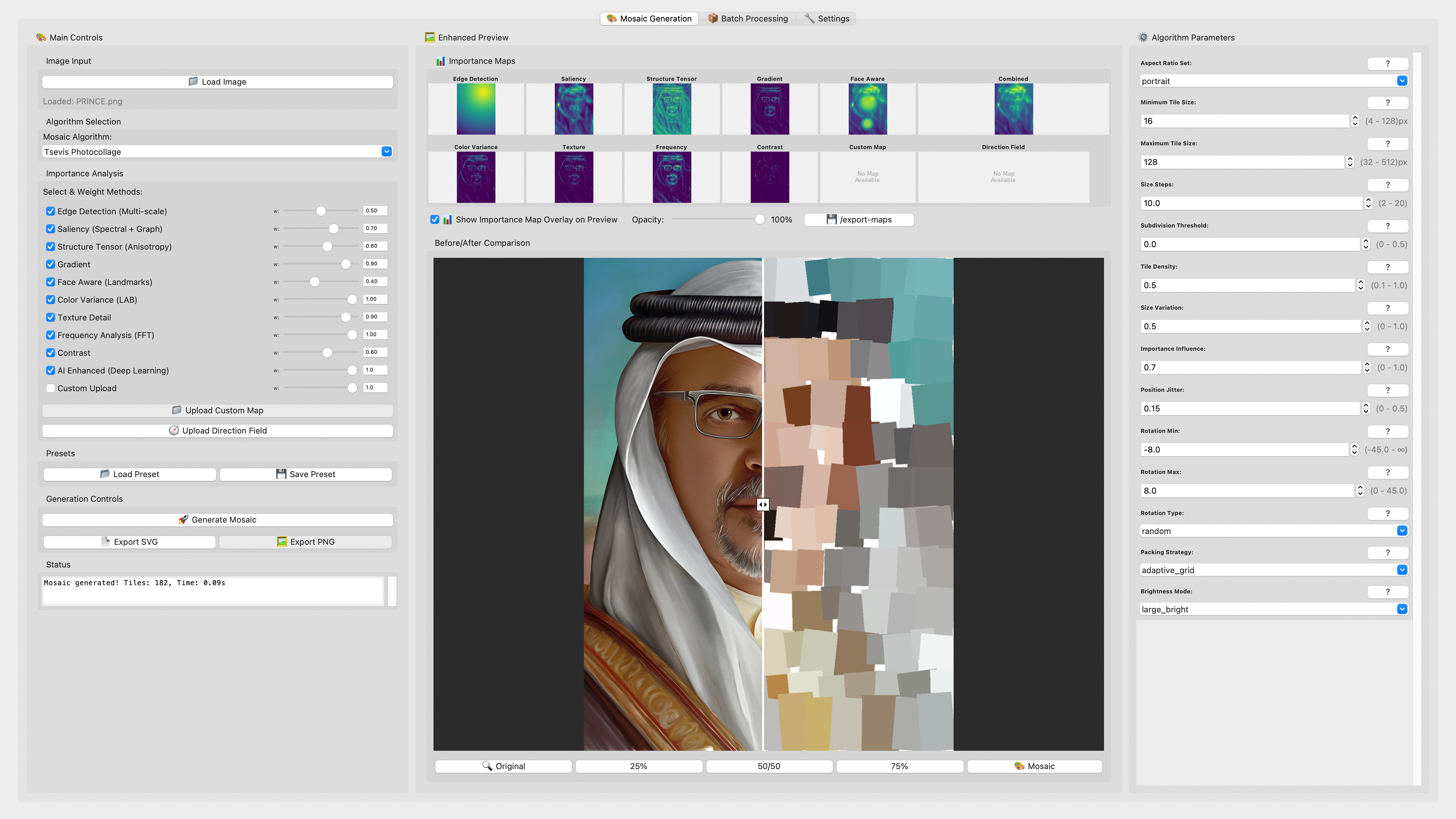
Complementing Mozaix is CGMCreator, a companion application specifically designed to extend the system’s analytical capabilities. CGMCreator employs sophisticated computer vision algorithms to generate:
Custom Importance Maps:
These visual weight maps determine where the viewer’s attention should naturally focus, ensuring that critical features—facial expressions, symbolic elements, cultural details—receive the highest visual fidelity.
These visual weight maps determine where the viewer’s attention should naturally focus, ensuring that critical features—facial expressions, symbolic elements, cultural details—receive the highest visual fidelity.
Adaptive Grid Masks
Variable-density tessellation grids that respond to image complexity, placing smaller tiles where detail is crucial and larger tiles where broad chromatic fields suffice.
Variable-density tessellation grids that respond to image complexity, placing smaller tiles where detail is crucial and larger tiles where broad chromatic fields suffice.
Tonal Hierarchy Systems
Algorithms that analyze and preserve the full range of values from deepest shadows to highest highlights, ensuring the portrait maintains its three-dimensionality and luminous presence.
Algorithms that analyze and preserve the full range of values from deepest shadows to highest highlights, ensuring the portrait maintains its three-dimensionality and luminous presence.
CGMCreator is built on the idea that the artwork should be clear and attractive both from far away and up close. This is made possible by algorithms that adjust the amount of detail and visual importance throughout the whole piece.
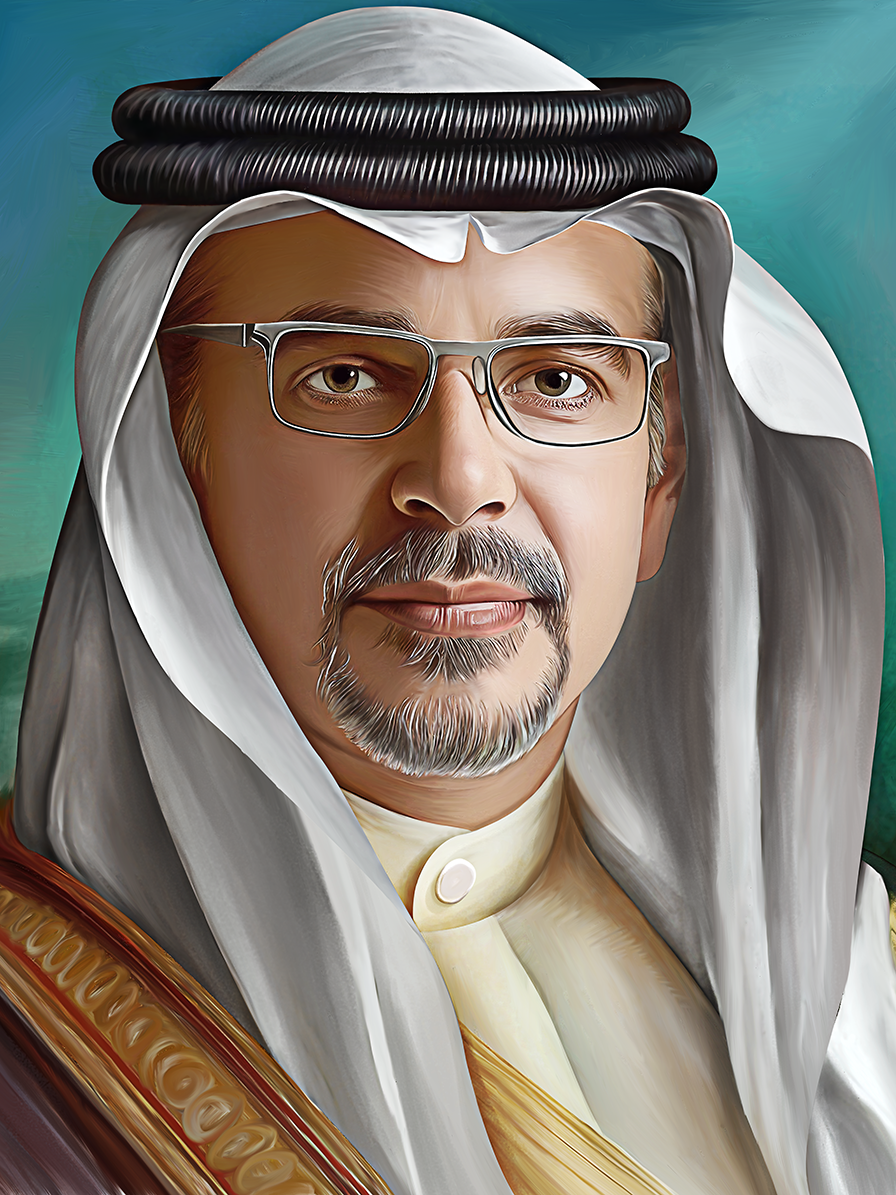
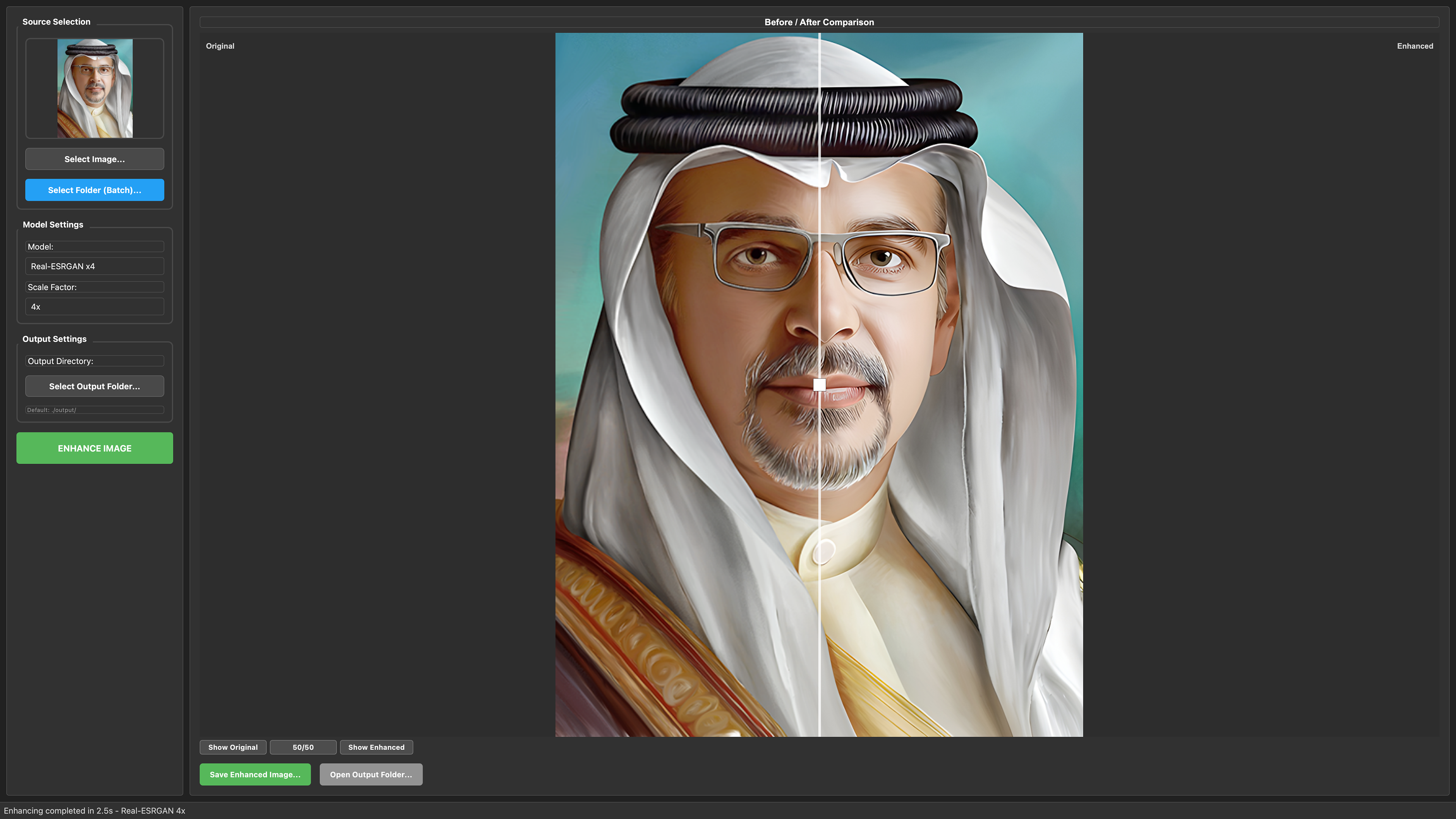
Enhancing and upscaling the source images of a digital mosaic is crucial for their quality.
TsevisEnhancer: Semantic Image Understanding
A critical component of the production pipeline is TsevisEnhancer, a specialized image processing system that applies semantic analysis to both source imagery and tile candidates. This system provides:
Facial Feature Recognition
Ensuring that the most important elements of portraiture—eyes, expression, distinguishing characteristics—receive preferential tile placement and optimal color matching.
Ensuring that the most important elements of portraiture—eyes, expression, distinguishing characteristics—receive preferential tile placement and optimal color matching.
Edge-Aware Processing
Preservation of critical boundaries and contours that define form, using gradient-based analysis to prevent visual artifacts at transitions.
Preservation of critical boundaries and contours that define form, using gradient-based analysis to prevent visual artifacts at transitions.
Context-Sensitive Enhancement
Adaptive processing that responds to image content type, applying different optimization strategies for skin tones, fabrics, architectural elements, and decorative details.
Adaptive processing that responds to image content type, applying different optimization strategies for skin tones, fabrics, architectural elements, and decorative details.
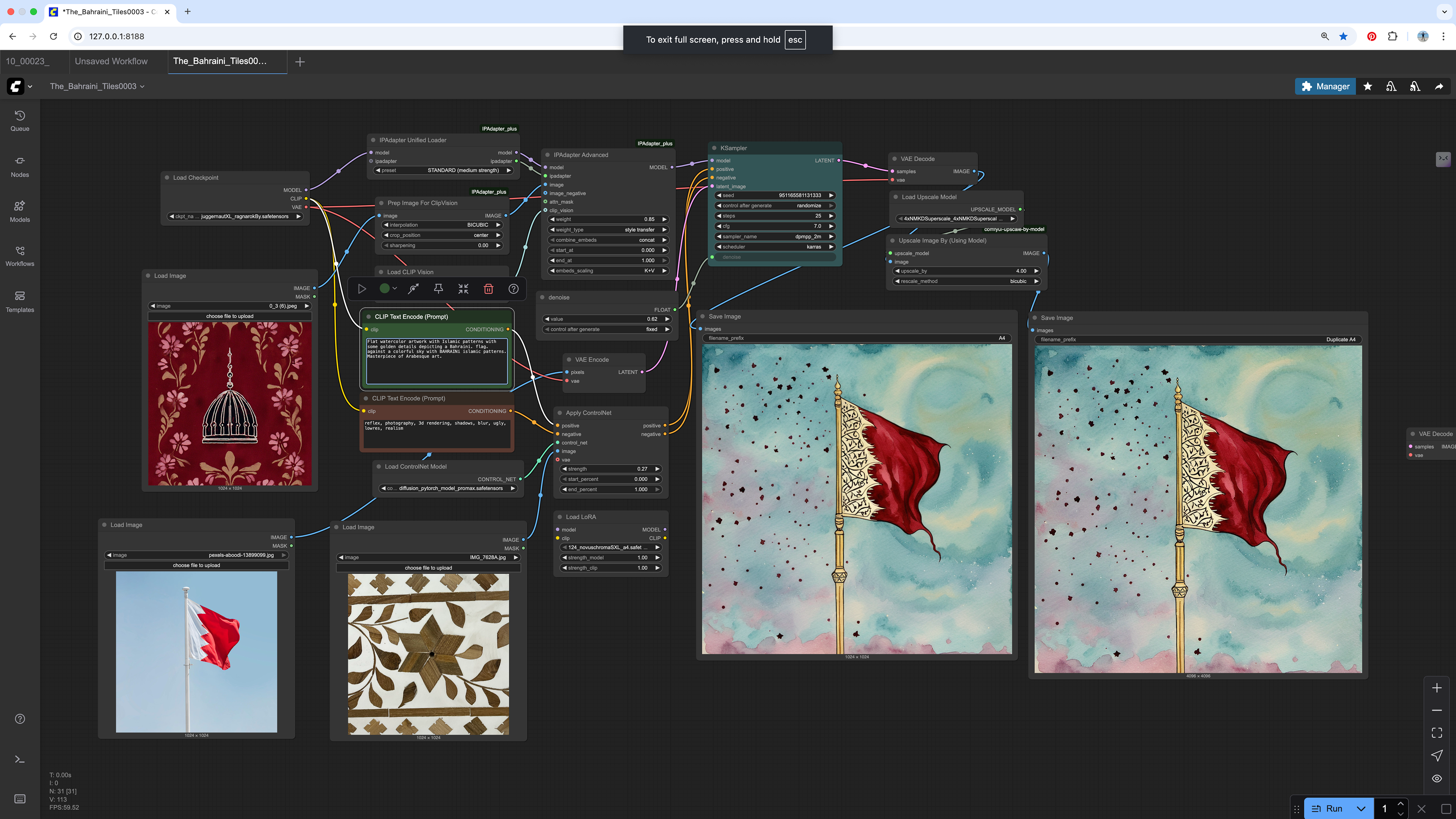
Cultural Translation Through Code. This ComfyUI interface shows the controlled, multi-model AI generation process used to create the micro-artworks for the Bahrain royal commission. By feeding prompts based on Al-Sadu weaving or wooden Islamic geometry, the system produces authentic, stylized elements that are then curated and refined by hand—demonstrating responsible, tool-based AI in fine art.
The Generative AI Workflow: ComfyUI Integration
Working with generative AI at a professional level bears no resemblance to casual prompting. It requires deep technical control and relentless critical judgment.
Technical Control: Beyond the Prompt
A text prompt is only the beginning. Achieving precise, culturally authentic output demands mastery of multiple control mechanisms working in concert:
Model Selection and Combination. Different base models carry different visual biases, color tendencies, and structural strengths. Selecting the right model for each task—and knowing when to combine outputs from multiple models—is itself an artistic decision.
ControlNet Integration. These conditional control models allow precise guidance over composition, pose, depth, and edge structure. Rather than hoping the AI produces correct spatial relationships, ControlNet enforces them through reference images and structural maps.
IPAdapters (Image Prompt Adapters). Text describes; images specify. IPAdapters allow feeding visual references directly into the generation process, transferring style, color relationships, or compositional logic from existing artwork into new outputs.
Custom LoRA Models. For this project, I trained a specialized LoRA on Islamic geometric patterns and Bahraini ornamental traditions. This is not downloading a preset—it requires curating training data, calibrating training parameters, and iterating until the model produces culturally accurate results.
Img2Img Refinement. Initial generations rarely survive unchanged. Image-to-image processing allows progressive refinement—adjusting color balance, strengthening weak areas, harmonizing disparate elements across multiple passes.
Inpainting and Outpainting. Surgical correction of specific regions without disrupting successful areas. A generated pattern may be 90% correct; inpainting fixes the 10% without starting over.
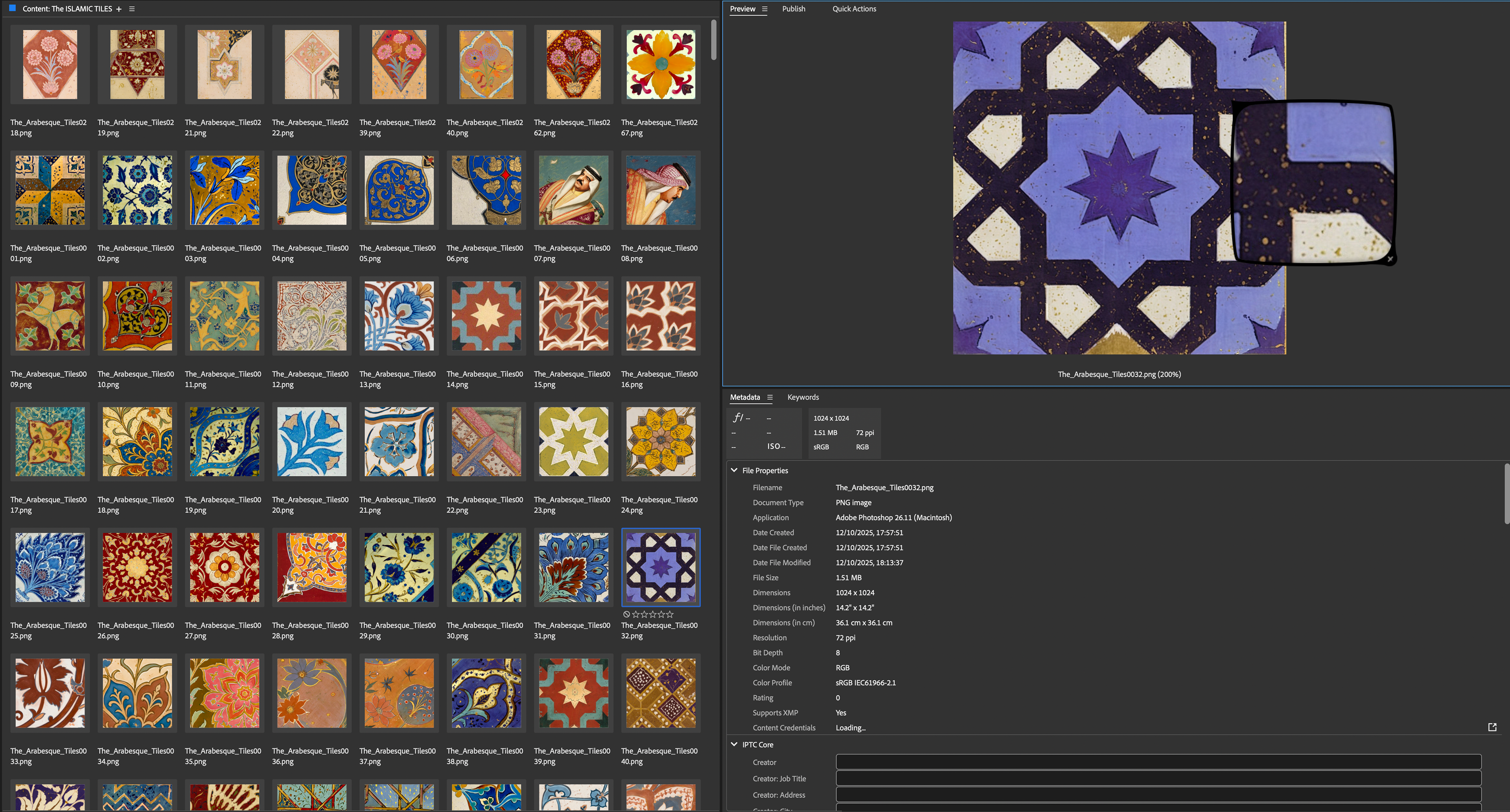
Curating the Cultural Library. This Adobe Bridge view shows the vast, meticulously organized digital archive of micro-tesserae—each a unique blend of AI generation and human refinement. These culturally authentic patterns form the visual vocabulary for the Bahrain royal portraits, ensuring every element resonates with heritage while meeting museum-grade production standards.sands of tiles using GenAI tools. But most of them will have to be thrown away as not really usable.
Critical Evaluation: The Human Filter
Technical control produces candidates. Artistic judgment produces artwork.
Every AI-generated element in this project passed through rigorous evaluation:
Artifact Detection. Generative models produce hallucinations—fingers that merge, patterns that break, textures that contradict physics. Each output was examined at full resolution for anatomical errors, geometric impossibilities, and visual noise that casual inspection misses.
Cultural Accuracy Verification. Islamic geometric patterns follow precise mathematical rules. Arabesque motifs carry specific meanings. AI models trained on global data frequently produce "Islamic-looking" patterns that violate tradition. Every ornamental element was verified against authentic sources.
Aesthetic Consistency. A single discordant element disrupts an entire composition. Generated outputs were evaluated not in isolation but against the evolving whole—color temperature, textural density, stylistic coherence.
Manual Correction. Elements that passed initial evaluation still required refinement: repainting areas where AI texture felt synthetic, geometric adjustment to align with tessellation grids, color correction to match archival printing profiles.
Only after this multi-stage filtration—technical control, artifact removal, cultural verification, aesthetic evaluation, manual refinement—did any AI-assisted element enter the final composition.
This is not AI art. This is art that employs AI as one instrument among many, subordinate to human intention at every stage.
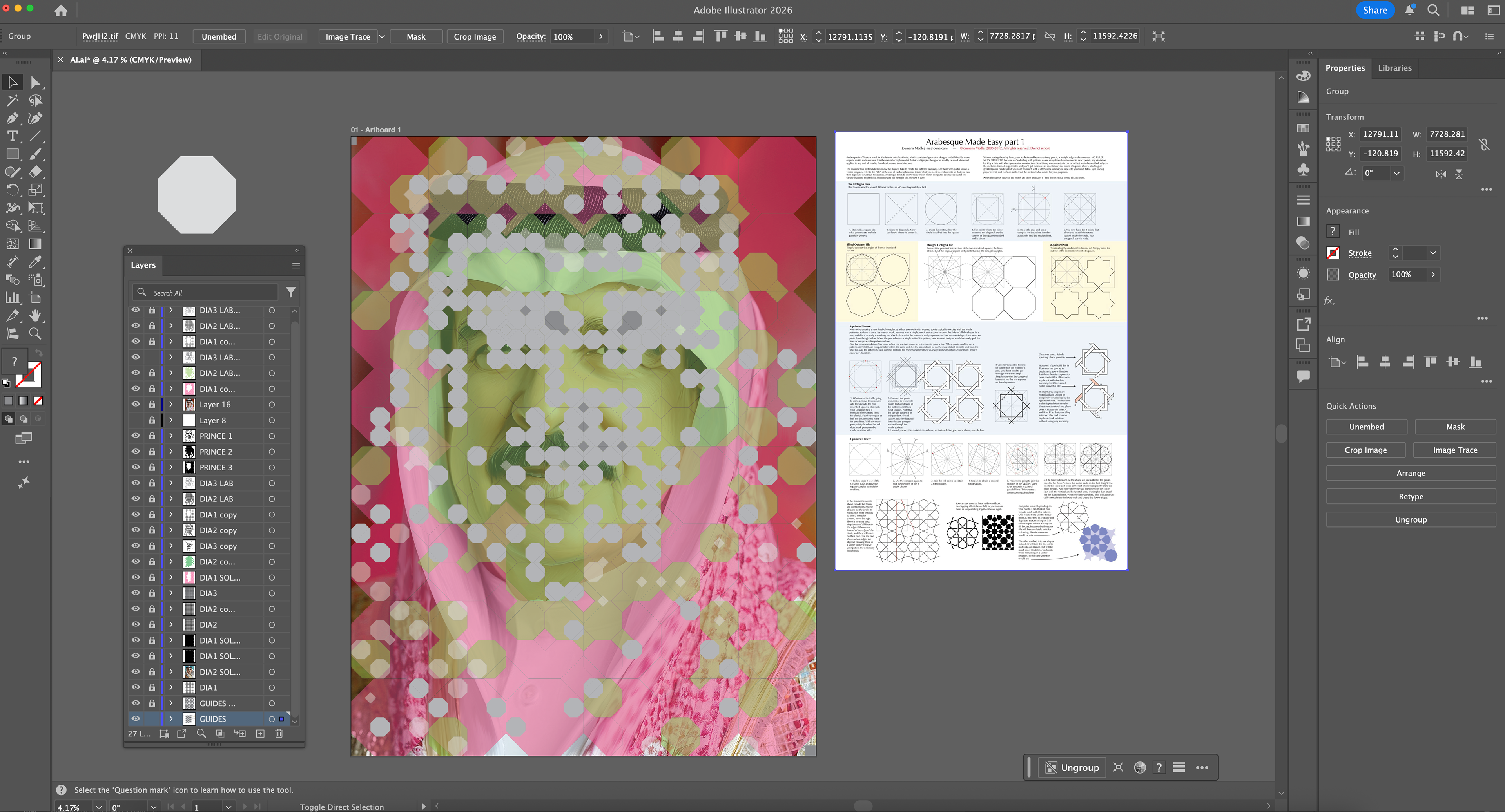

Traditional Digital Tools: The Adobe Ecosystem
The production pipeline integrates traditional digital tools for precision work, now augmented by a new generation of generative capabilities operating within familiar professional environments.
Adobe Illustrator
Vector-based geometric construction
Mathematical accuracy in tessellation
Scalable pattern development
Technical specification documentation
Adobe Photoshop
High-resolution image editing and color calibration
Layer-based compositional refinement
Color profile management for print accuracy
Final proofing and quality control
The Convergence: Generative AI Within Professional Tools
What makes the current moment significant is the integration of generative AI directly into established production software. Adobe Firefly, embedded within Photoshop, allows generative fill and expansion operations that respect existing color profiles, layer structures, and non-destructive workflows. This is not a separate AI application producing isolated outputs, it is generative capability operating within a controlled, print-calibrated environment.
More critically, Photoshop now serves as a correction and refinement station for AI-generated images from external models. An element generated in ComfyUI using Flux or produced through custom workflows can be imported into Photoshop where conventional computer vision tools, content-aware fill, frequency separation, selective color adjustment, neural filters, work alongside generative features to repair artifacts, extend compositions, or harmonize disparate elements.
The emerging integration of models like Flux directly within Photoshop further collapses the boundary between generation and refinement. Rather than exporting and importing between applications, artists can generate, evaluate, correct, and finalize within a single color-managed environment. NanoBanana and similar lightweight models offer rapid iteration for concept development without leaving the production pipeline.
This convergence matters for archival art production. Every generative operation occurs within proper color space management. Every correction maintains print fidelity. The museum-grade standards that govern final output now extend backward into the generative phase itself.
These tools ensure that every digital element meets archival production standards before physical realization begins.
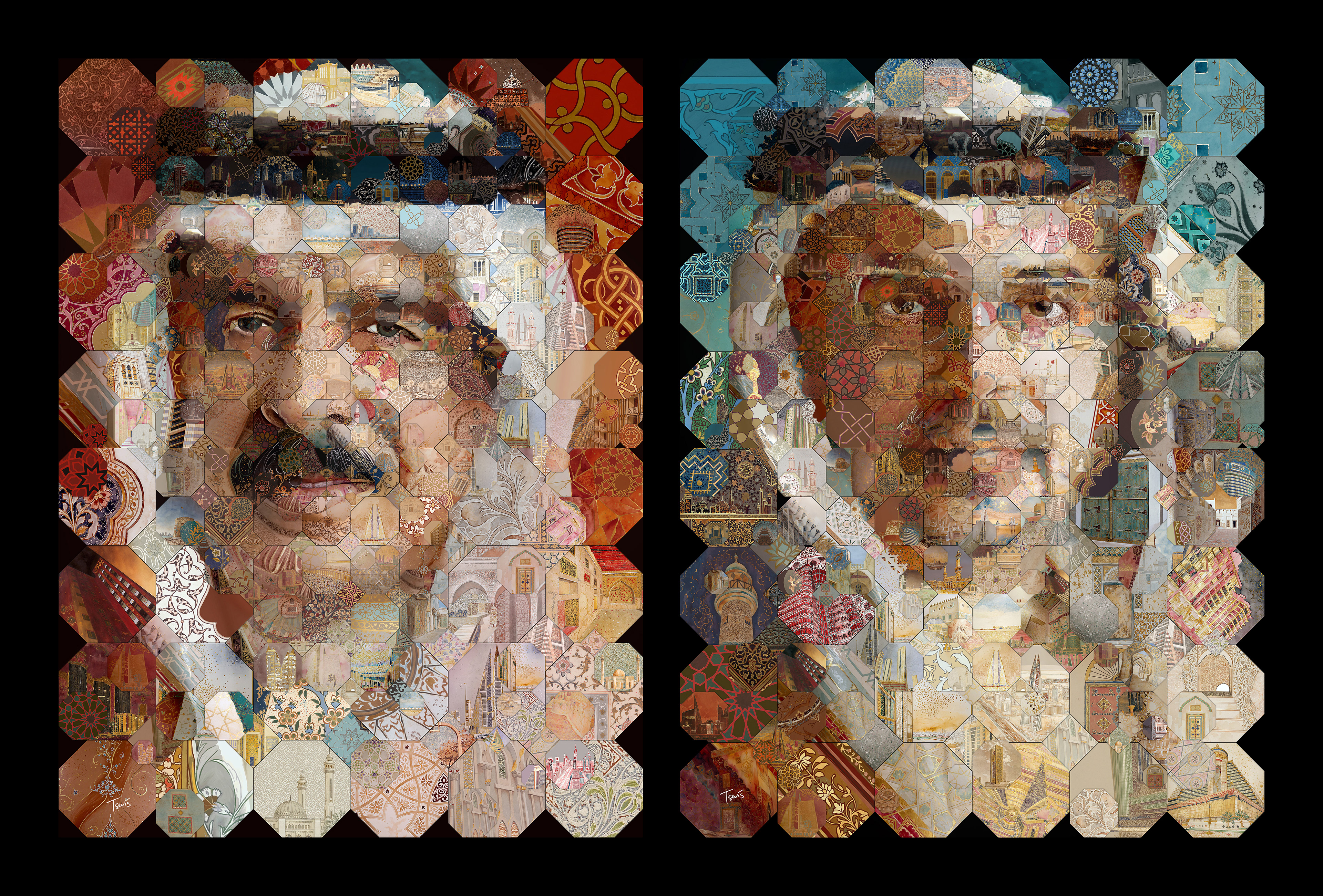
The Digital Portaits: The first version of the final artworks is a digital study. These twin portraits are composed of hundreds of unique hexagonal tesserae. Each tile is a micro-artwork—featuring Islamic geometry, Bahraini architecture, and textile motifs—woven together by algorithmic precision to create a powerful visual narrative of identity, legacy, and innovation.

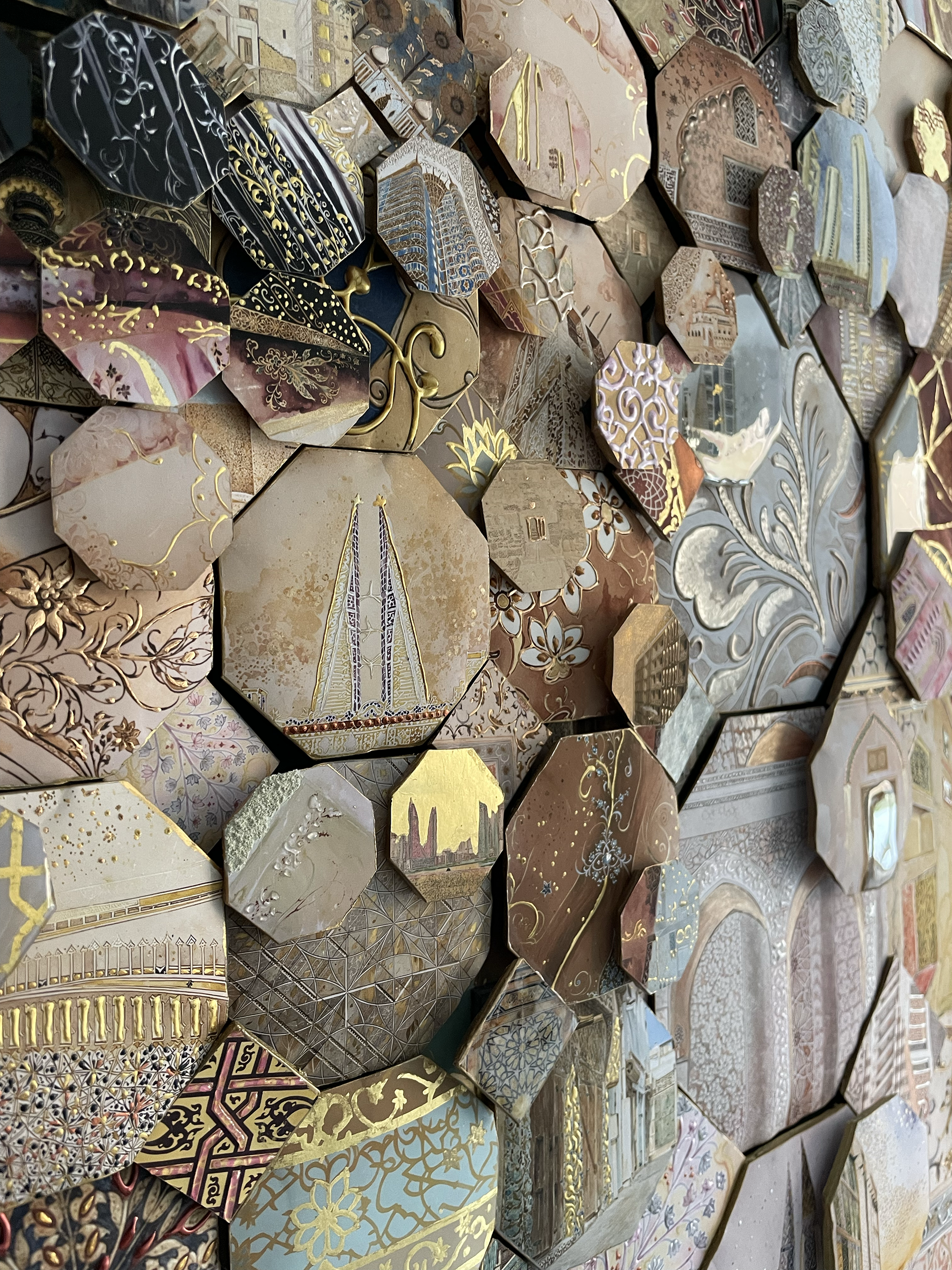
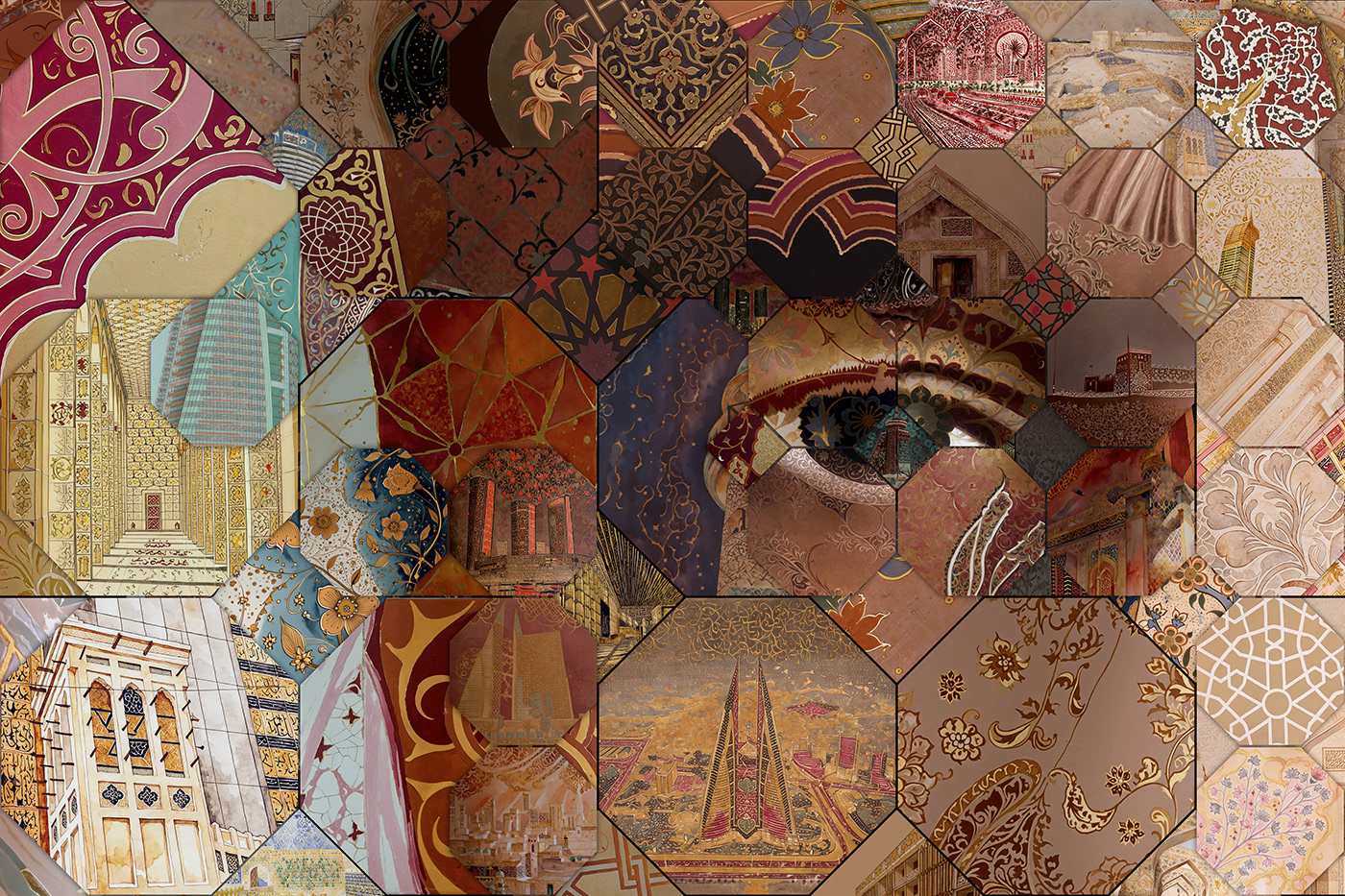
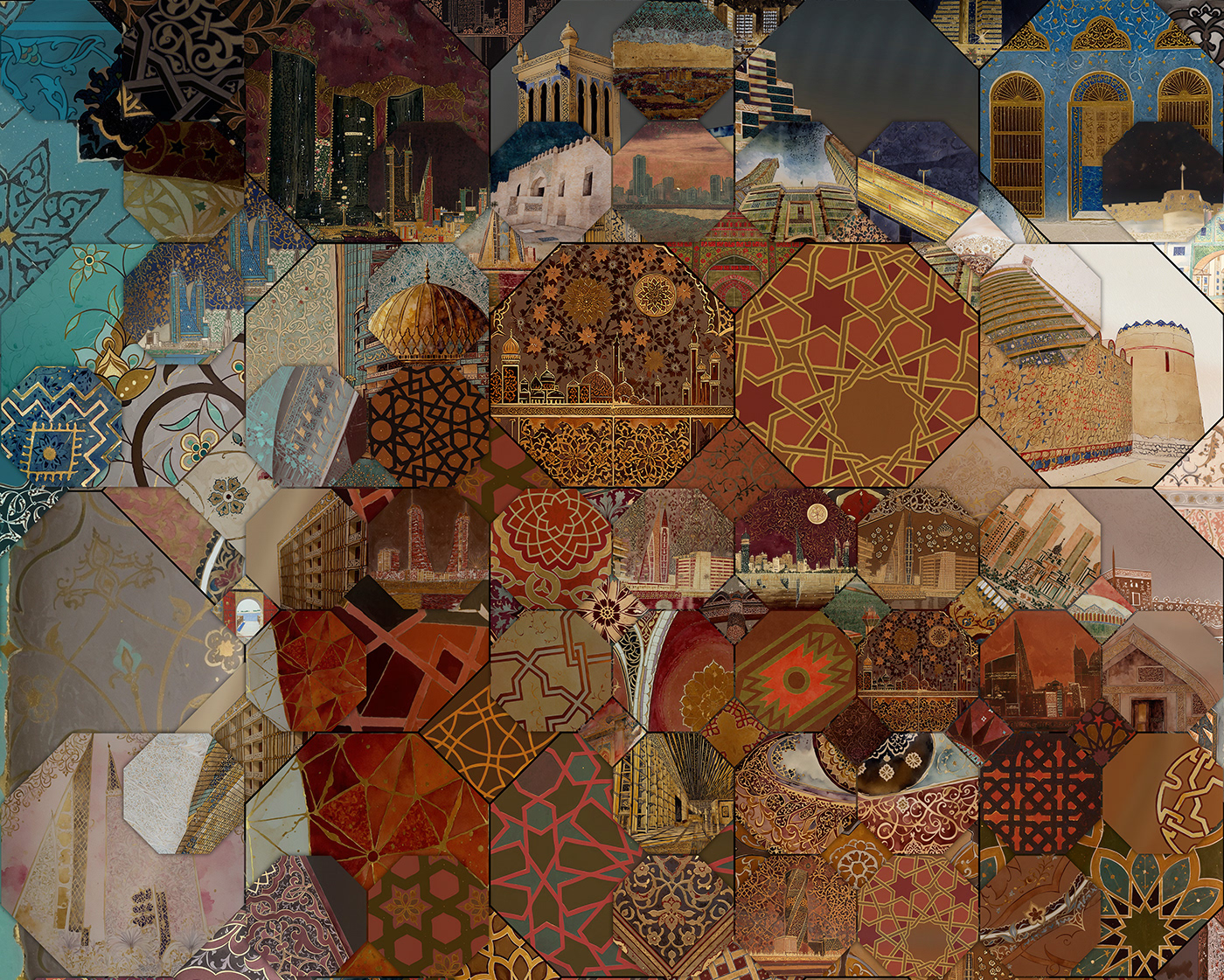
Every Tile Tells a Story. This close-up reveals the astonishing detail within the royal portrait: each hexagonal tessera is a unique micro-artwork depicting Bahraini landmarks, Islamic geometry, and traditional patterns. The fusion of algorithmic placement and hand-crafted imagery creates a layered narrative of heritage, designed to be discovered upon intimate viewing—a hallmark of this museum-grade commission.

The Visionary Portrait. This bespoke mosaic of His Royal Highness the Crown Prince is a masterwork of computational artistry and cultural storytelling. Each hexagonal tile—depicting Bahraini architecture, geometric patterns, and maritime heritage—is algorithmically placed to form a dignified likeness, embodying the nation’s progress while honoring its deep-rooted traditions.
From Digital to Physical
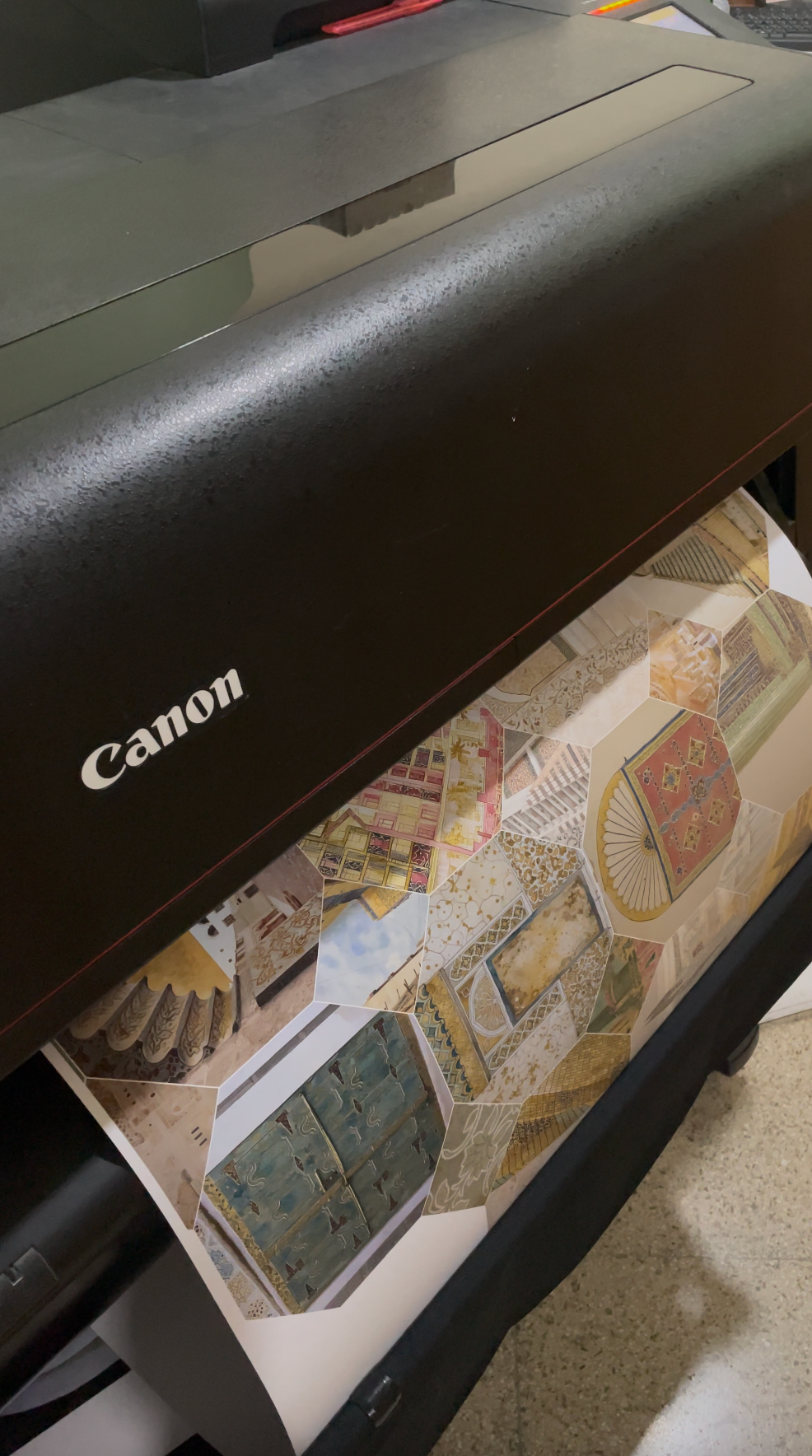
Once the mosaic architecture reached its final form, it took on its physical form through a meticulous analog process. The portraits were printed using museum-grade 12-ink Giclée technology on acid-free matte art paper, ensuring maximum chromatic fidelity.
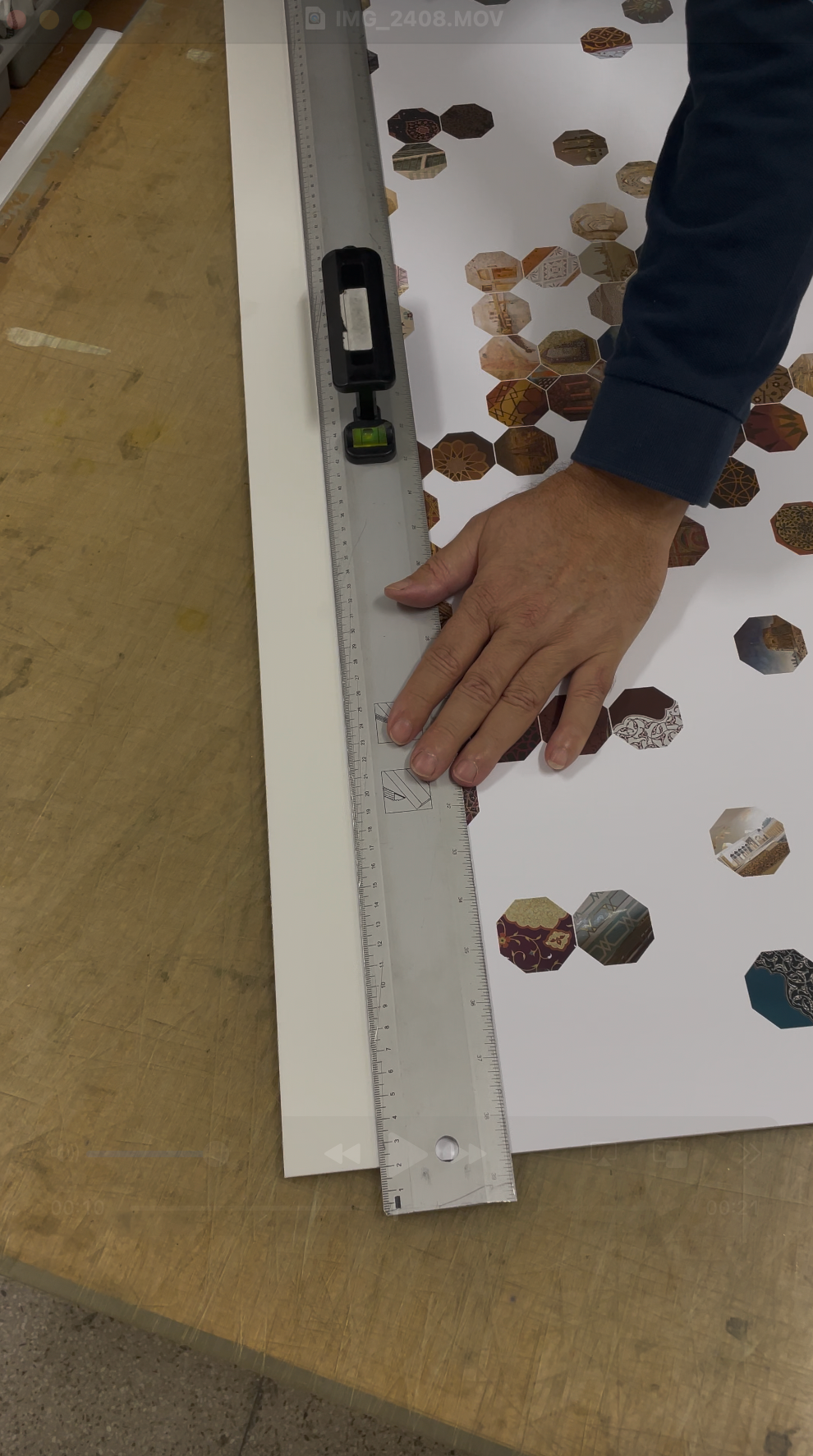
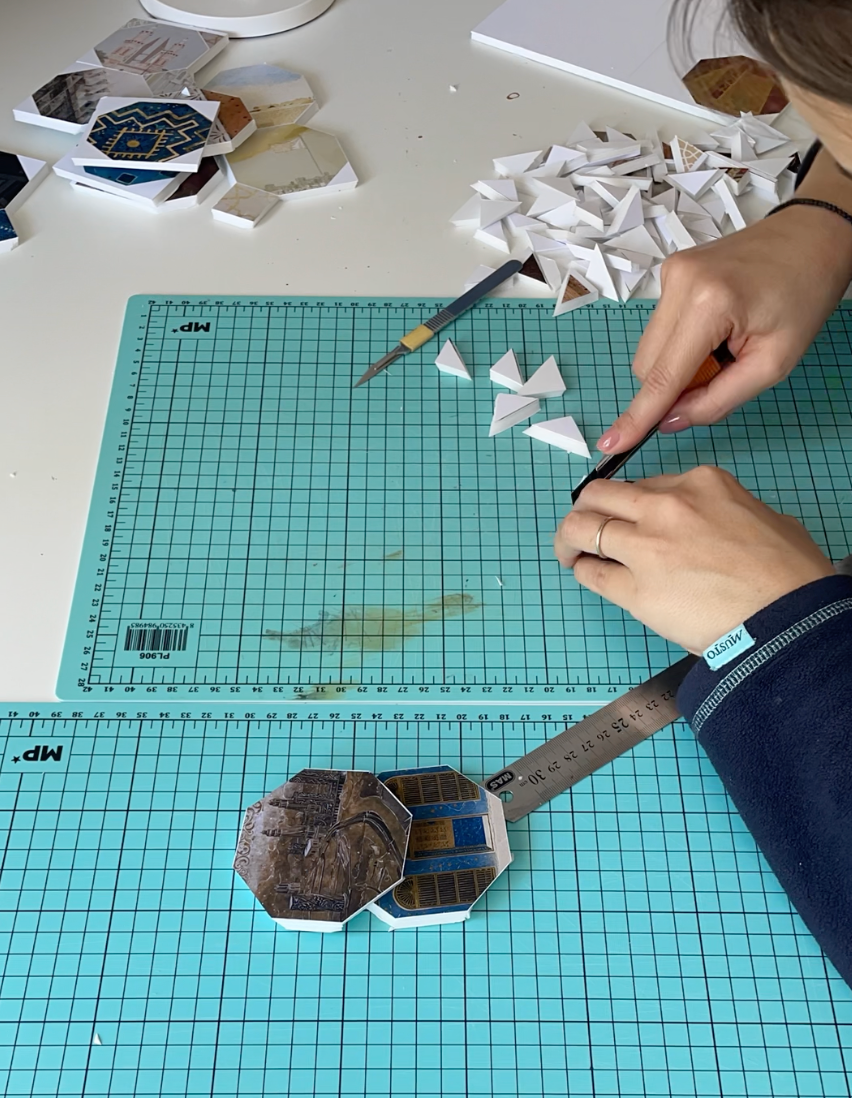
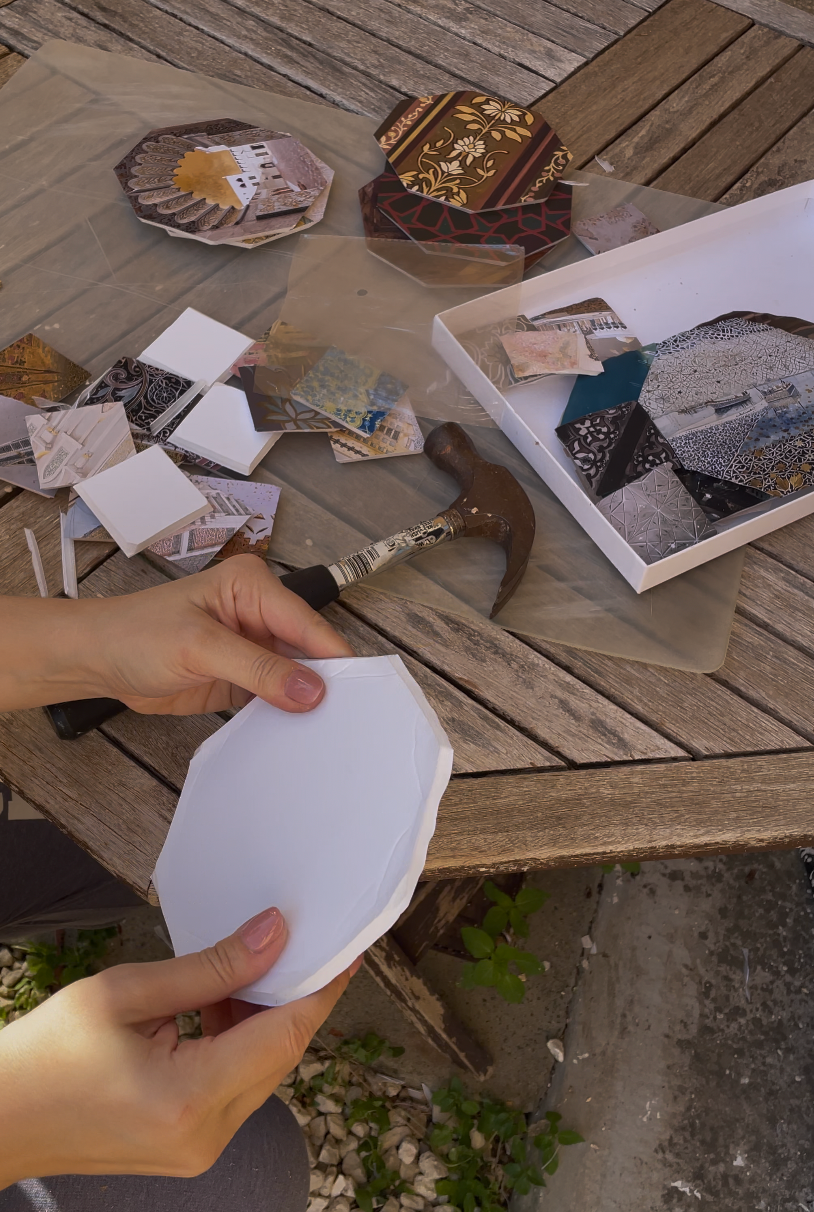
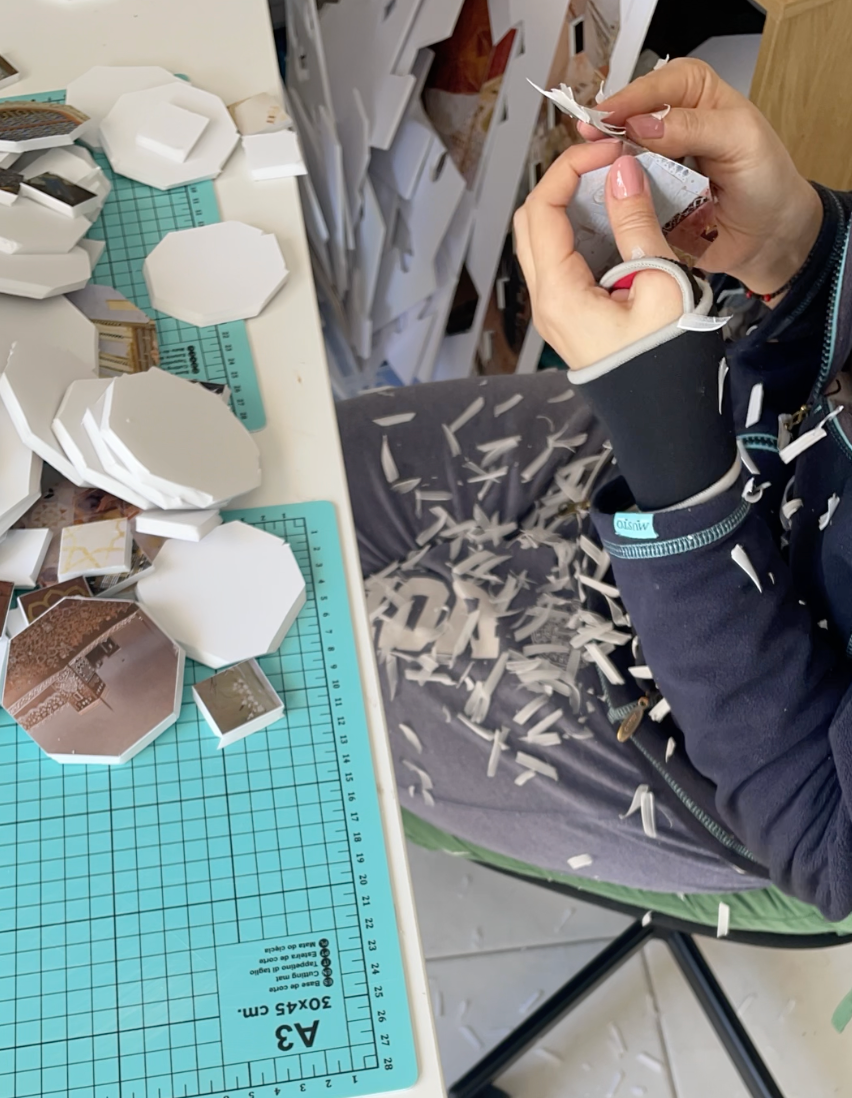
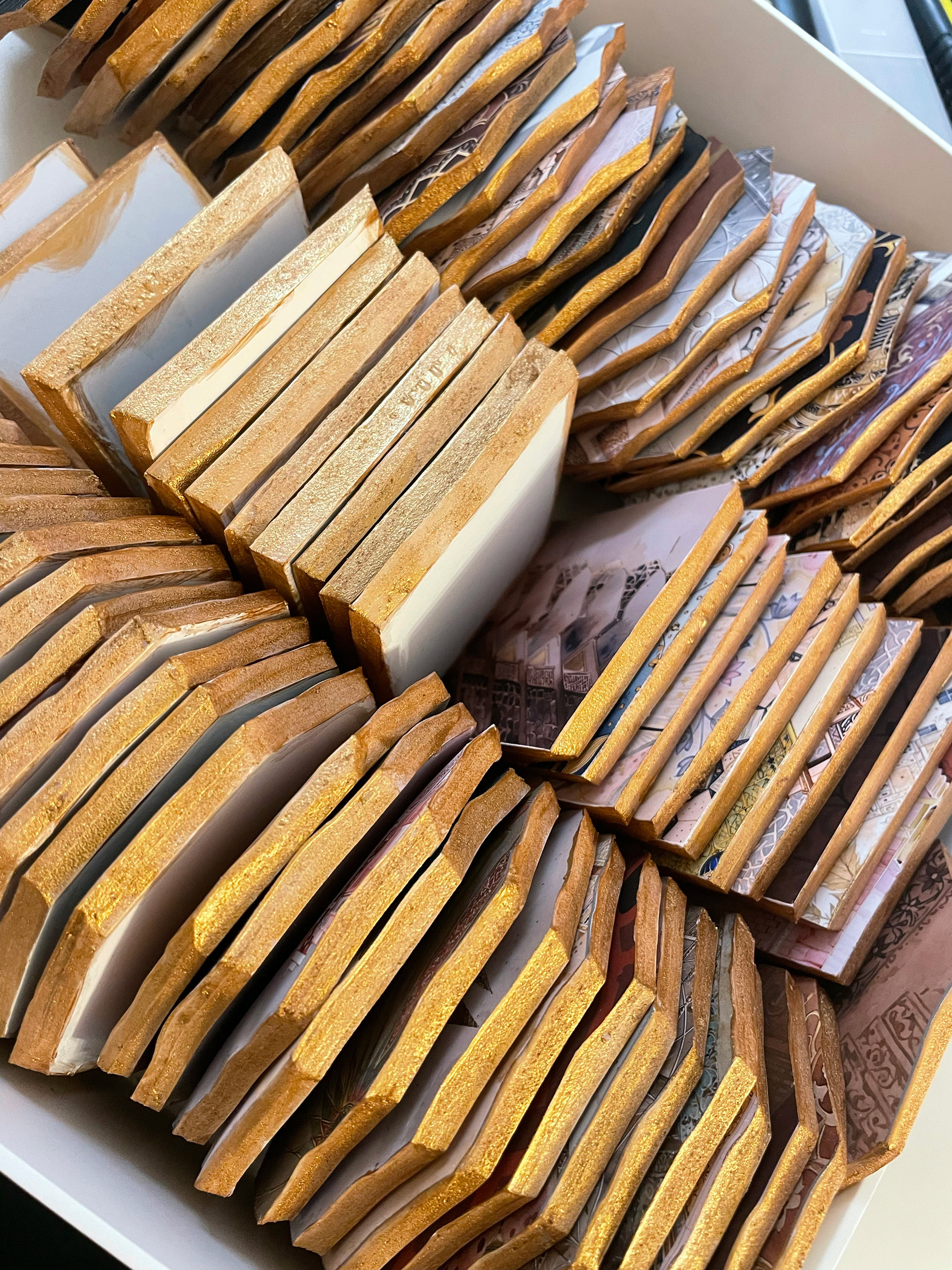
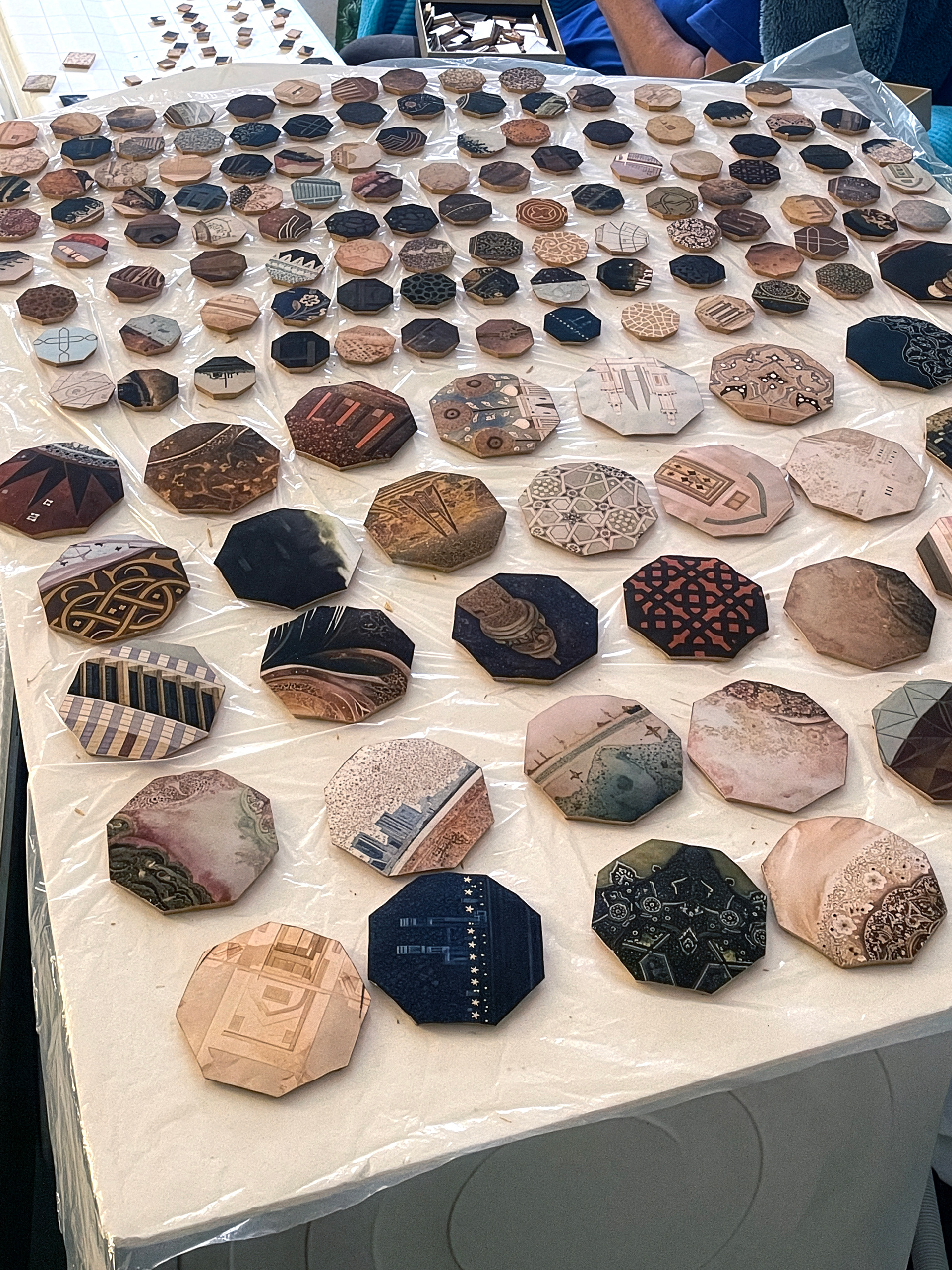
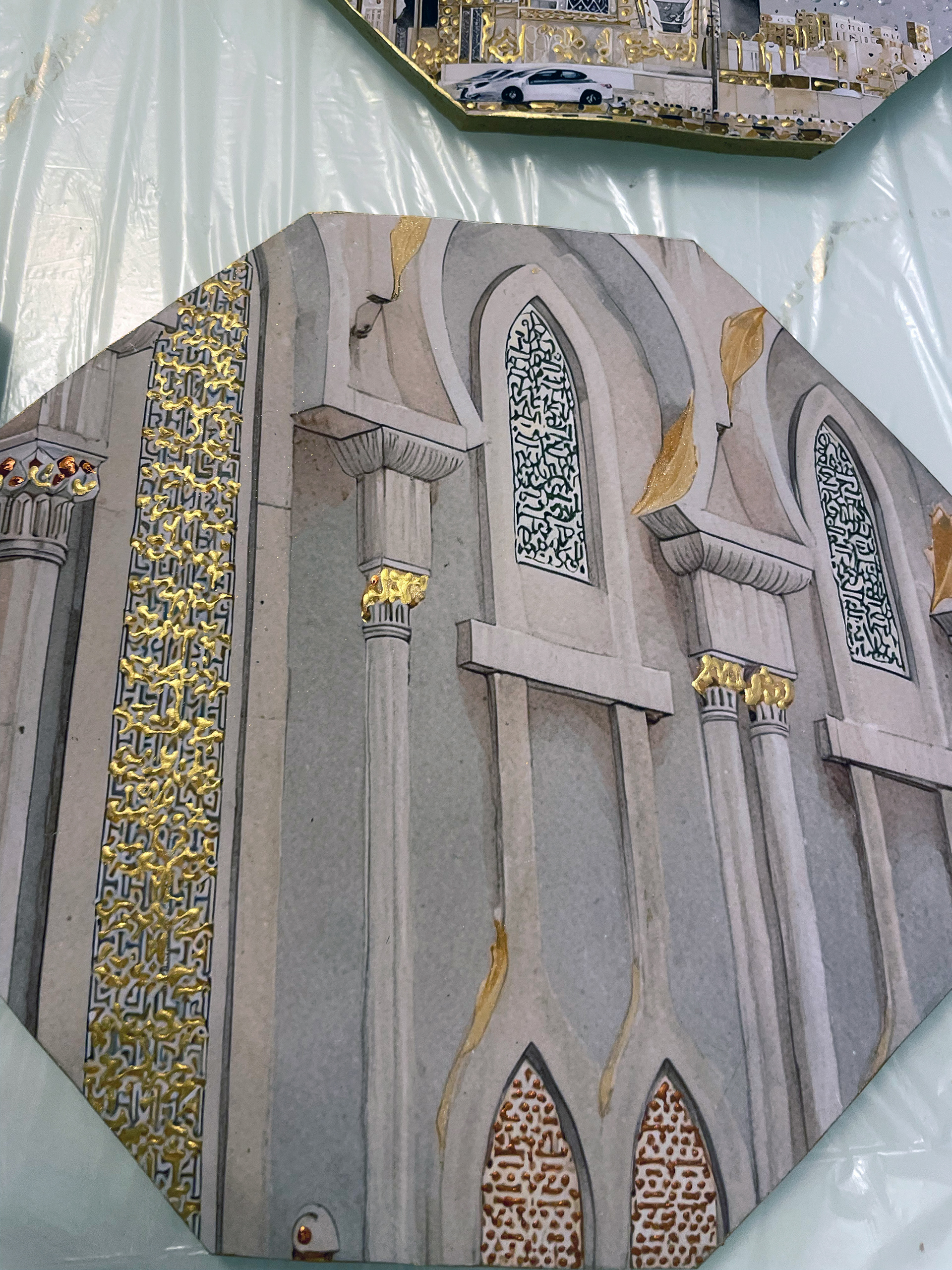
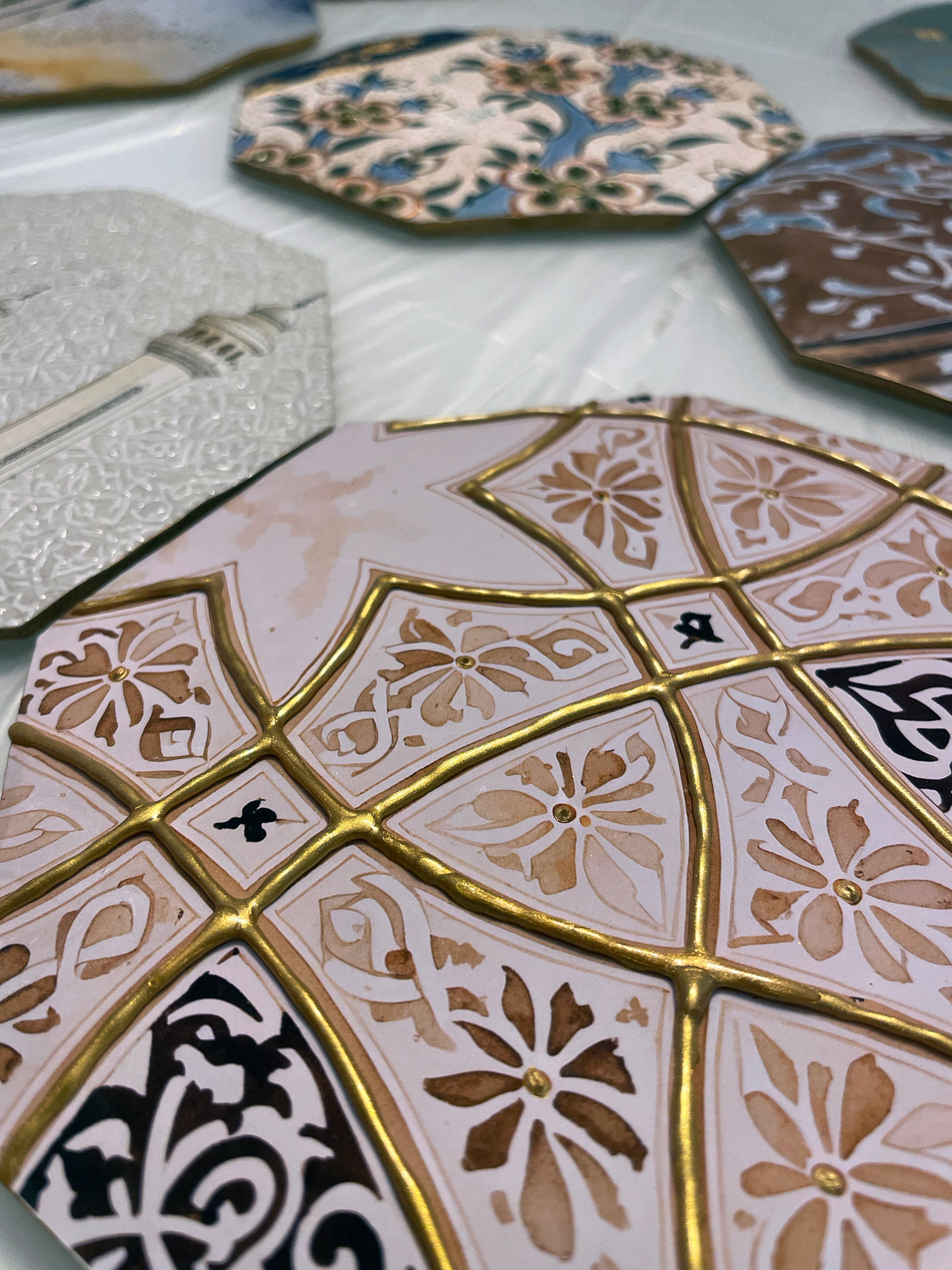
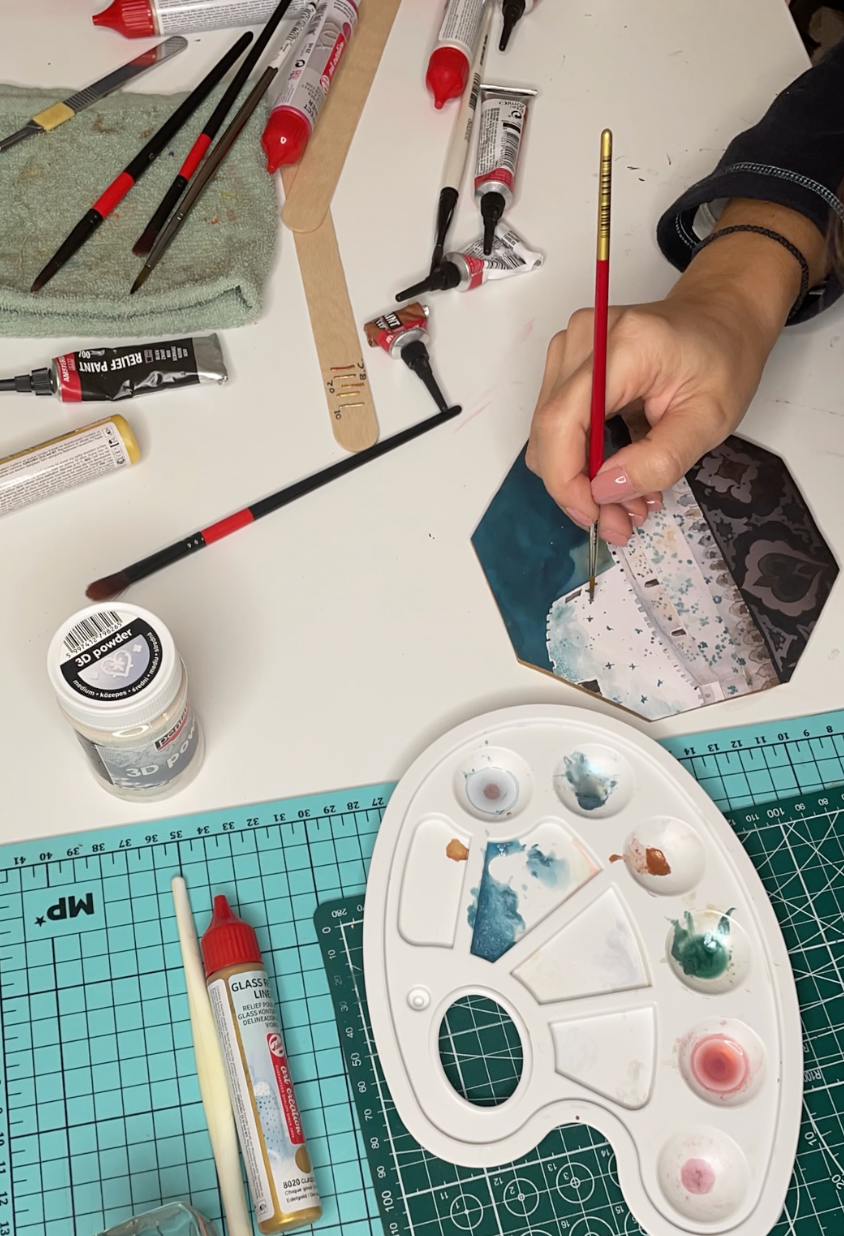
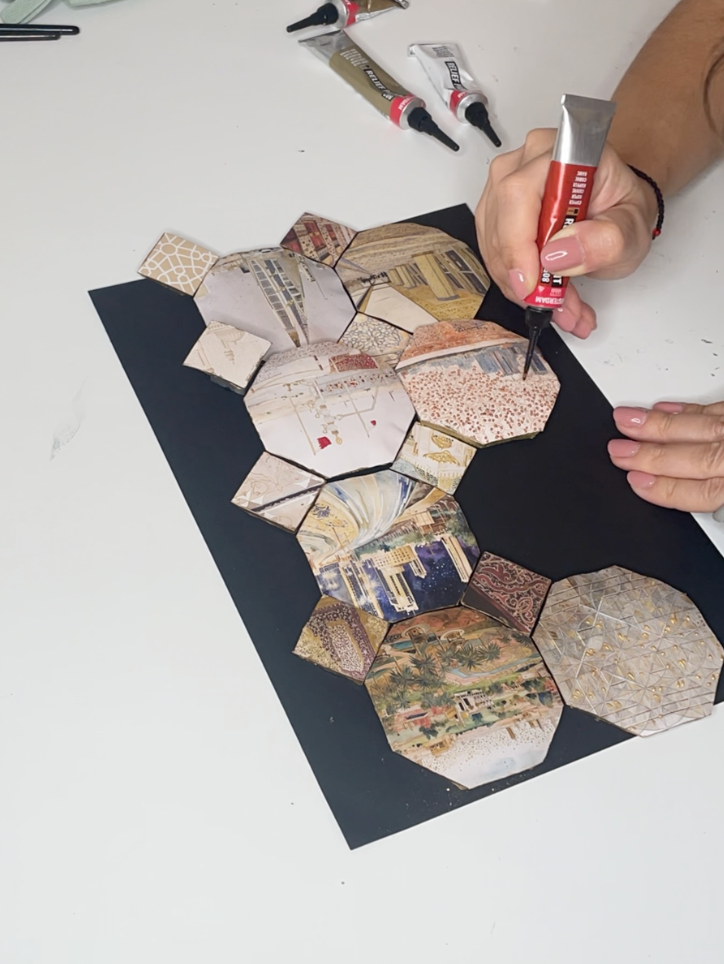
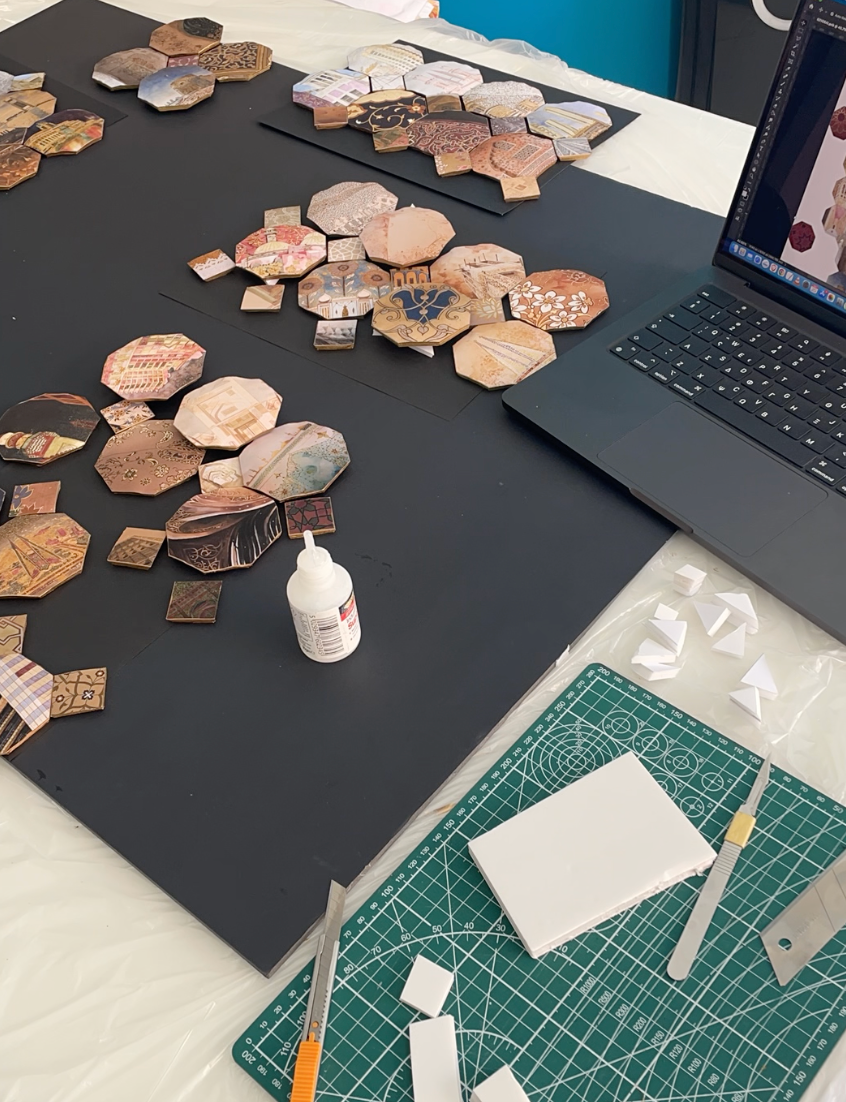
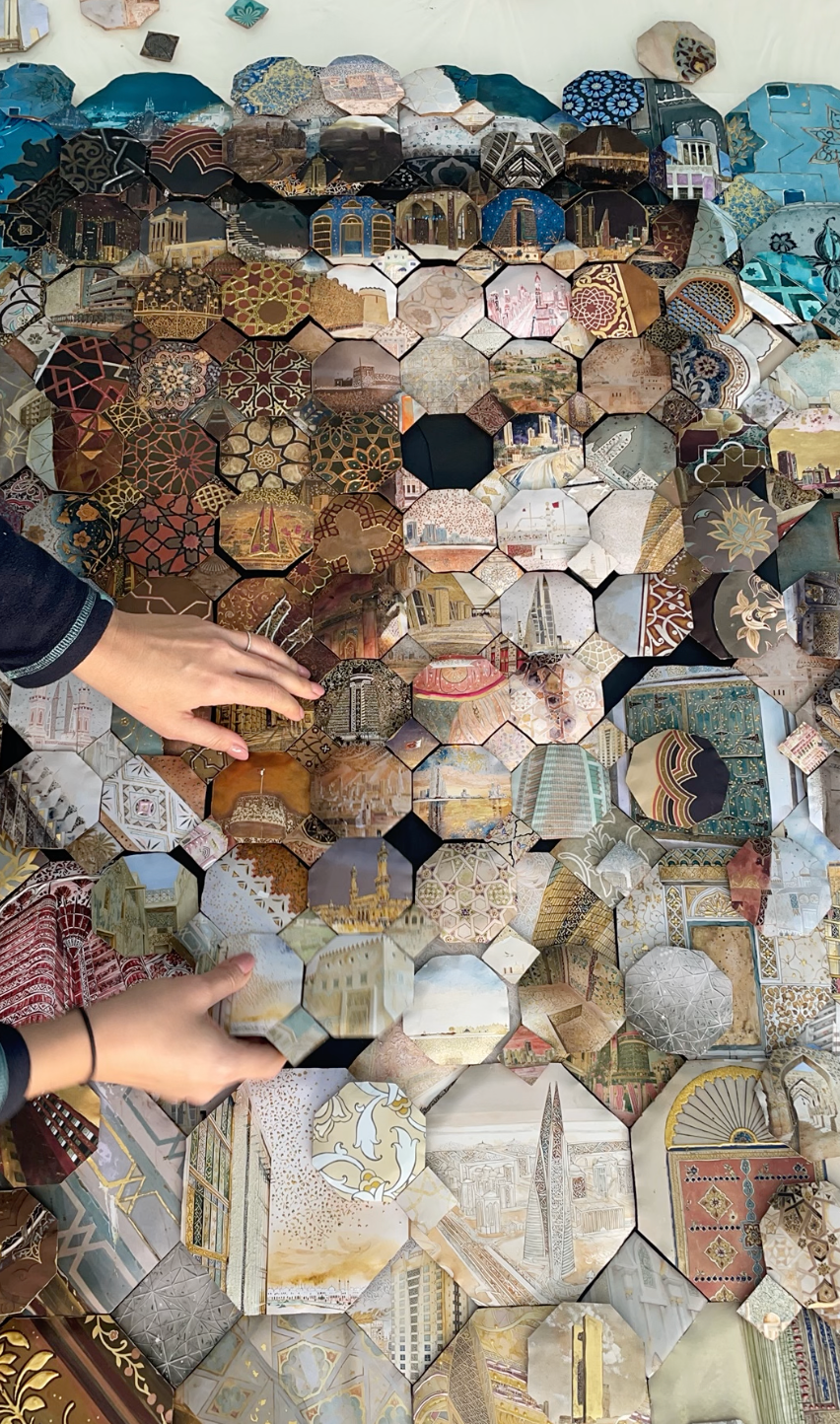
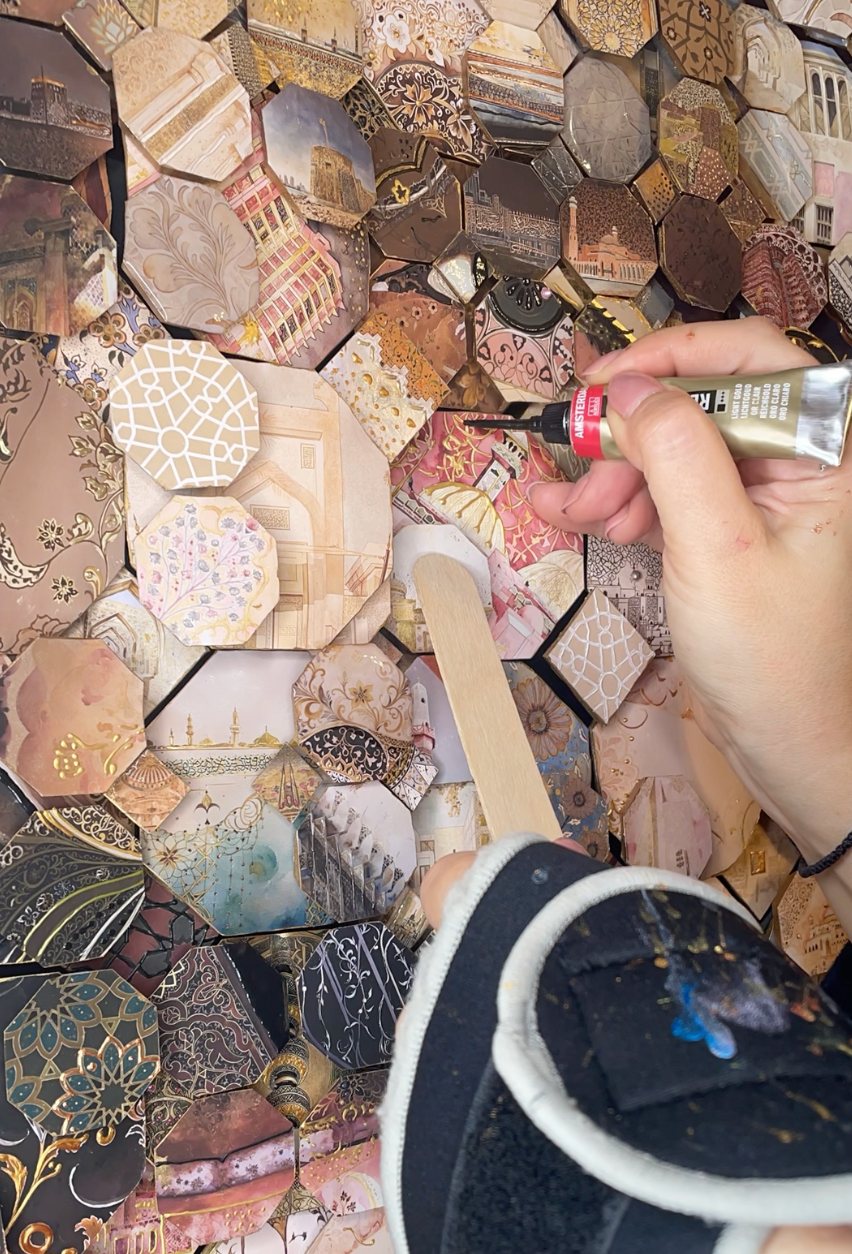
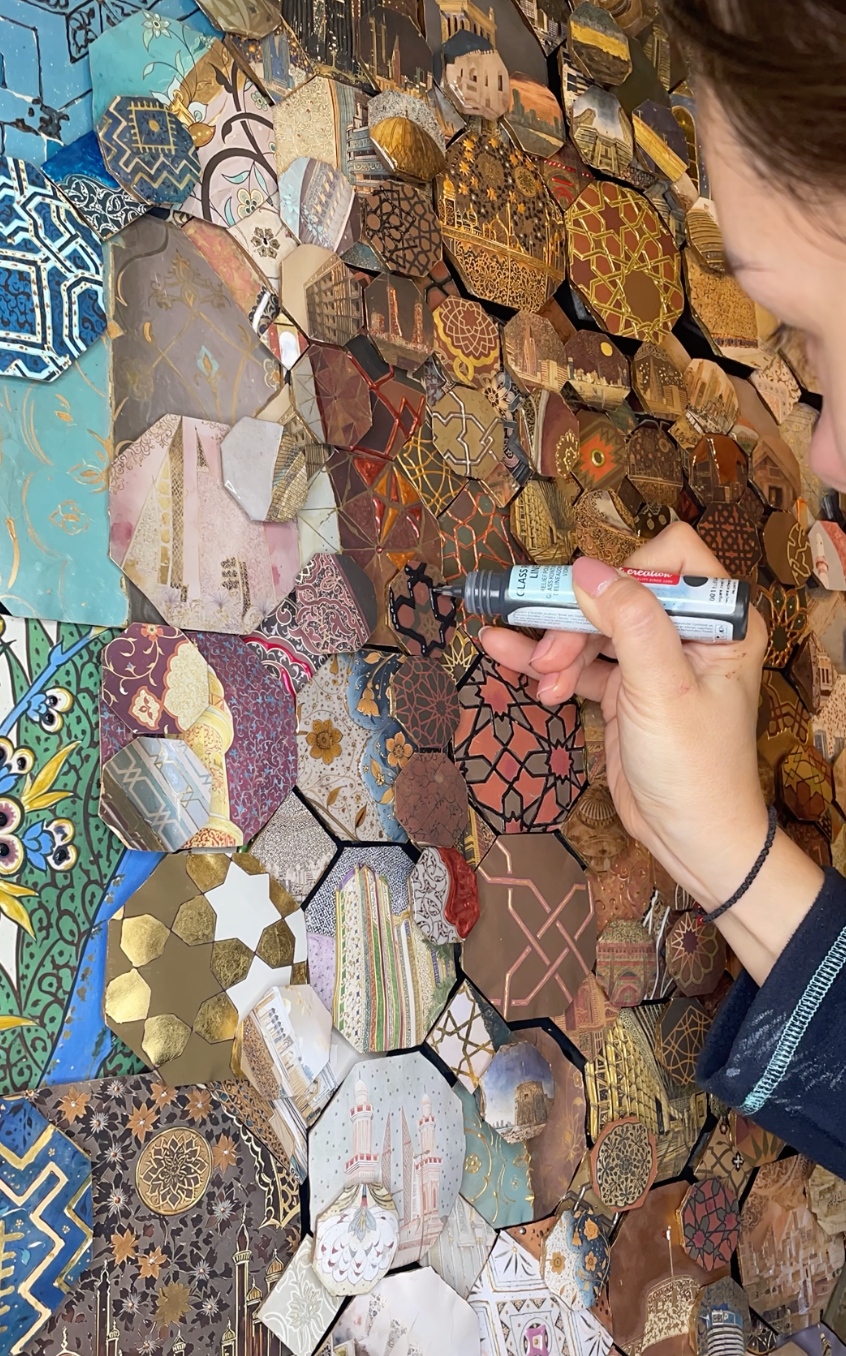
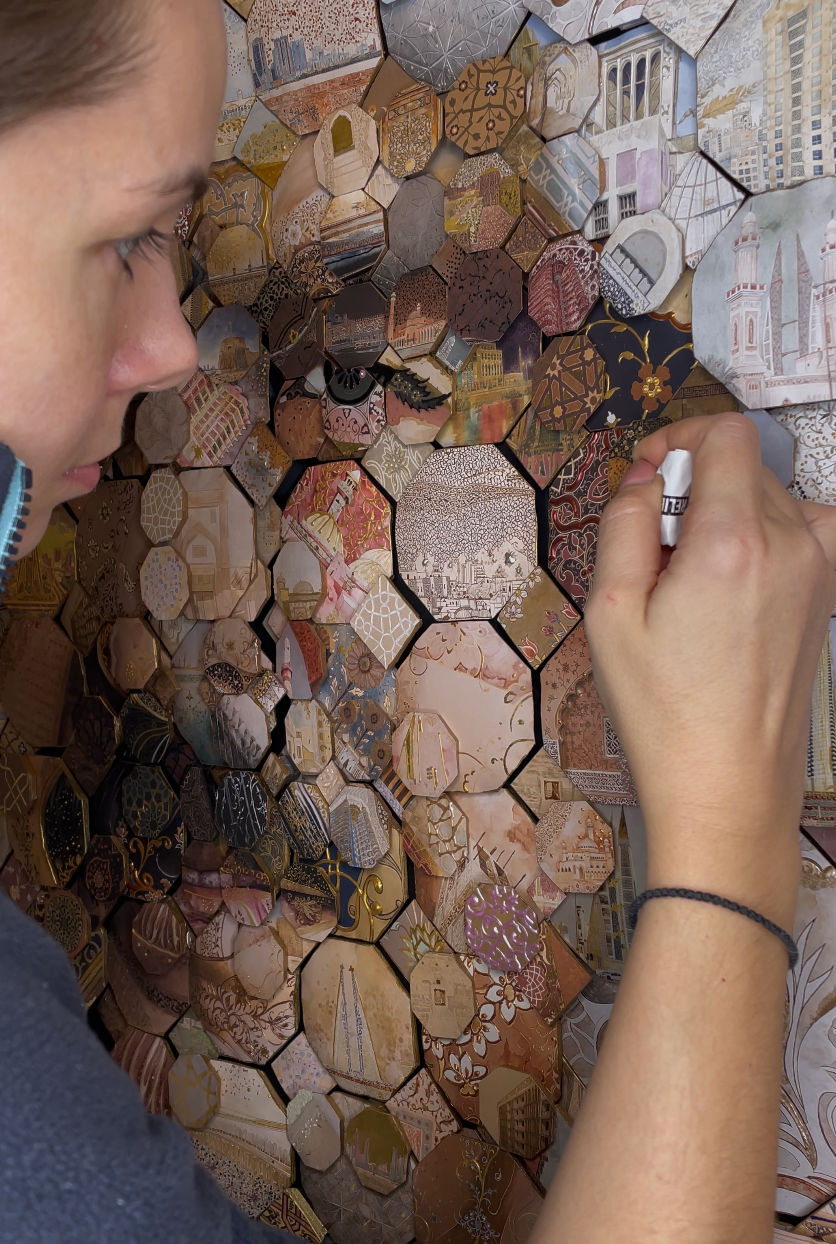
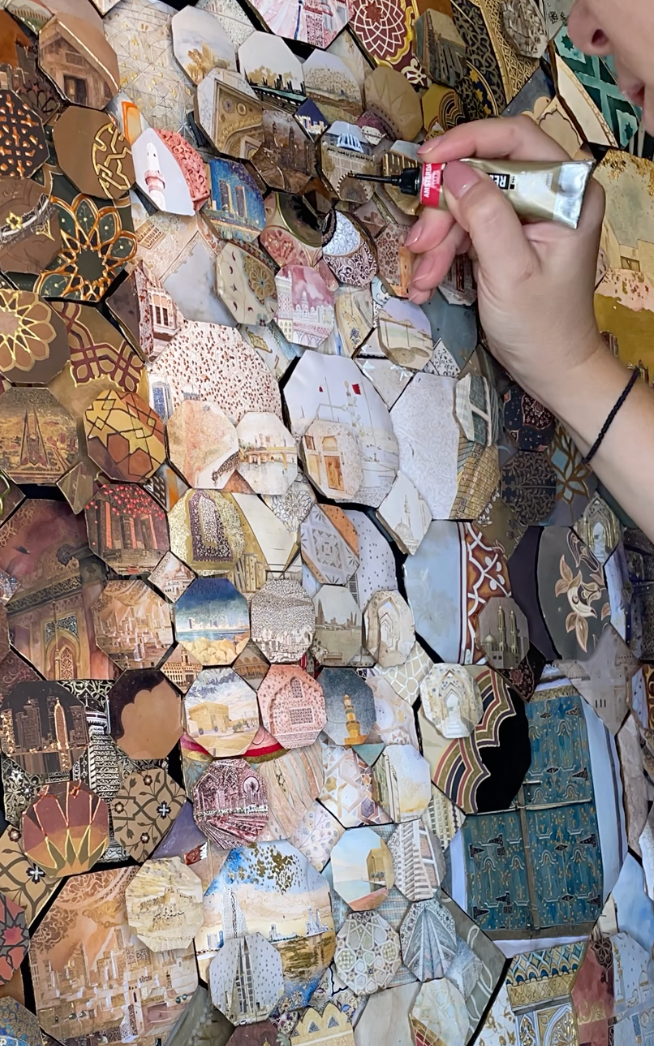
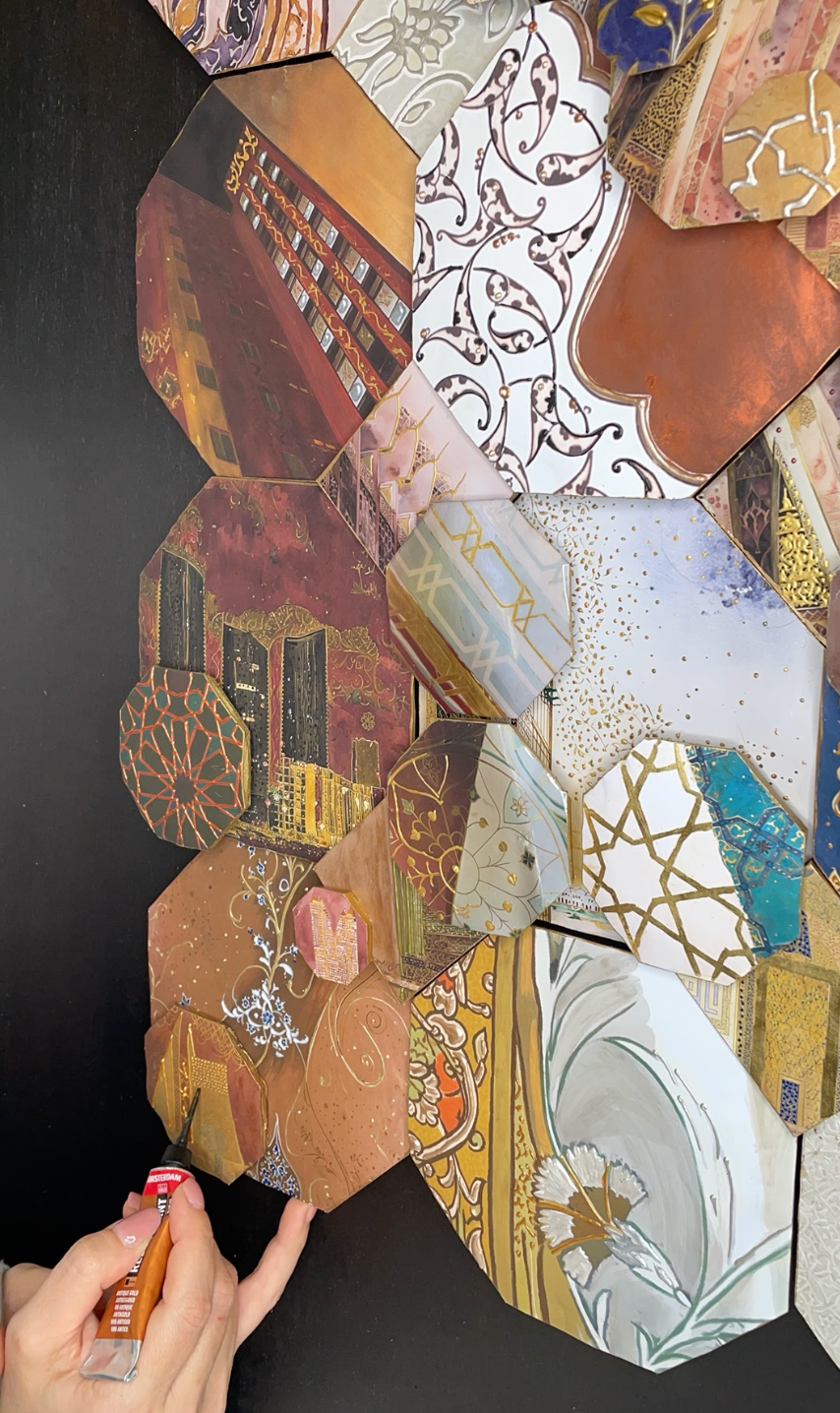
The printed mosaic sheet was then transformed into a collection of physical tiles, approximately 450 individually crafted elements per artwork. Each tile was cut, carved, bent slightly at the edges to achieve a ceramic-like presence, hand-coated with protective layers, and given gold varnish along its sides to enrich the sense of depth.
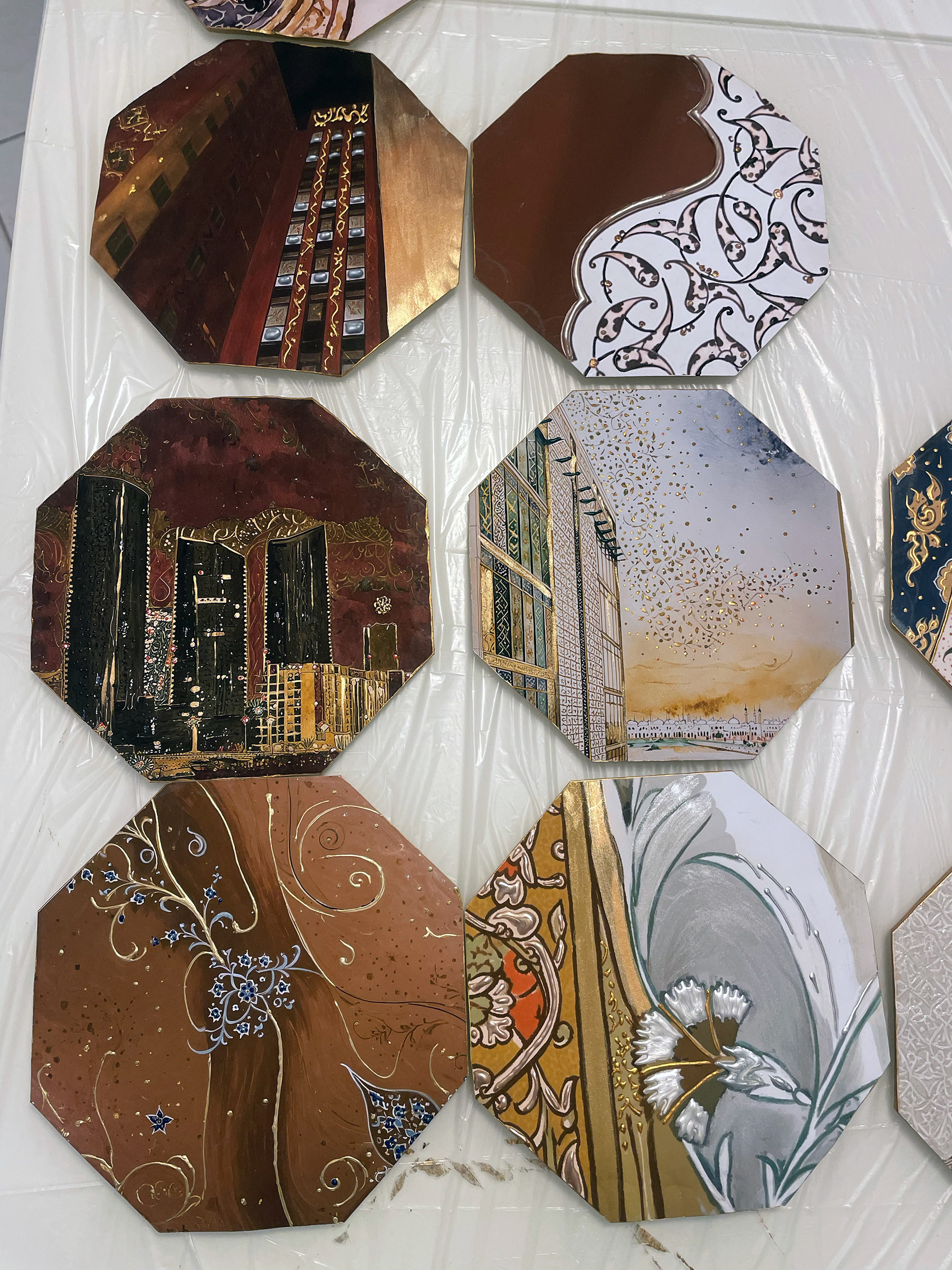
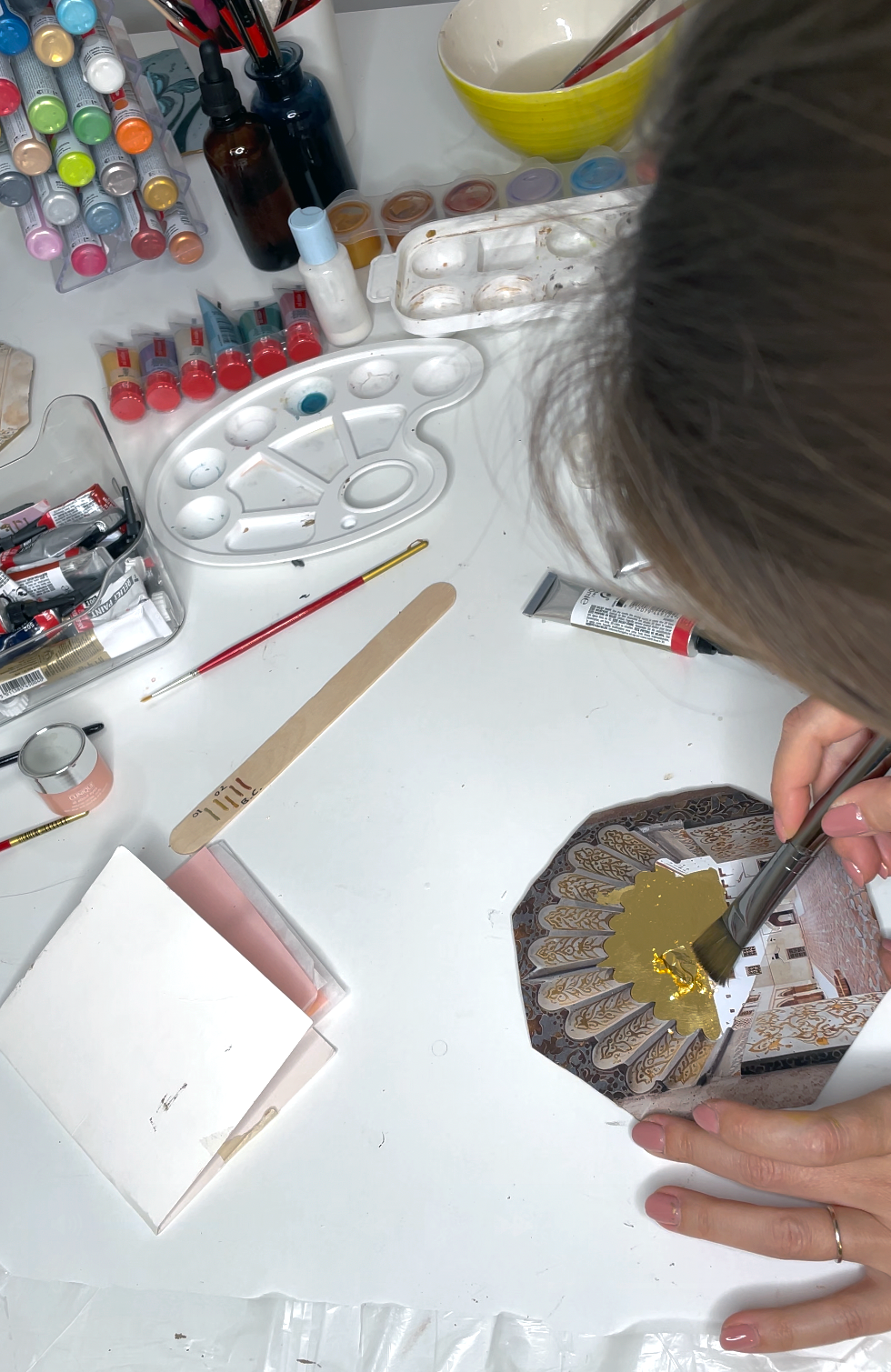
The physical finishing stage incorporates a rich suite of materials: 24K Giusto Manetti gold leaf (KTS 24, 24g, light-pressed) applied by hand; Royal Talens acrylics and metallic paints; relief paint for dimensional accents; and selective liquid glass coating. A crystal-clear resin layer is added to specific regions to intensify luminosity and optical depth. The resin amplifies color vibrancy, produces glass-like highlights, and invites the viewer to explore the artwork from multiple angles.
The Analog Transformation: Three Weeks of Handcraft
Three skilled artisans worked on each piece for over three weeks. Each tile was constructed through a layered process, building depth incrementally. Every individual element occupies a distinct physical and visual plane, contributing to the artwork’s three-dimensional presence.
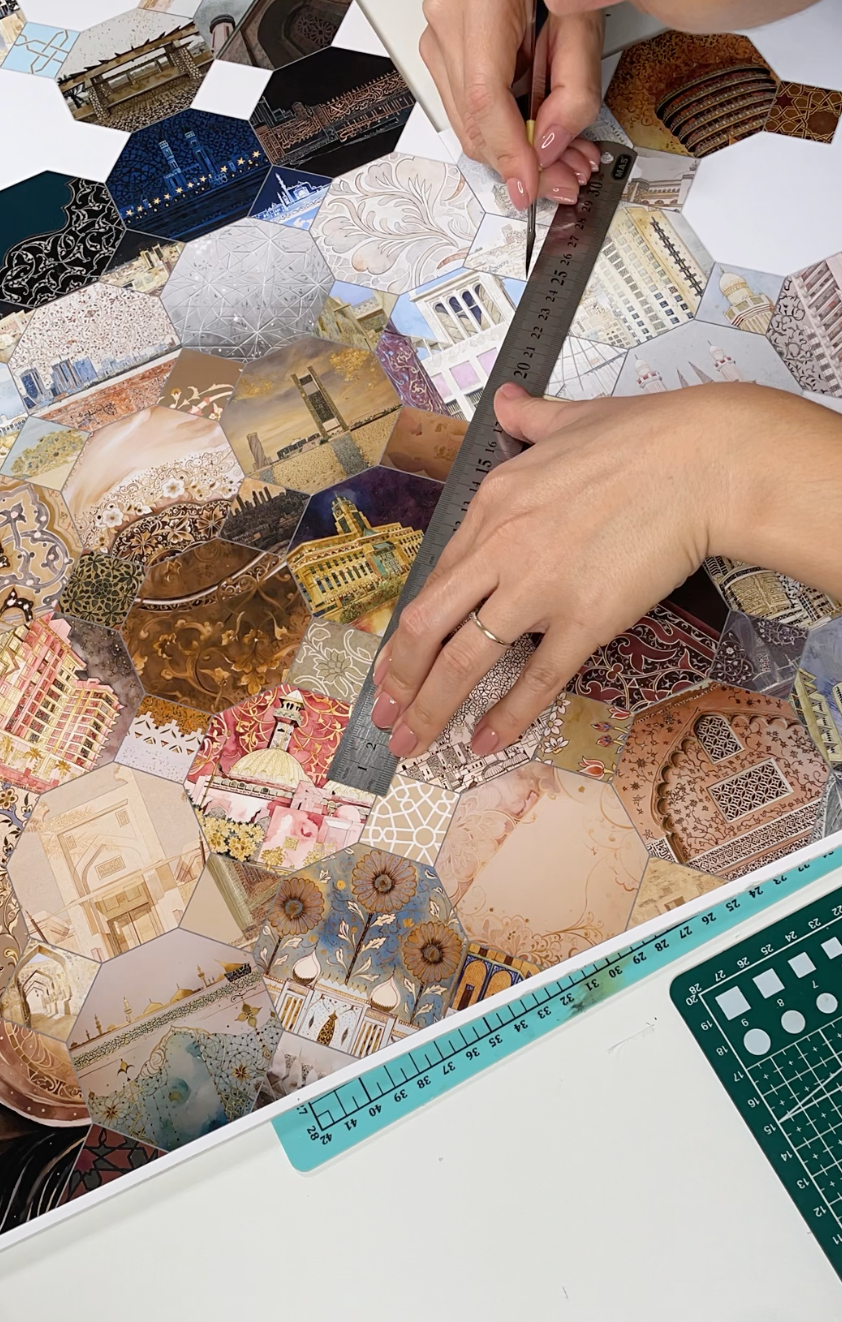
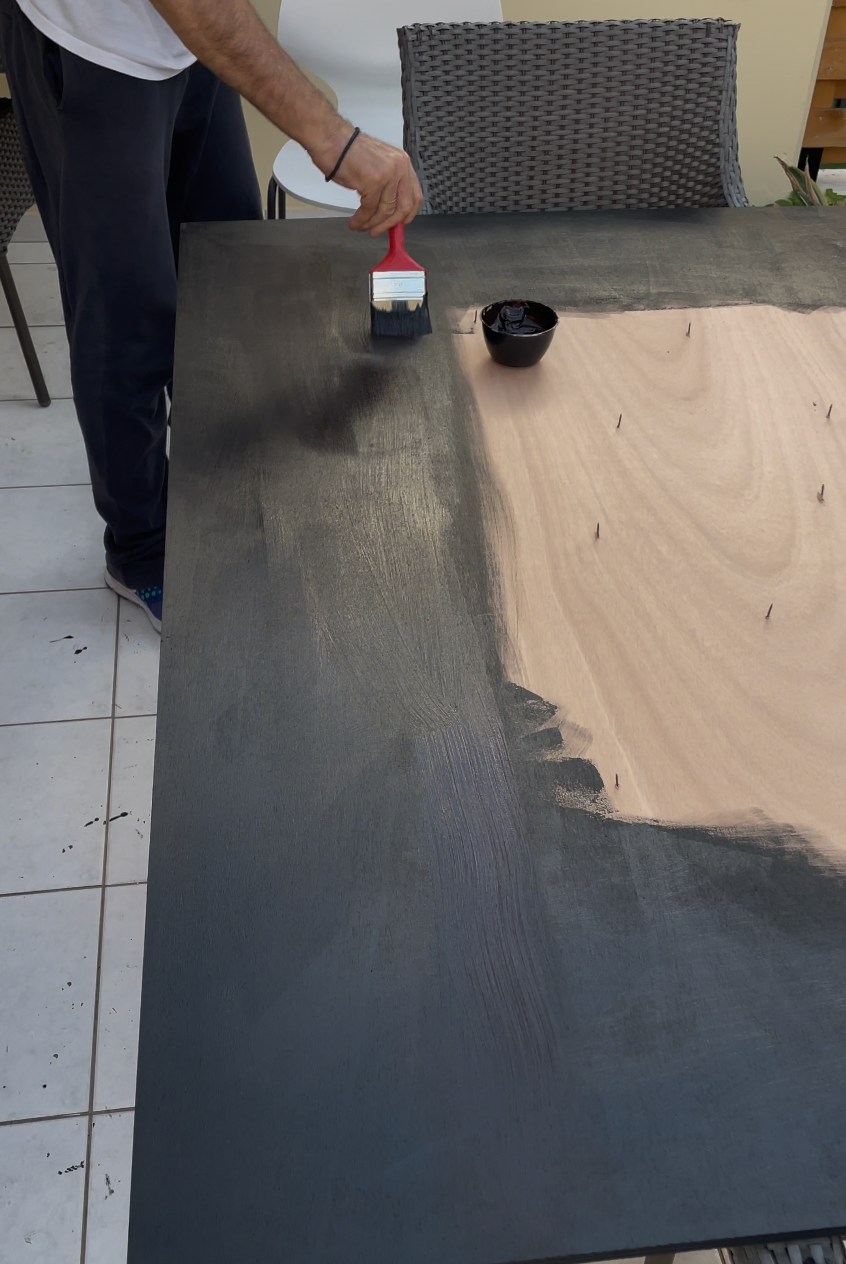
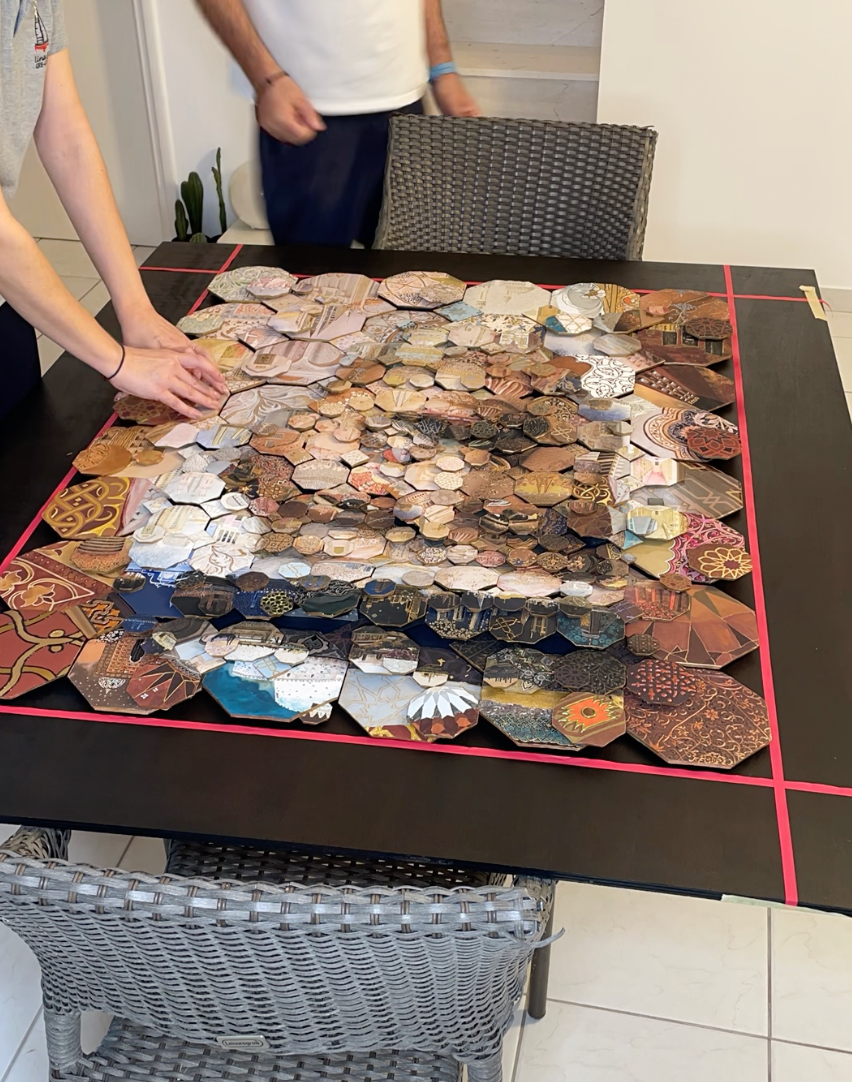
Then mounted onto a solid marine-grade plywood board of 120 × 150 cm, previously treated with a deep black acrylic foundation to complement the gold and chromatic palette. The assembly required unwavering precision, since every tile had to align simultaneously with the mosaic’s digital geometry and its manually sculpted form.
Once the tiles were placed, the artwork underwent its final refinement phase: selective hand-painted details, micro-adjustments, chromatic harmonizing, and symbolic reinforcement. At this stage, algorithmic structure and human craftsmanship dissolve into one seamless entity, the hallmark of Tsevis and Konstanta’s hybrid philosophy.

Finishing Touches
Once all structural, chromatic, and protective layers are complete, the artwork enters a final phase of meticulous manual refinement.
During this stage, subtle tonal adjustments, edge calibrations, and selective hand-painted details are applied to reinforce portrait accuracy and symbolic clarity. Gold-leaf highlights, resin surfaces, and varnished areas are carefully cleaned and optically balanced to ensure harmonious material interaction under lighting.
The piece is then evaluated from multiple viewing distances, from close inspection to long-range perception, to confirm visual coherence, depth integrity, and narrative legibility. This concluding process ensures a museum-grade finish and a level of ceremonial precision appropriate for a royal gift.

The Collaboration: Charis and Vira
This project represents a significant evolution in the long-standing creative partnership between my wife, Vira, and me. Together, we have developed a complementary approach that unites:
Charis: The Digital Architect
Computational system development
Algorithmic design and optimization
Computer vision integration
Digital composition and color architecture
AI model training and workflow design
Vira: The Analog Master
Paper sculpture and dimensional treatment
Hand-finishing techniques
Material selection and testing
Varnish and coating application
Quality control and final assessment
This split, often called 'software' meeting 'hardware,' creates a comprehensive creative system in which digital accuracy and hands-on intuition work together. The result is something greater than what either digital or traditional methods could do alone.

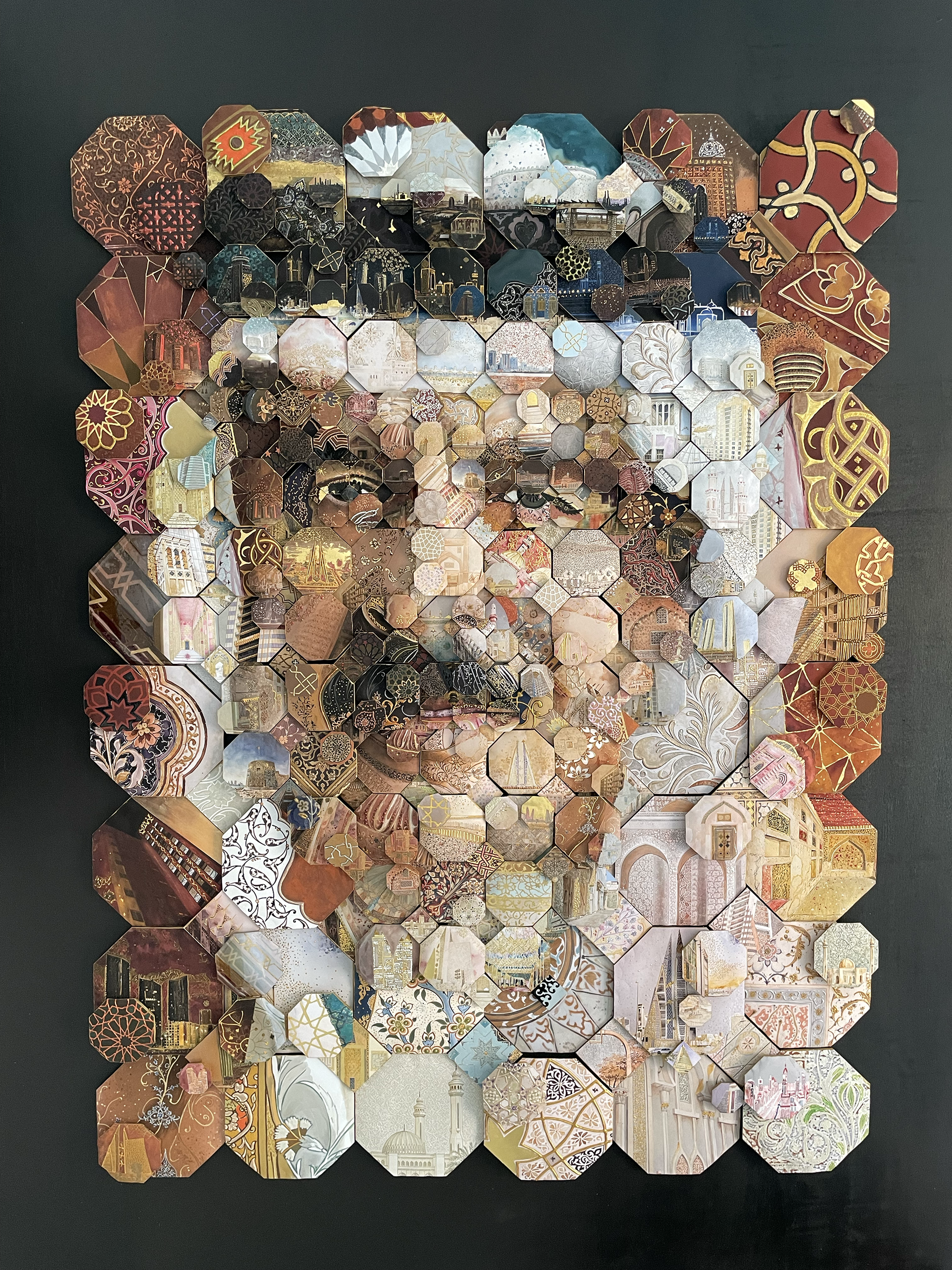
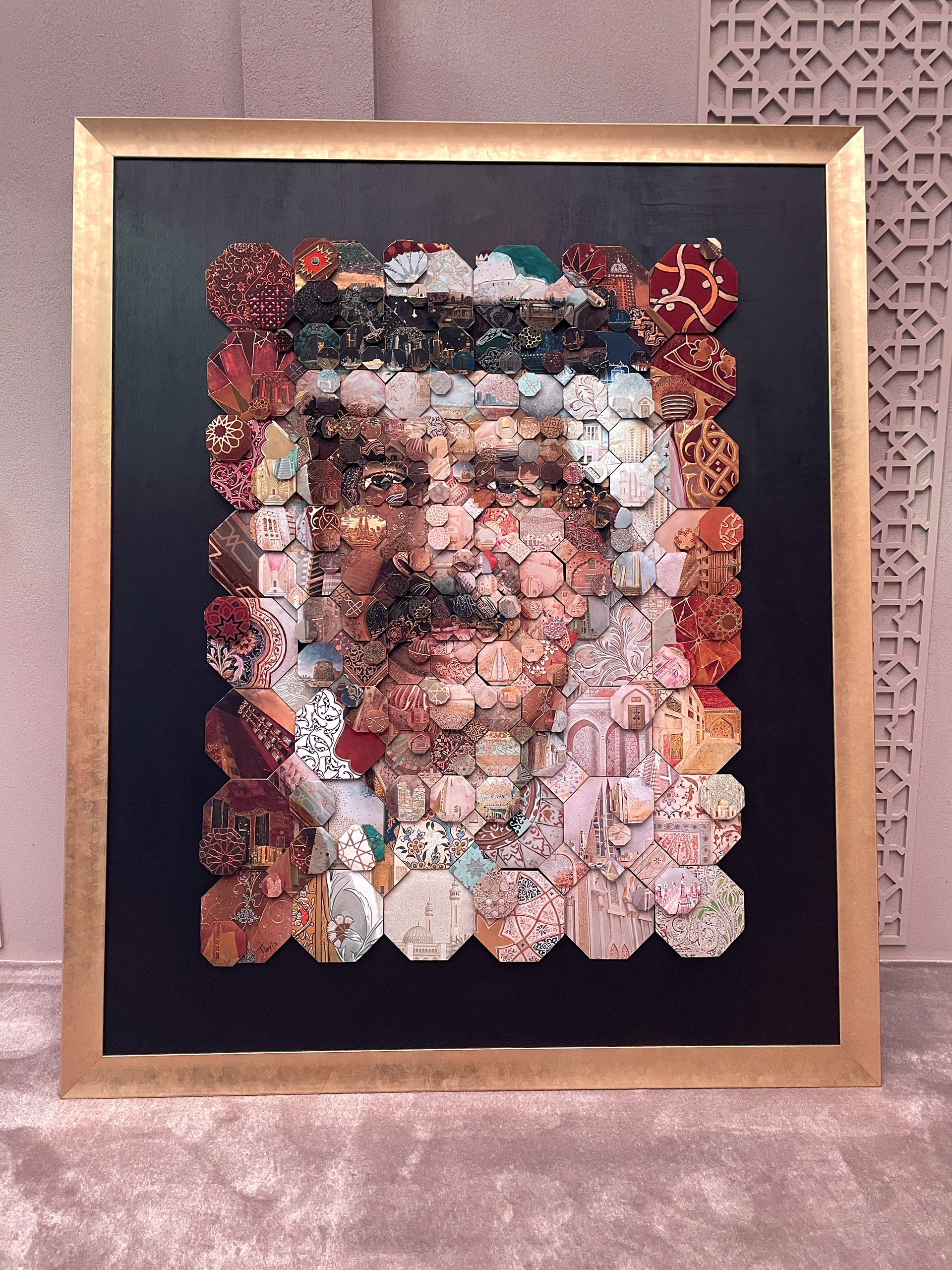
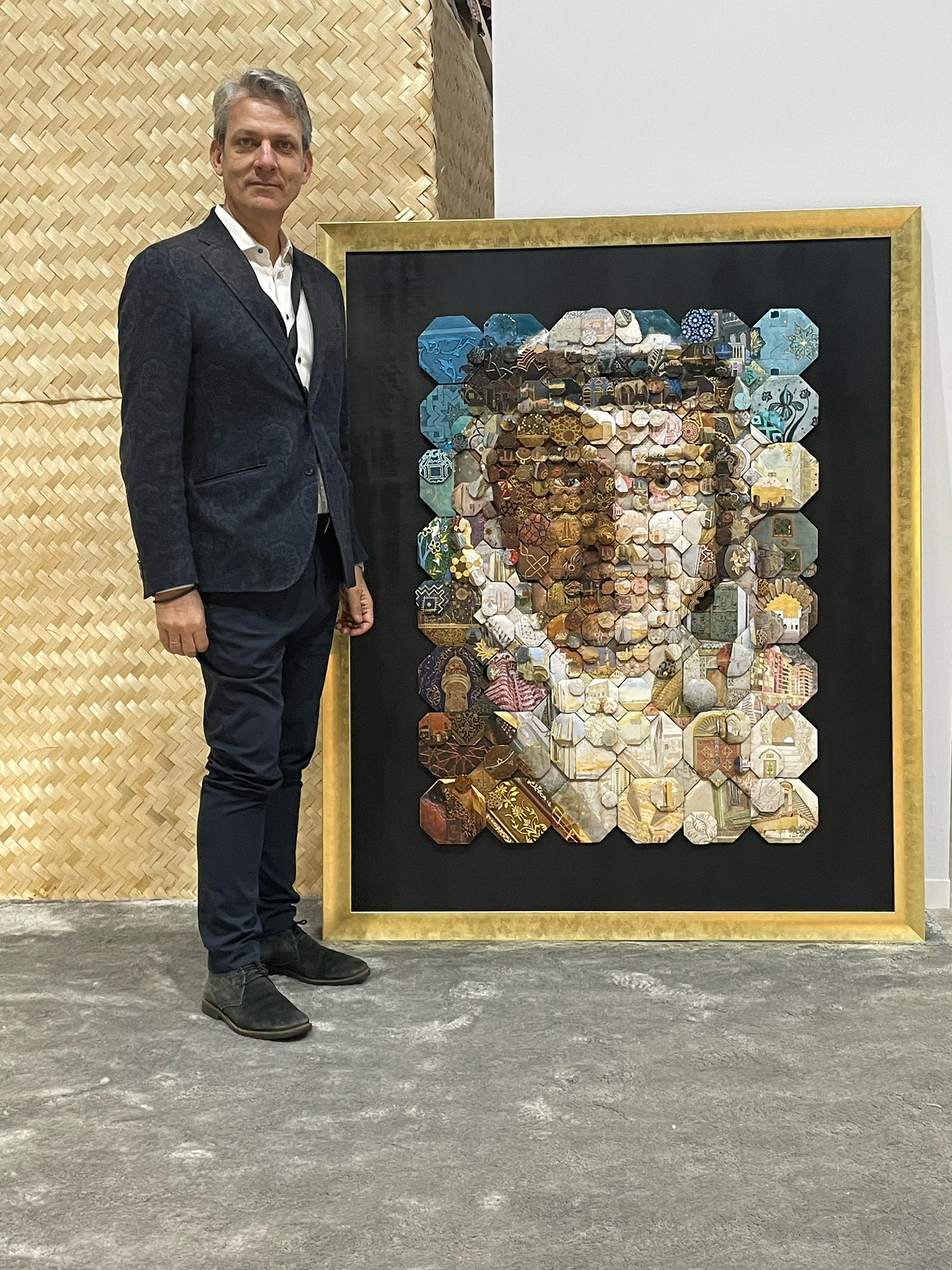
The finished analog portrait of His Majesty King Hamad bin Isa Al Khalifa
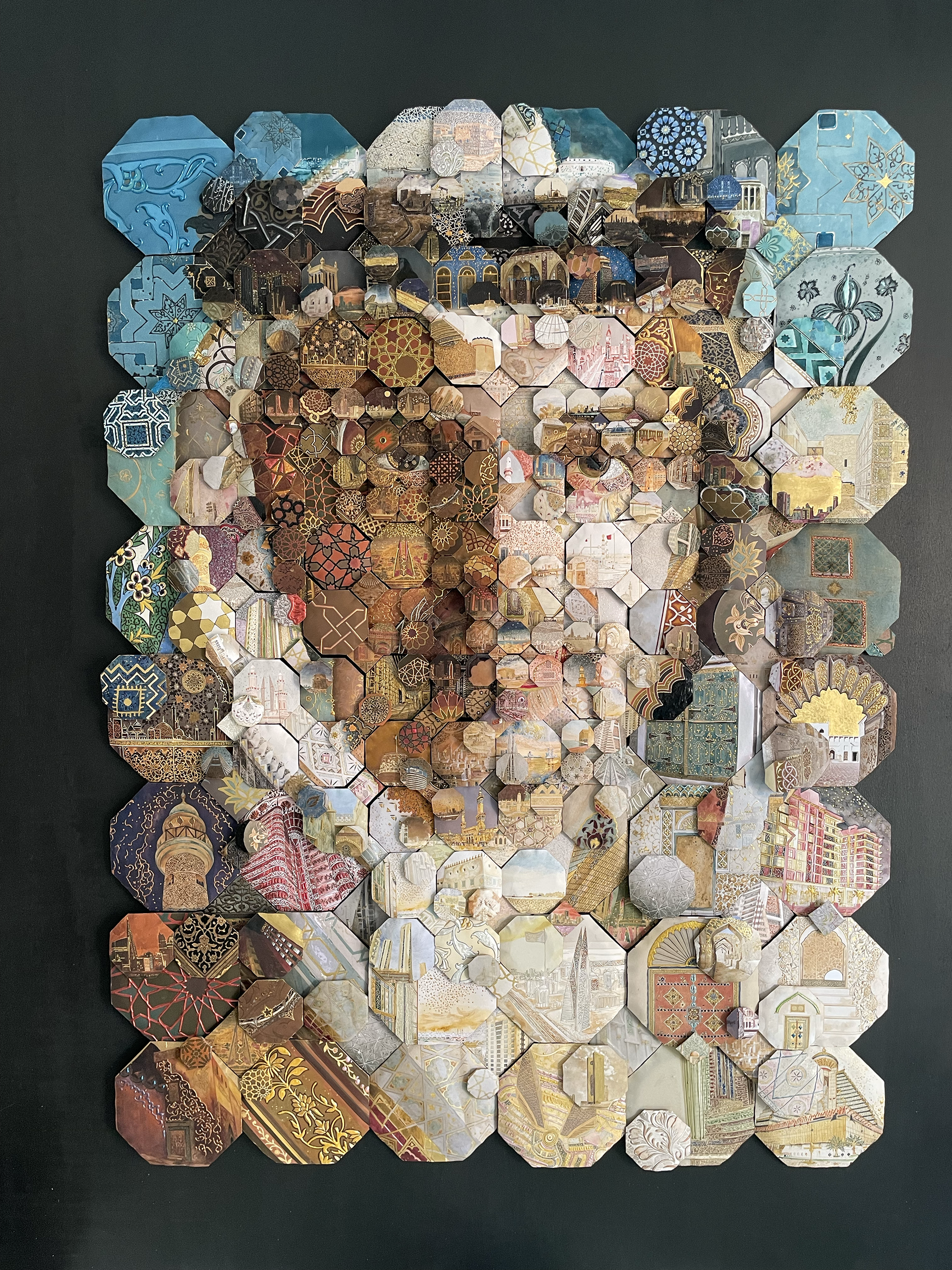
The finished analog portrait of His Royal Highness the Crown Prince
The Gift Presented Before the King
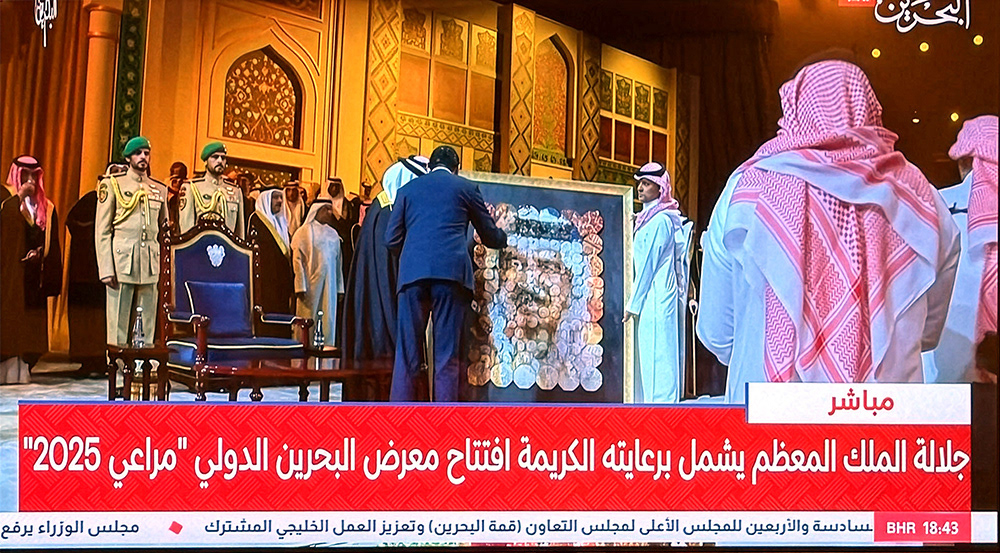
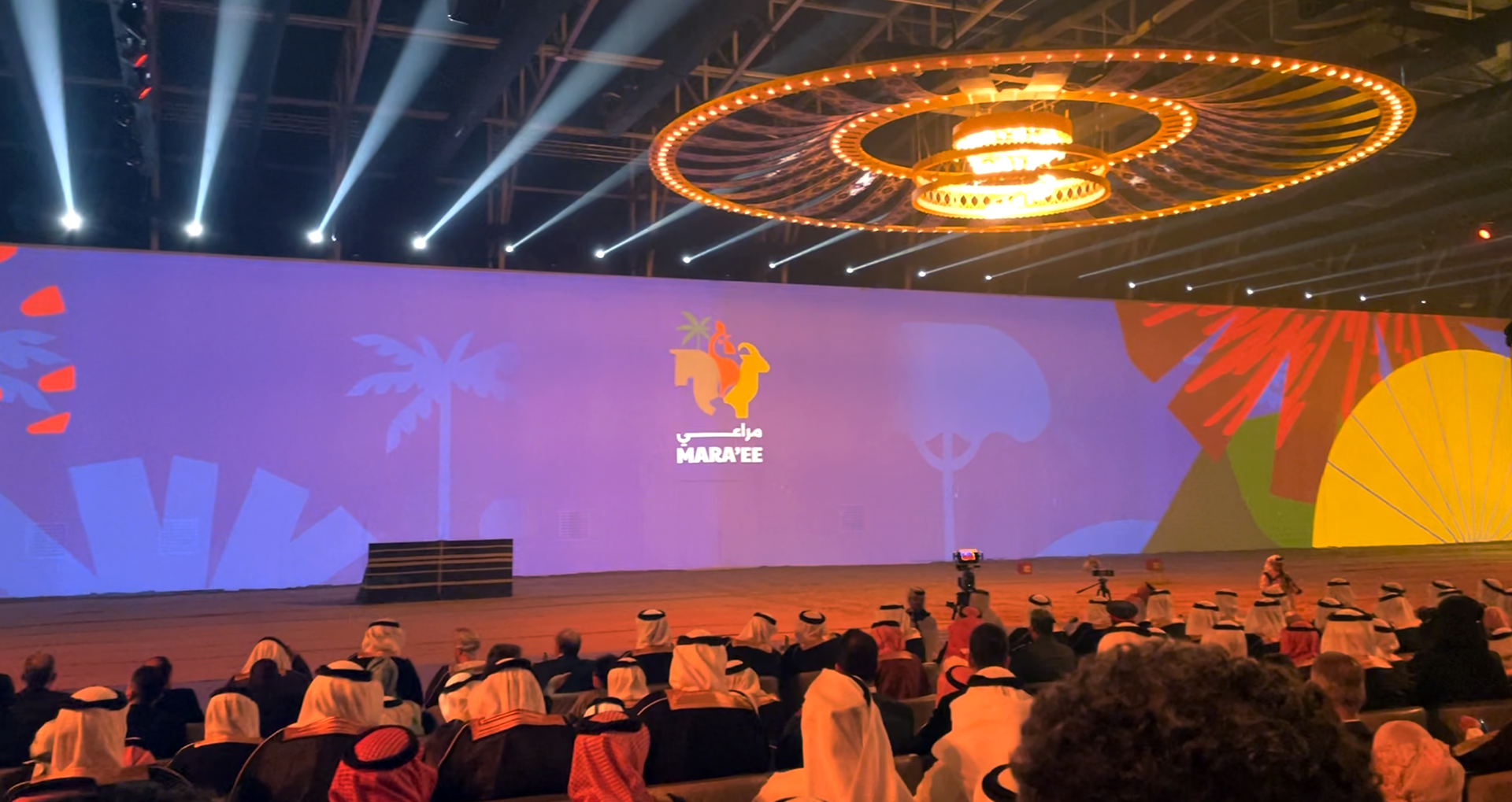
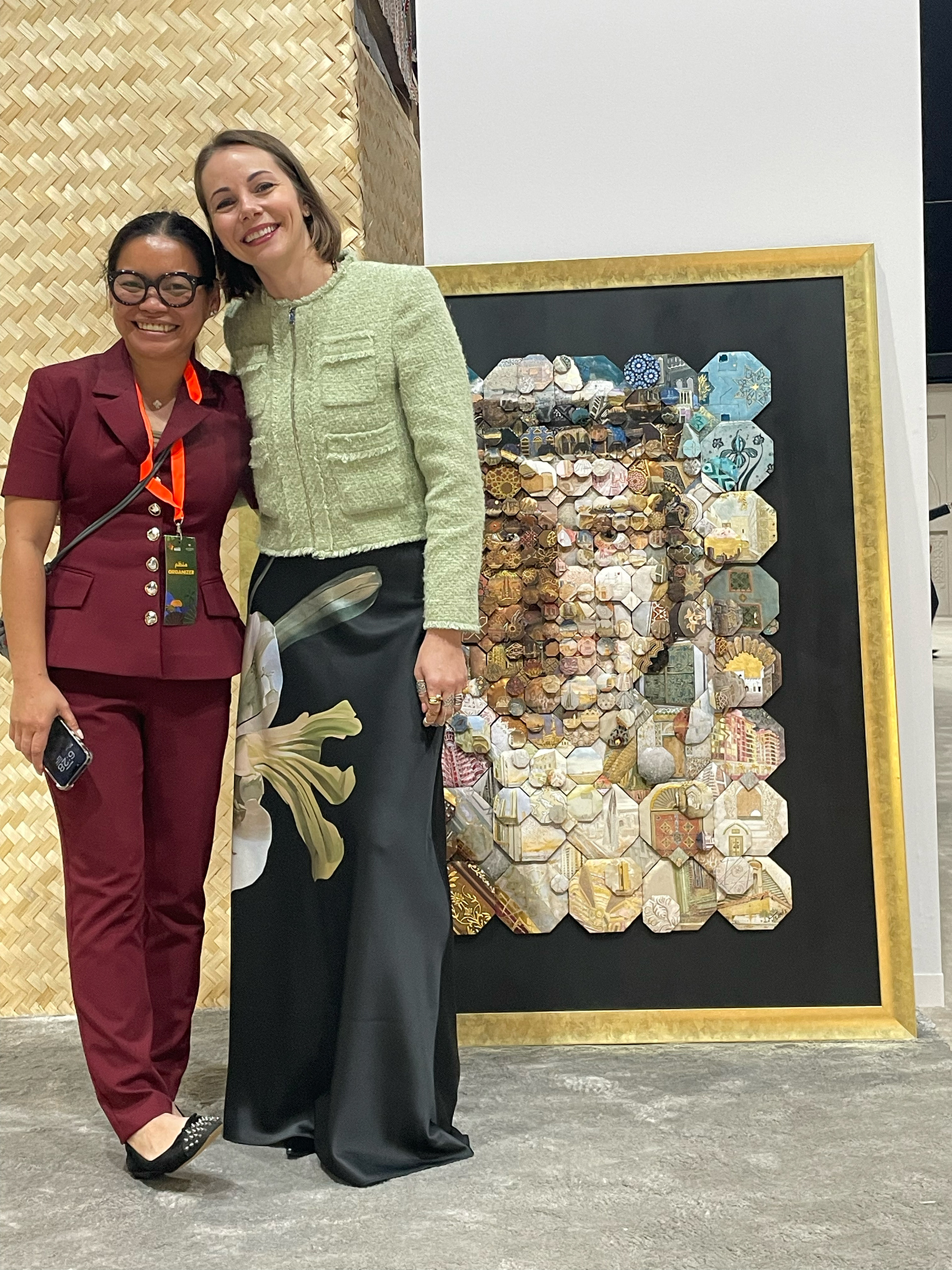
The works were unveiled in Bahrain during the Mara'ee Show's Art Exhibition in honor of His Majesty King Hamad Bin Isa Al Khalifa. In front of the royal family, foreign dignitaries, ministers, and a global audience, the artworks were presented as a personal gift.
Such occasions carry weight beyond the artwork itself. A royal presentation is witnessed and remembered. The portraits needed to withstand not only aesthetic scrutiny but symbolic examination. Every ornamental element, every geometric reference is legible to an audience deeply familiar with their own visual heritage. The months spent studying Bahraini traditions, training AI models on authentic Islamic patterns, and verifying every generated element against cultural sources, all of it, led to this moment.
The scale of the portraits, their hybrid construction, and the cultural literacy embedded within each of the 450 tiles elevate the work beyond decorative portraiture. His image is reconstructed through the visual language of his own kingdom, assembled from fragments that individually honor Bahraini heritage and collectively extend what mosaic art can become.
Epilogue: The Value of Time and Understanding
When making art for someone who already has every material thing, the real gift is something money can’t buy. It’s the time spent learning, and the understanding that turns into the final piece.
Long before any algorithms were used or tiles were cut, the process started with research. I studied Bahraini architecture, Al-Sadu weaving, Girih patterns, the unique Gulf light, and the symbols of royal heraldry. These elements weren’t just decoration. They are part of a living culture. The king doesn’t need another portrait; he already has many. Instead, I created a portrait using his own cultural language, made from hundreds of small artworks, each with meaning beyond how it looks. Every pattern and color choice is tied to his heritage. In this way, the research itself becomes part of the gift.
This same approach shaped how the portraits were made. Spending three weeks on each one wasn’t just about following a schedule. It was about giving focused, human attention that the recipient could sense. I spent hours hand-curving 450 tile edges, applying gold varnish to every border, and adjusting surfaces to achieve the best light. You can see this effort in the finished piece. While algorithms can arrange tiles in seconds, they can’t match the dedication of handcraft. In royal and diplomatic settings, where symbols matter, the time and skill put into the work show respect in a way that technology alone cannot.
After finishing the portraits, what remains is a method that can be applied beyond this project. By combining cultural research, perceptual computing, artist-guided AI, top-quality materials, and hands-on finishing, I’ve created an approach that can work in other cultures, institutions, and collections where art needs both thought and physical craft. The Bahrain portraits are done, but the process behind them lives on.
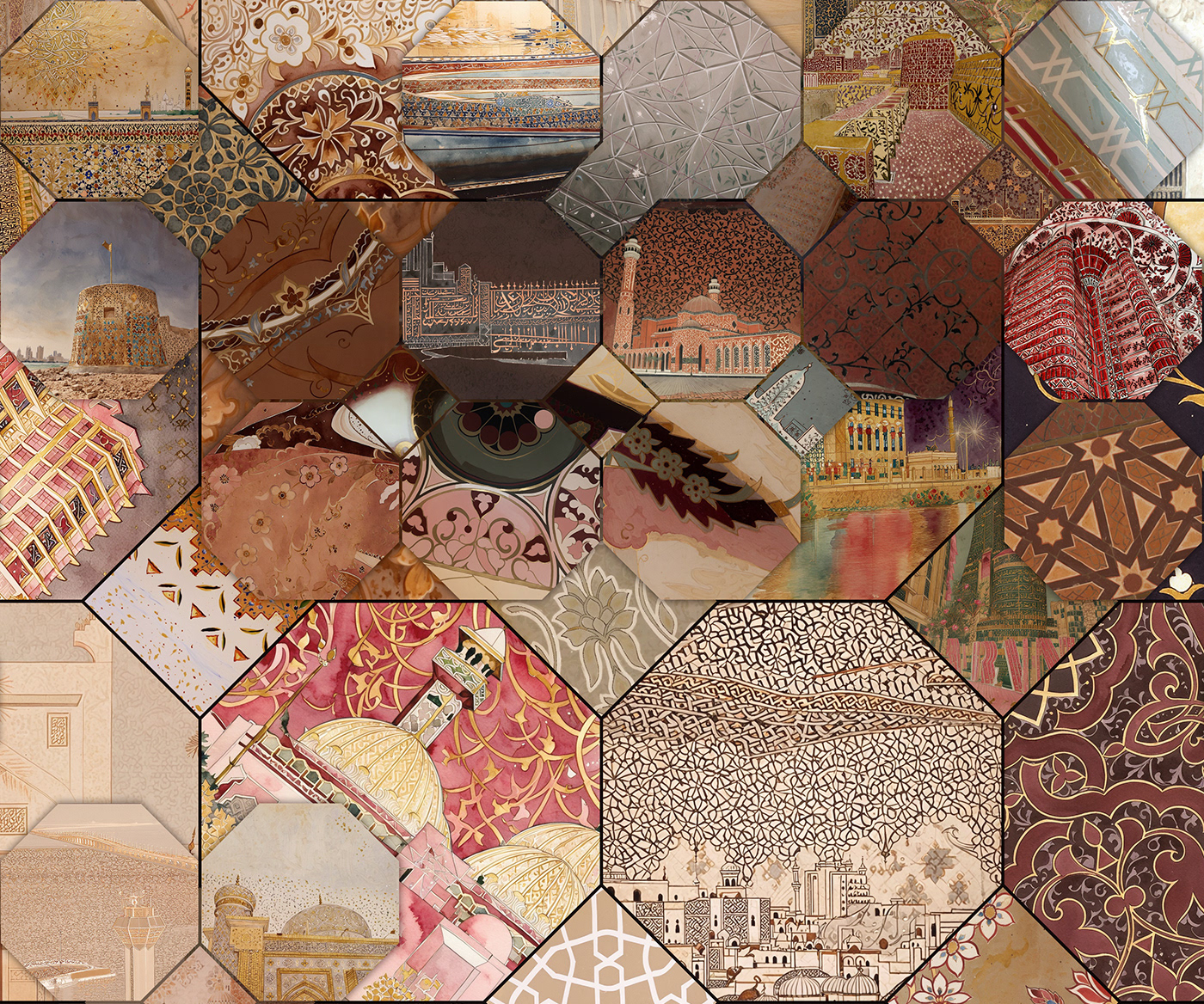
Some details:

The Human Touch in Every Curve.
No algorithm can replicate the subtlety of a human expression. Our artisans spent hours refining the lip area, ensuring the final piece carries the warmth and presence only true craftsmanship can deliver.
No algorithm can replicate the subtlety of a human expression. Our artisans spent hours refining the lip area, ensuring the final piece carries the warmth and presence only true craftsmanship can deliver.
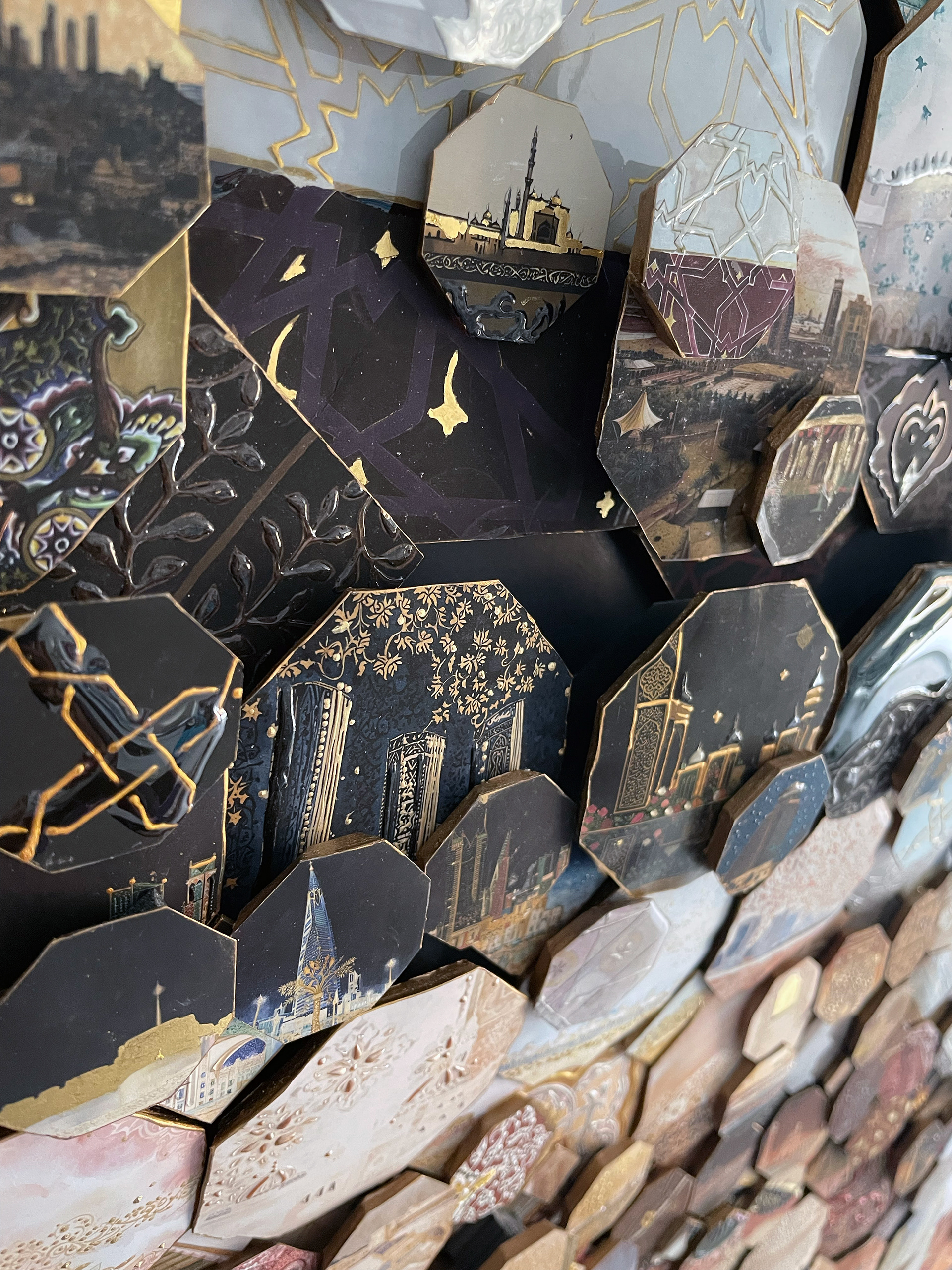
The luminous glow along this tile’s edge comes from days of meticulous hand-application of gold varnish—a finishing touch that elevates the work, echoing Byzantine and Islamic traditions of sacred illumination.
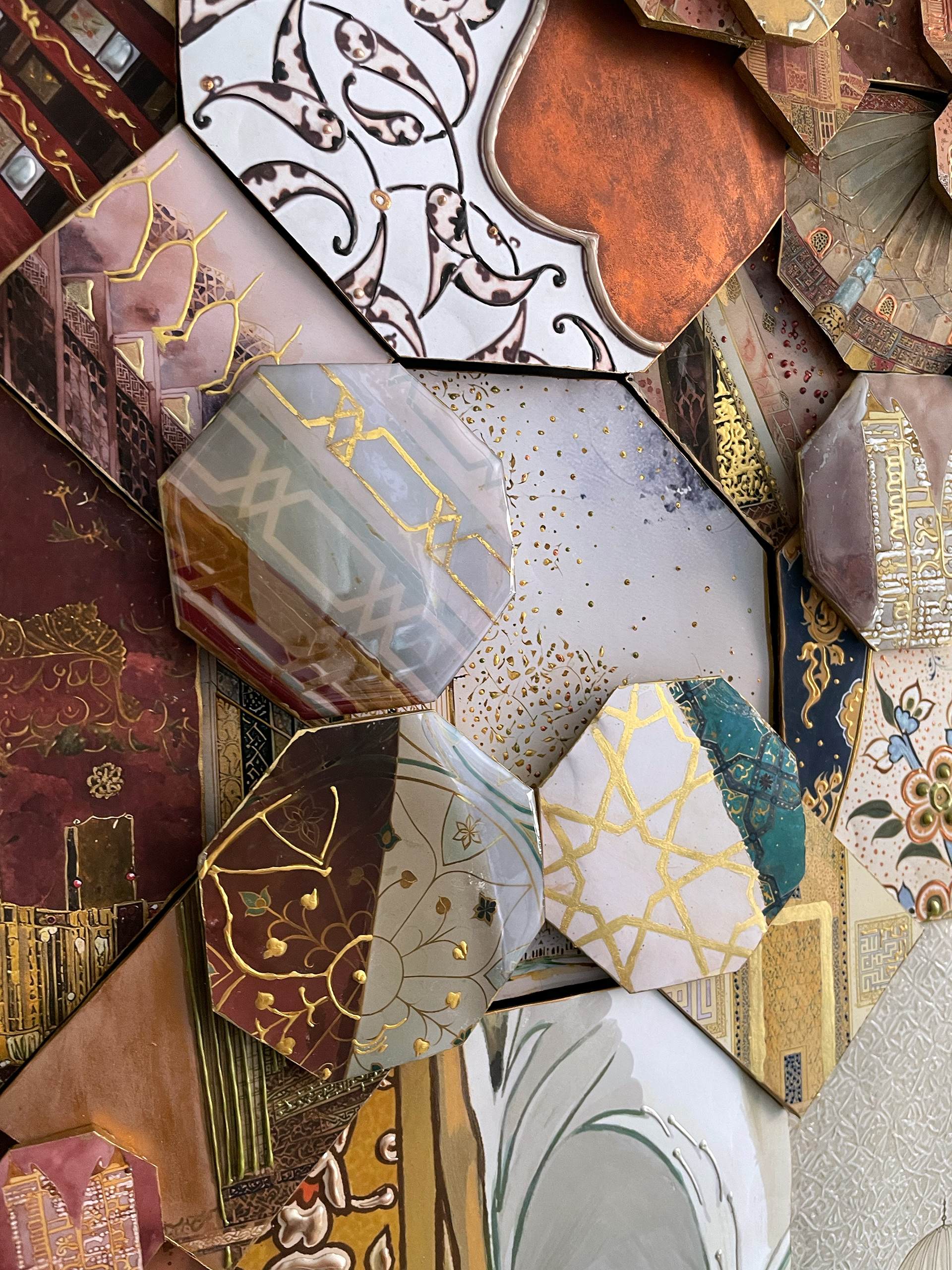
This tile bridges past and future, juxtaposing an abstracted modern skyline with a textured, hand-painted background. It reflects Bahrain’s evolution while grounding it in its rich artistic traditions.
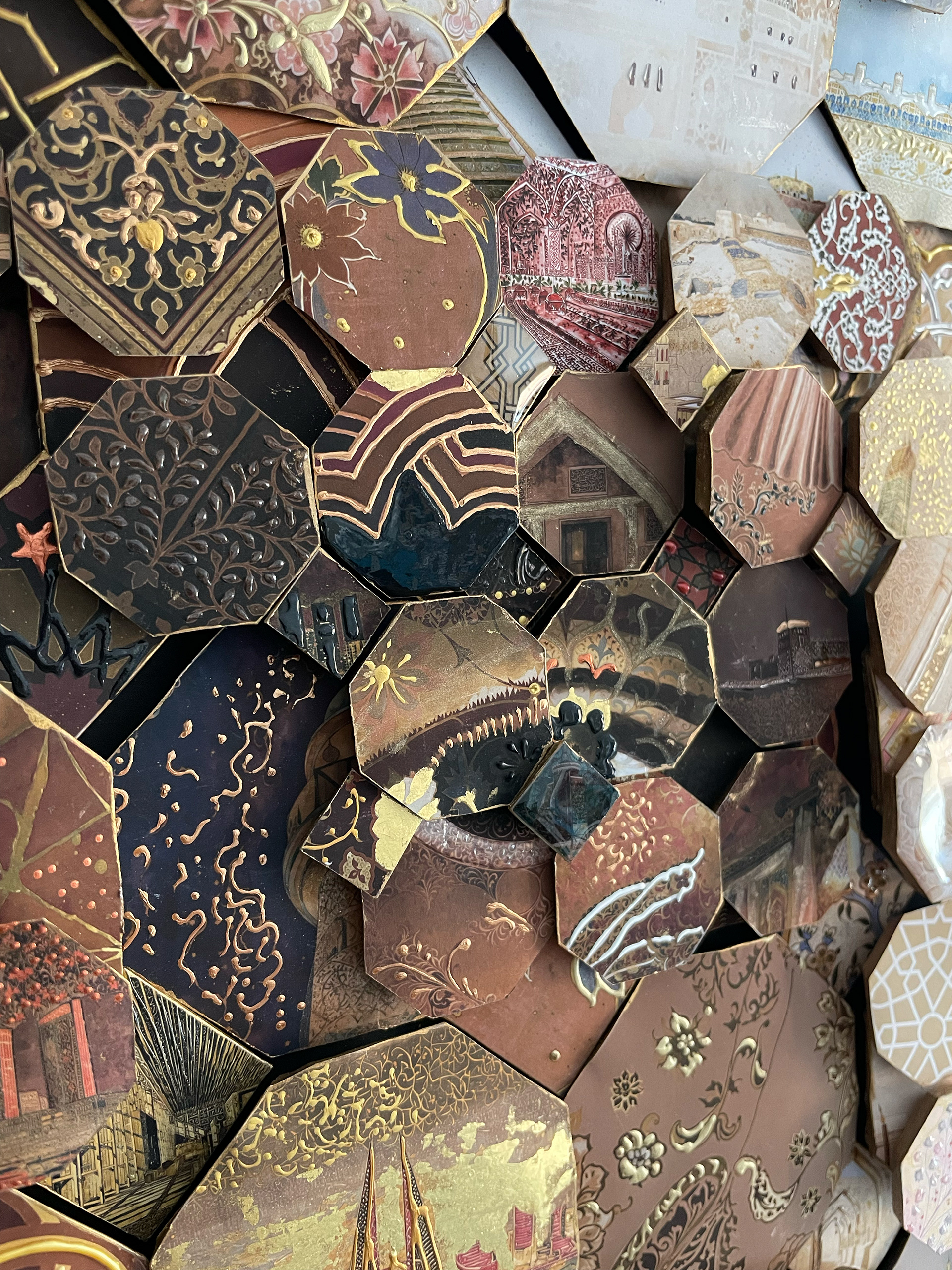
A nod to Bahrain’s pearl-diving legacy, this tile subtly incorporates maritime motifs and sea-toned palettes. It’s a tribute to the nation’s economic and cultural roots, embedded within the royal portrait’s visual lexicon.
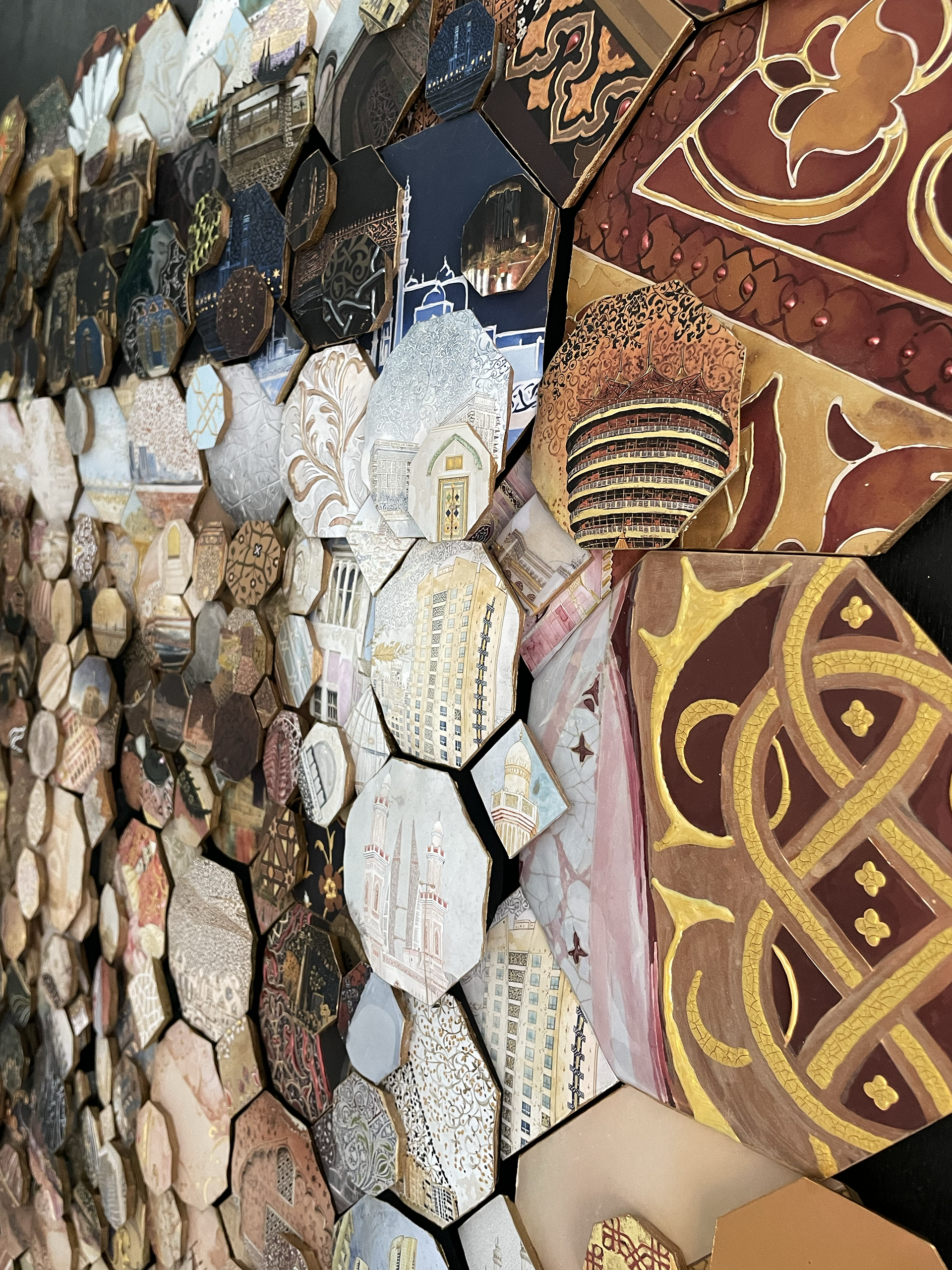
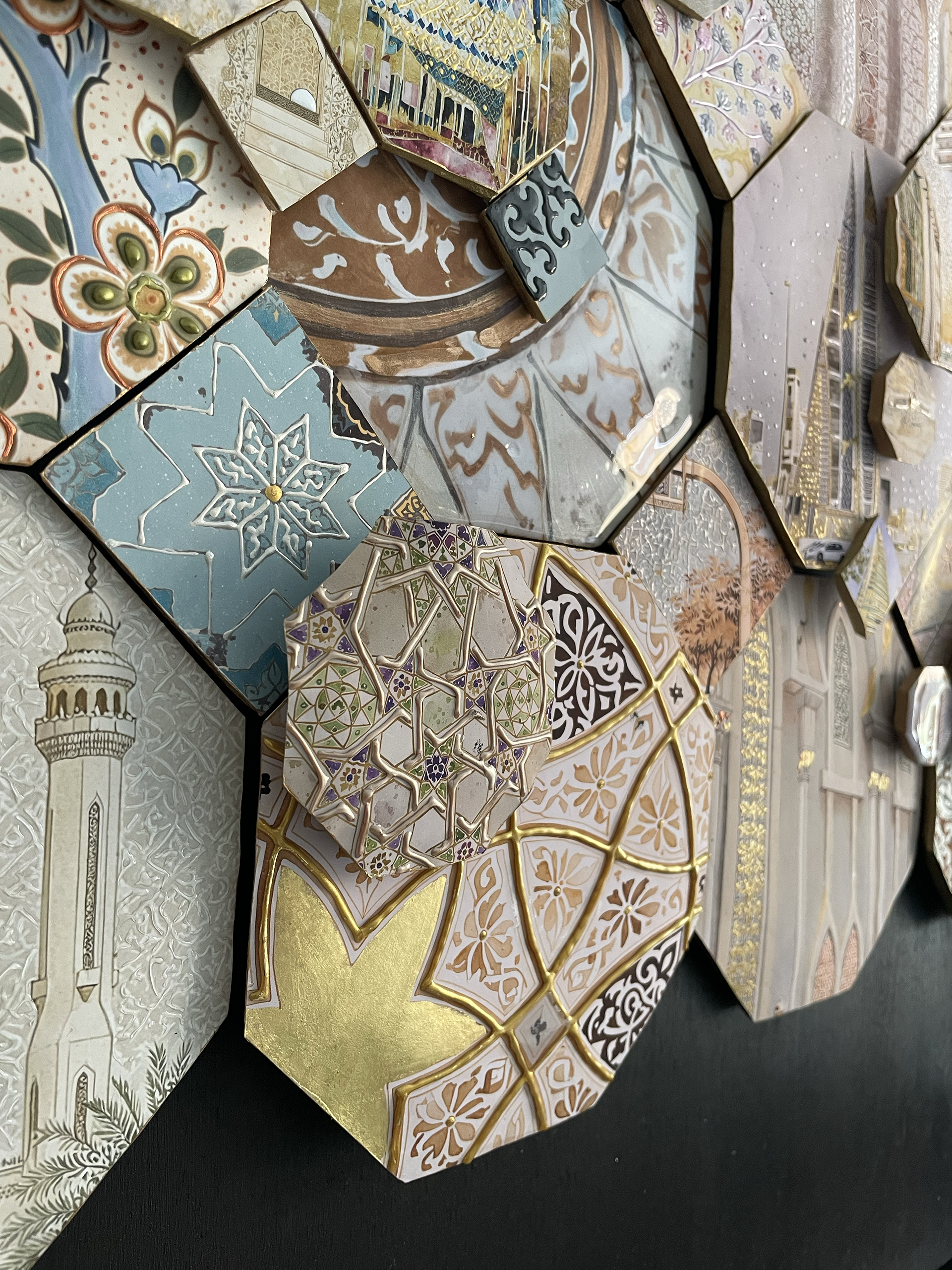
Where mathematical precision meets organic flow, this tile merges Girih grids with flowing floral lines—a signature of the project’s hybrid aesthetic, balancing science and nature in perfect harmony.
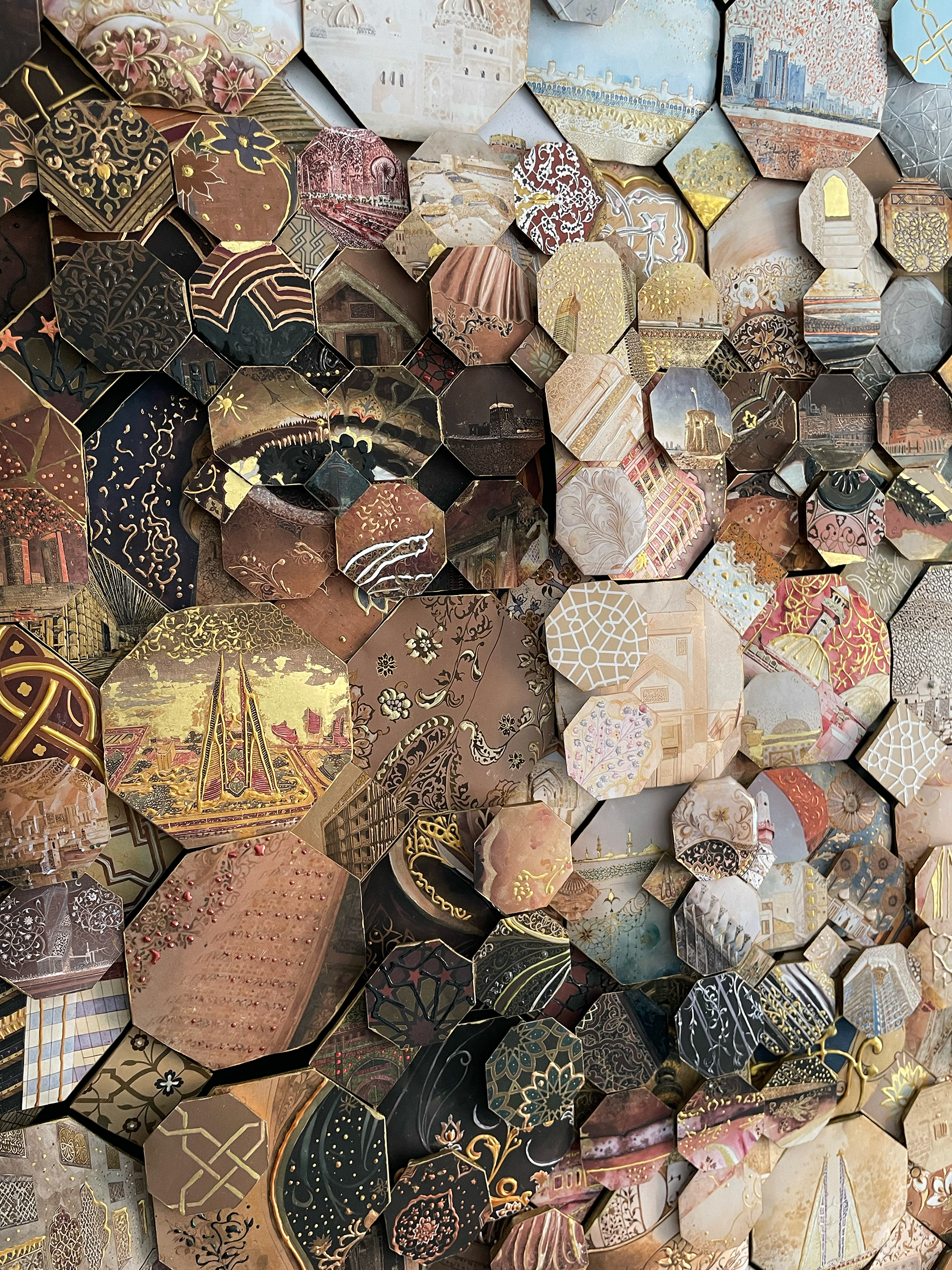
The Gaze That Holds a Nation’s Story.
Every hexagonal tile in this eye was algorithmically chosen and hand-finished to capture not just likeness, but the quiet wisdom and enduring vision of His Majesty.
Every hexagonal tile in this eye was algorithmically chosen and hand-finished to capture not just likeness, but the quiet wisdom and enduring vision of His Majesty.
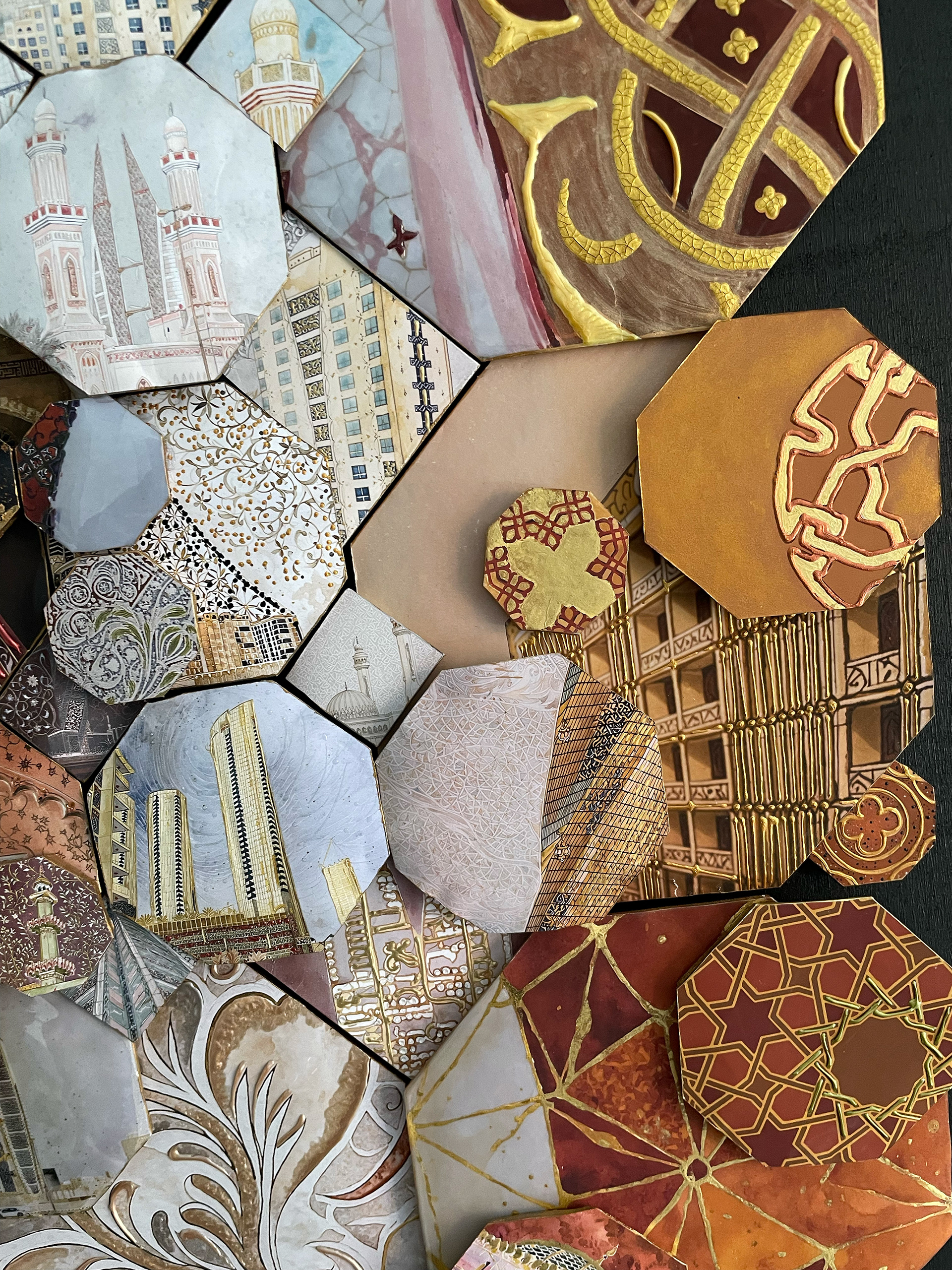
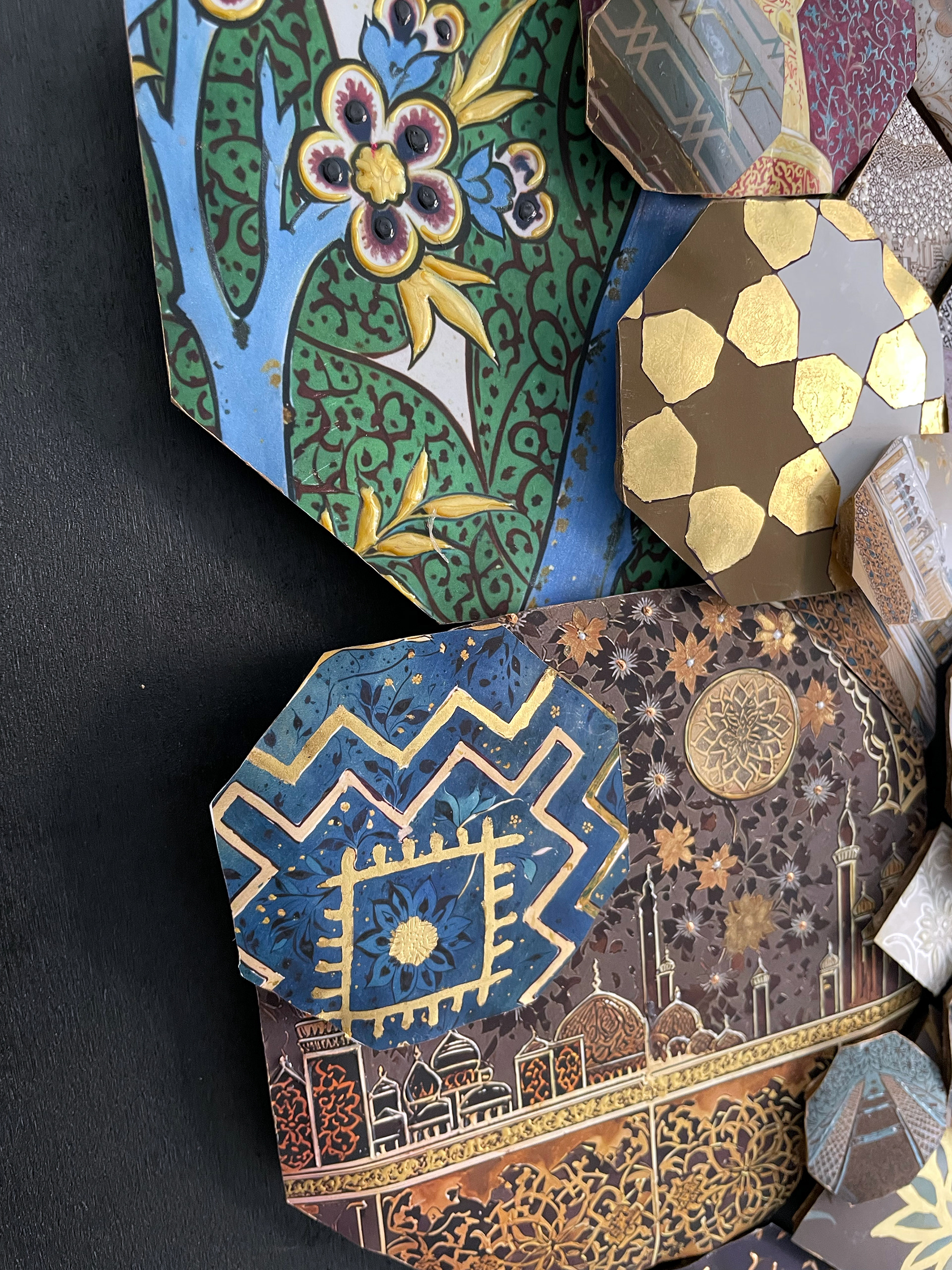
Drawing from the ornamental screens of Bahraini mosques, this tile’s intricate lattice work demonstrates how sacred architectural language is translated into a secular, commemorative form for the royal commission.
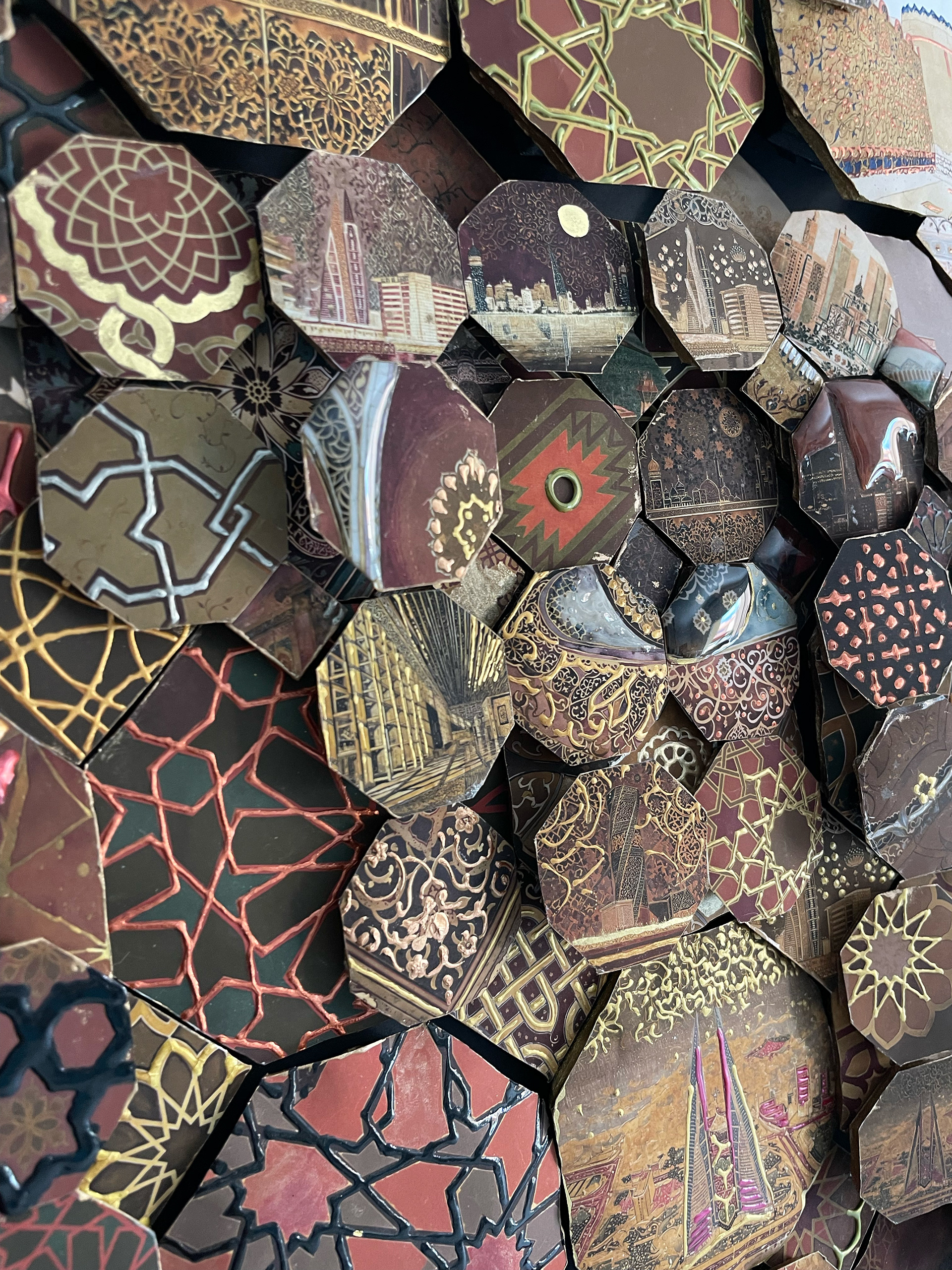
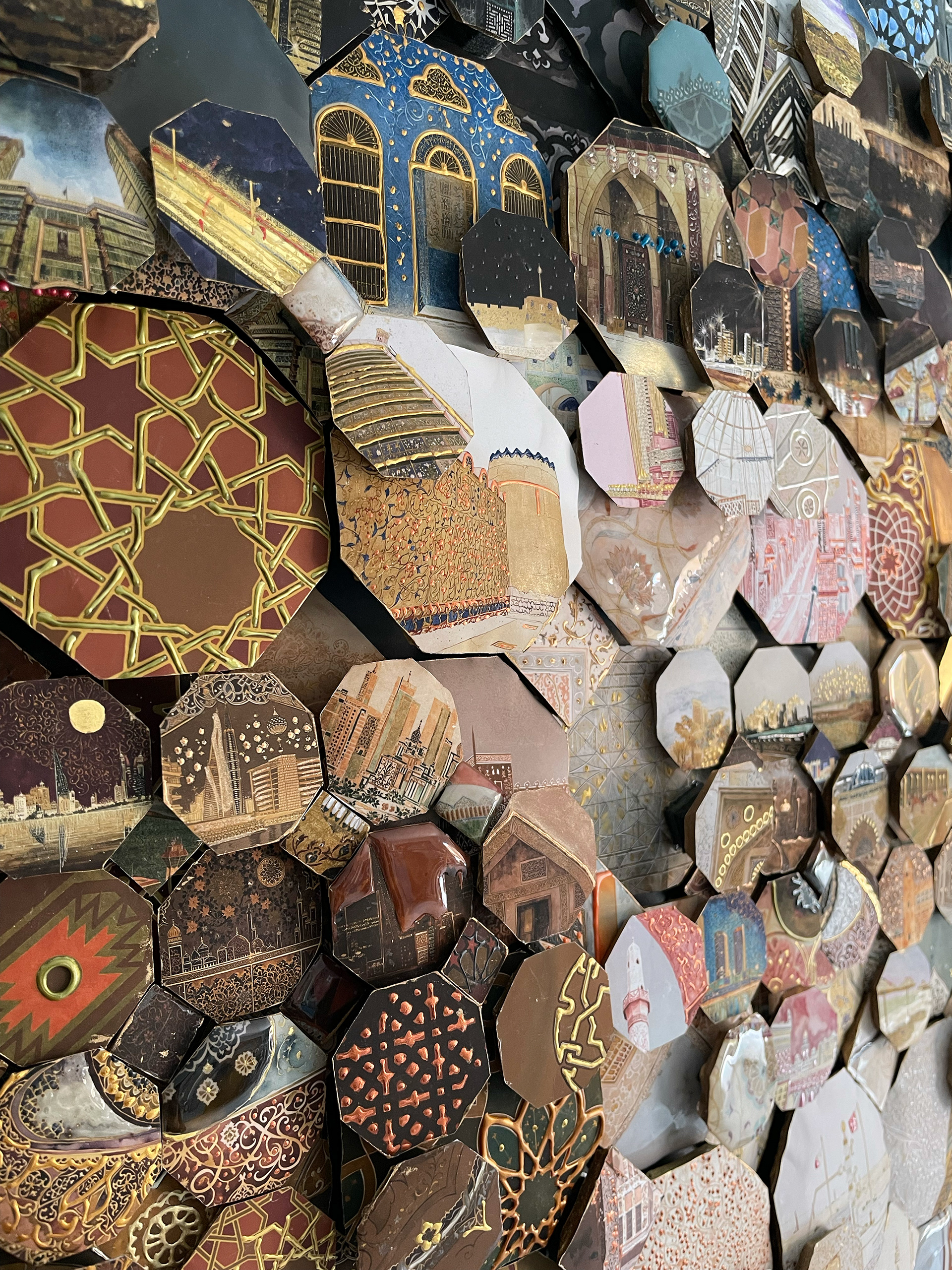
This detail reveals the delicate balance between digital construction and analog refinement—the eyes rendered with care, convey a sense of calm resolve, a silent promise to the nation.
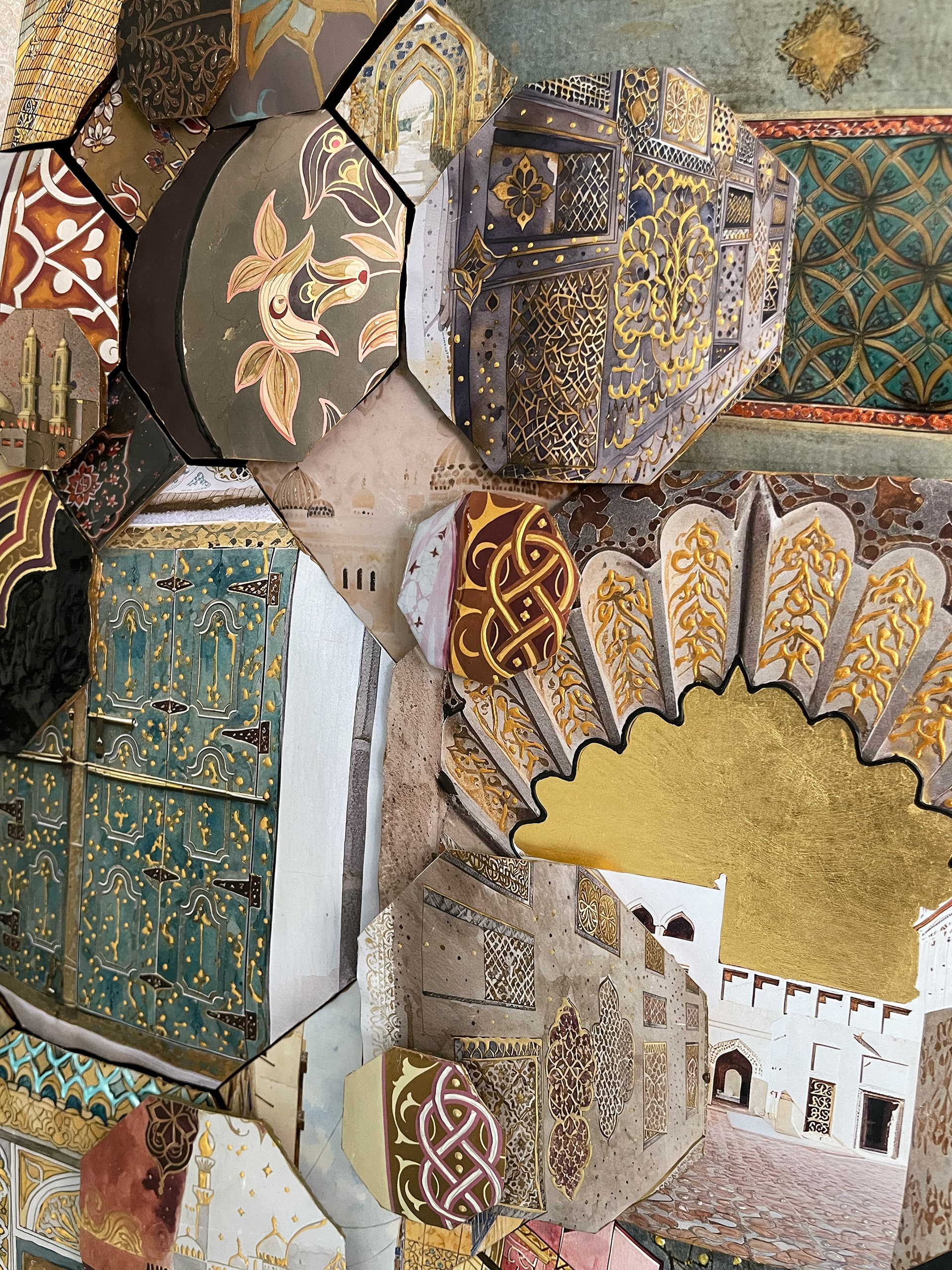
A macro view reveals the intricate craftsmanship: each tile is hand-finished with delicate gold leaf and precise linework, transforming digital designs into tangible artifacts that honor Bahraini decorative traditions.
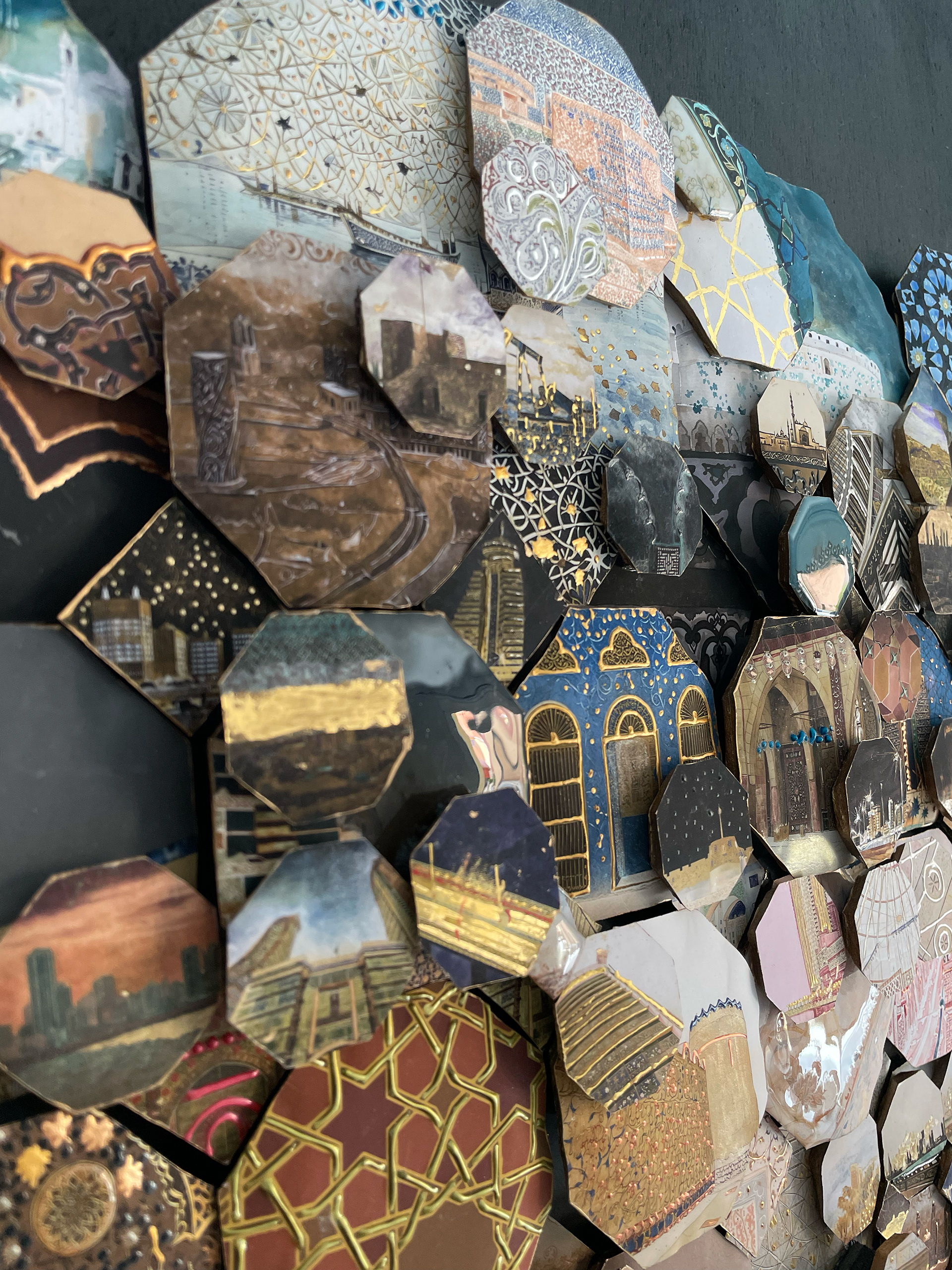
This tile captures a serene Bahraini skyline in soft watercolor tones, accented with hand-applied gold foil—a fusion of traditional painting technique and contemporary digital composition for the royal portrait.
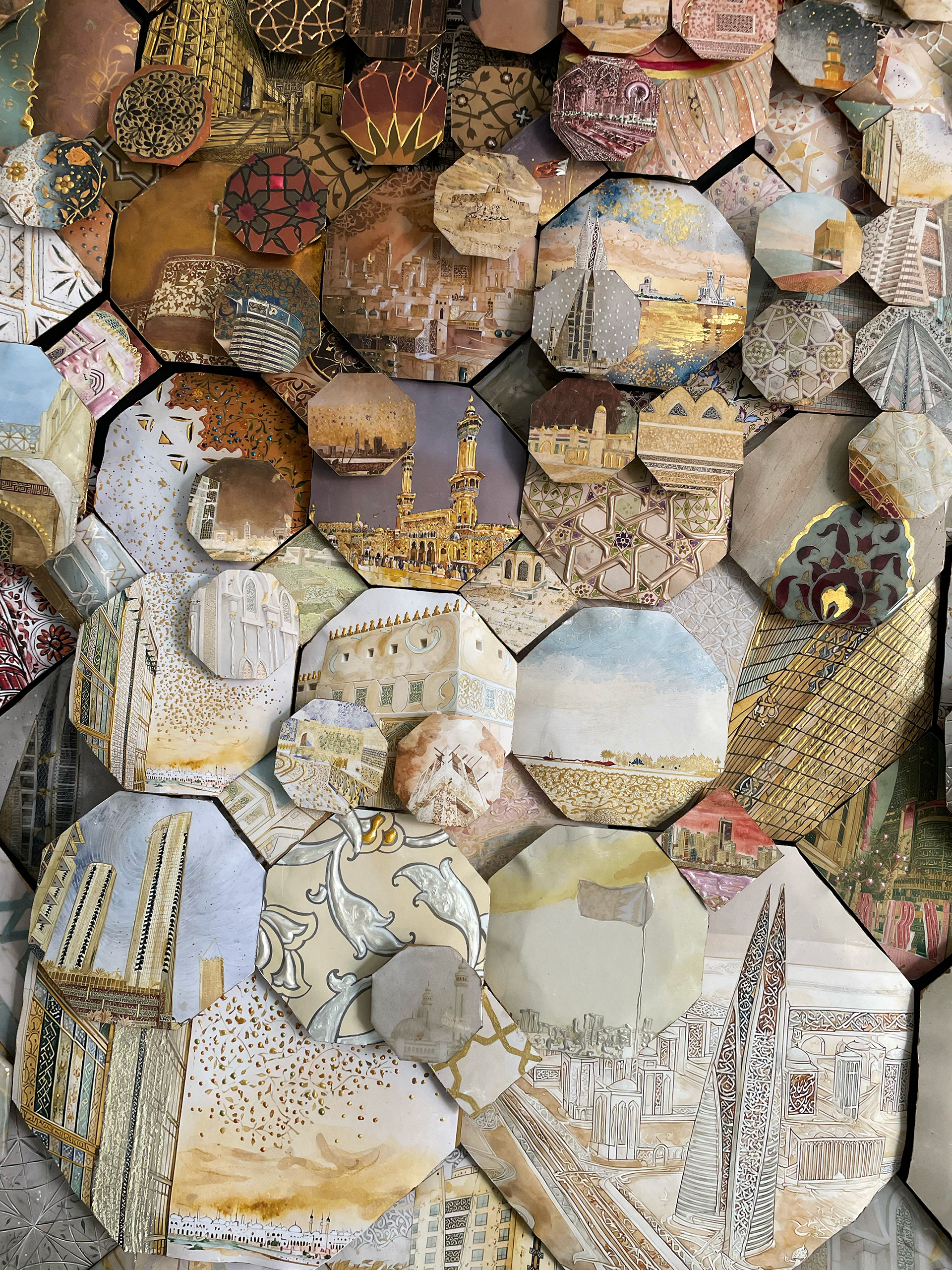
Inspired by the iconic Al-Sadu textile tradition, this tile’s floral motif carries deep cultural symbolism. The pattern was generated via custom AI, then refined by hand to ensure authenticity and aesthetic harmony within the mosaic.

The subtle texture and metallic luster on this tile come from multi-layered varnish application—an analog technique engineered to mimic ceramic glaze, adding depth and tactile richness to the final piece.
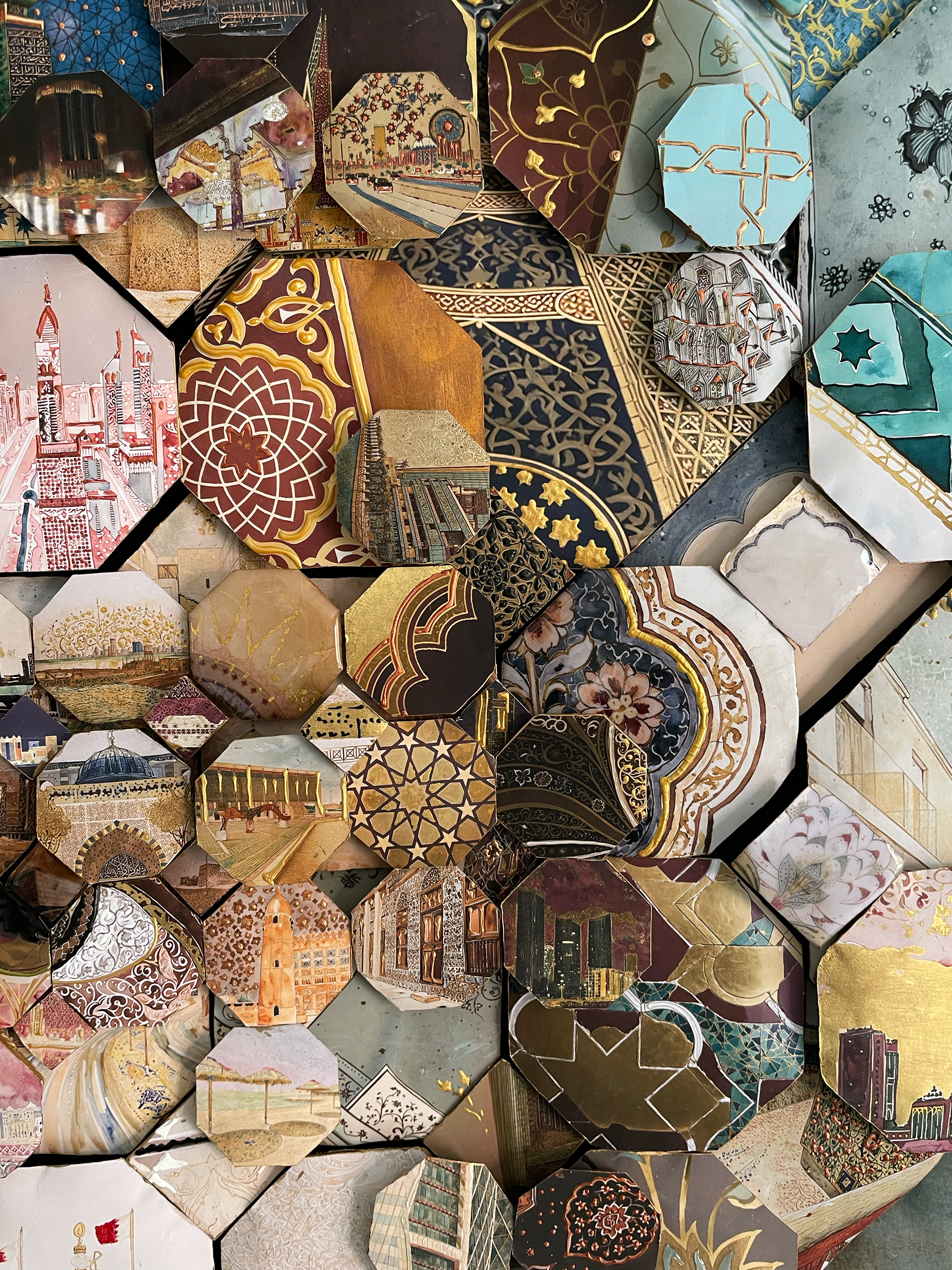
Seeing Through Centuries of Heritage.
In this close-up, you see more than a portrait—you see the reflection of Bahrain’s past, present, and future, woven into the very fabric of the mosaic through culturally coded patterns.
In this close-up, you see more than a portrait—you see the reflection of Bahrain’s past, present, and future, woven into the very fabric of the mosaic through culturally coded patterns.
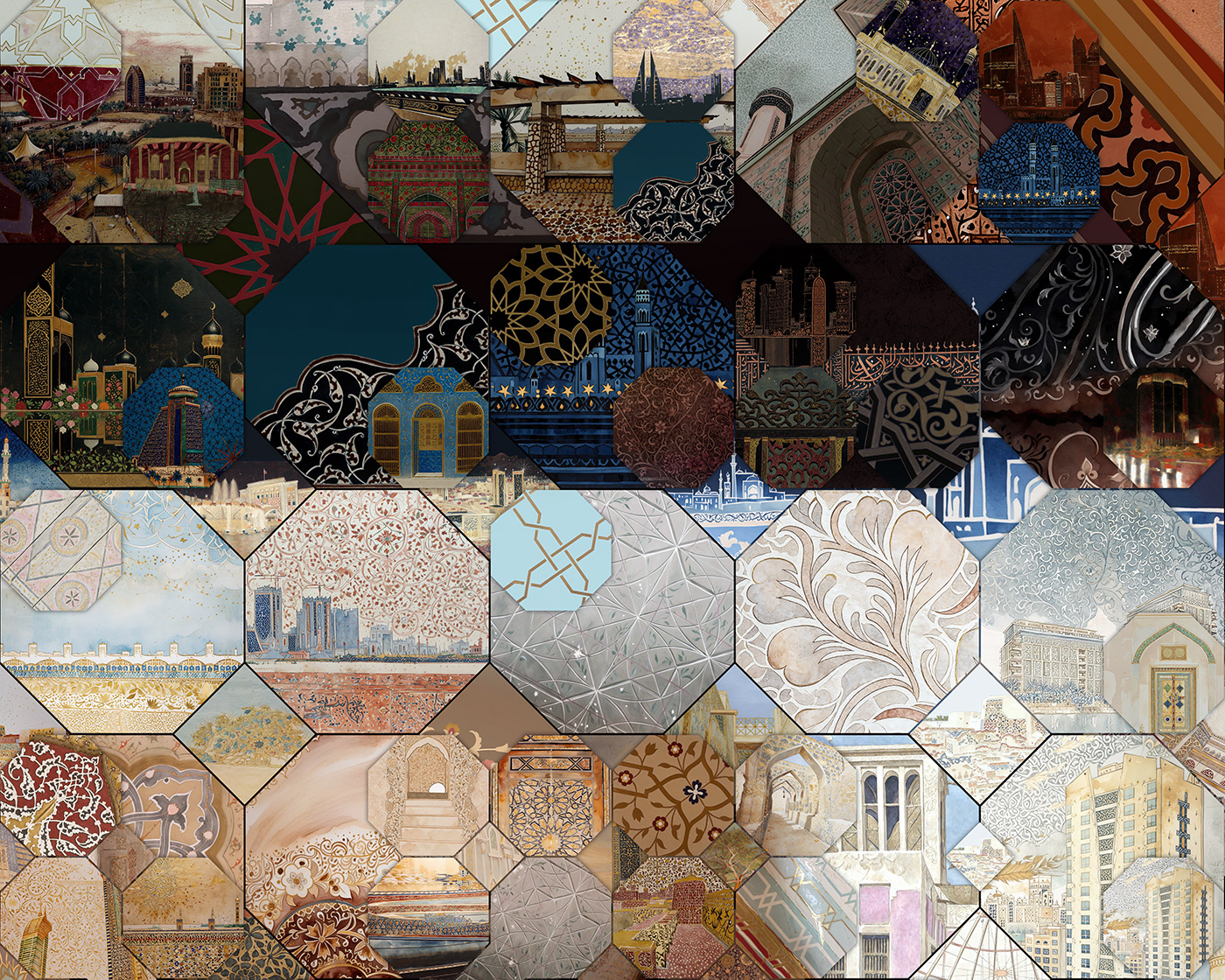
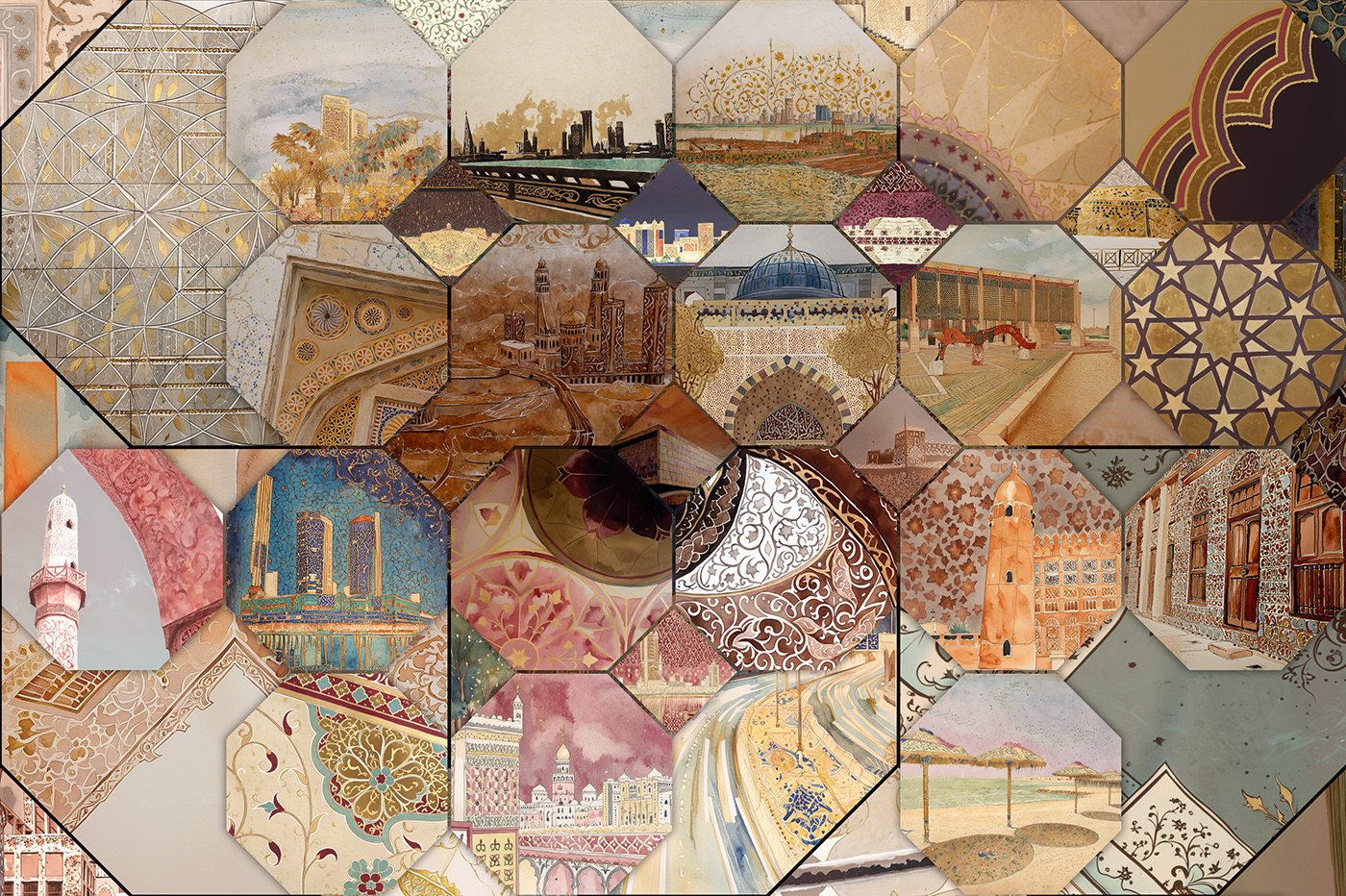
Some digital details:
Many thanks to the Ministry of Interior and Agriculture of the Kingdom of Bahrain, Khalid Juman and everyone at Pico Bahrain, Fotokinisi, Lemon Printing, Konstantas Art Sciences.