Steve Jobs, Tim Cook and John Ternus, built from the icons of the Mac. Six organic mosaic portraits and a one-minute film in which the same small pieces pass from one face to the next.
Handoff, 2026. Steve Jobs becomes Tim Cook, Tim Cook becomes John Ternus. Every piece is a macOS icon. Also on Vimeo.
A few weeks ago I made Hello to What Comes Next, a series of mosaic portraits that marked a new chapter at Apple. Steve Jobs, Tim Cook and John Ternus, built from the pixel icons of the first Macintosh years and the icons of today.
This is what came next.
The same three faces. A new way of placing the pieces. And, this time, motion.
In the film, the icons that make Steve Jobs do not disappear when his turn ends. They travel across the frame and become Tim Cook. Then Tim Cook lets his icons go, and John Ternus gathers his own.
One company. Three leaders. The same pieces, handed on.
- Works: six mosaic portraits and a 59-second film, and one more thing
- Year: 2026
- Type: self-initiated
- Pieces: 585 macOS icons, used as they are
- Portraits: 6827 × 10240 px each, built in seven layers
- Film: 1500 × 2250 px, 24 frames per second, 1,414 frames
- Software: Mozaix, the mosaic software I build
Why “Handoff”
Handoff is the name Apple gave to a small, quiet feature: you start something on one device and finish it on another. Nothing is lost on the way.
It is also the word for what happens when one person passes a company to the next. The work goes on. The people who carry it change.
A mosaic is the most natural way I know to show this. The pieces stay the same. Only their arrangement changes, and with it, the face.
I have been making portraits of Steve Jobs since the early 2000s, and they changed my life. This series is my way of saying thank you to Apple, once more, with the only language I really speak.
The portraits
Two portraits of each man, taken from two different moments of the same moving portrait that the film is built from.
Steve Jobs
Steve Jobs fills the frame down to its bottom edge. His portrait is made of larger icons, with smaller ones laid over them, and it is the only one of the three that does not fade away. Everything else in this series grew out of this face.
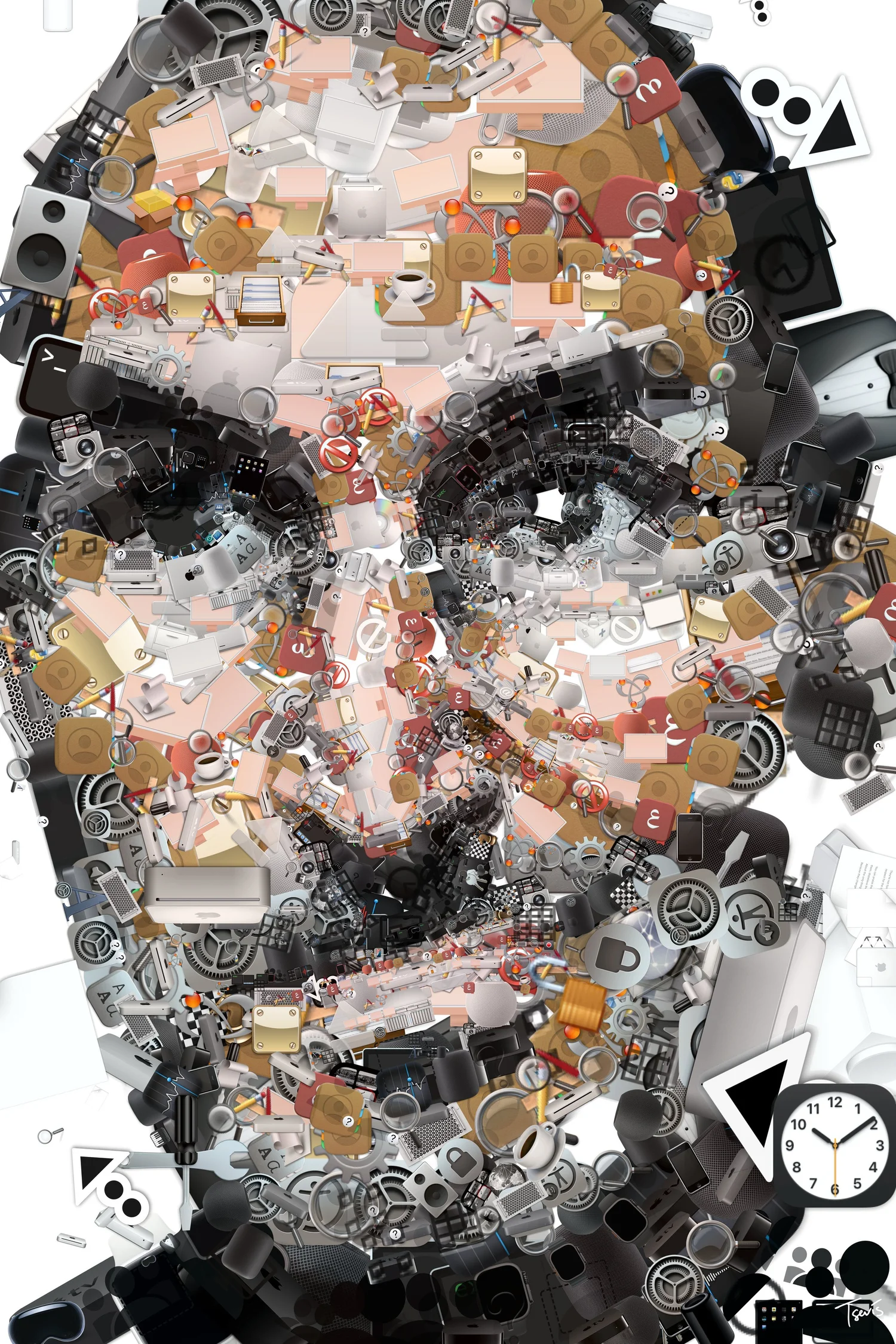
Steve Jobs, 2026. Handoff series, 6827 × 10240 px.
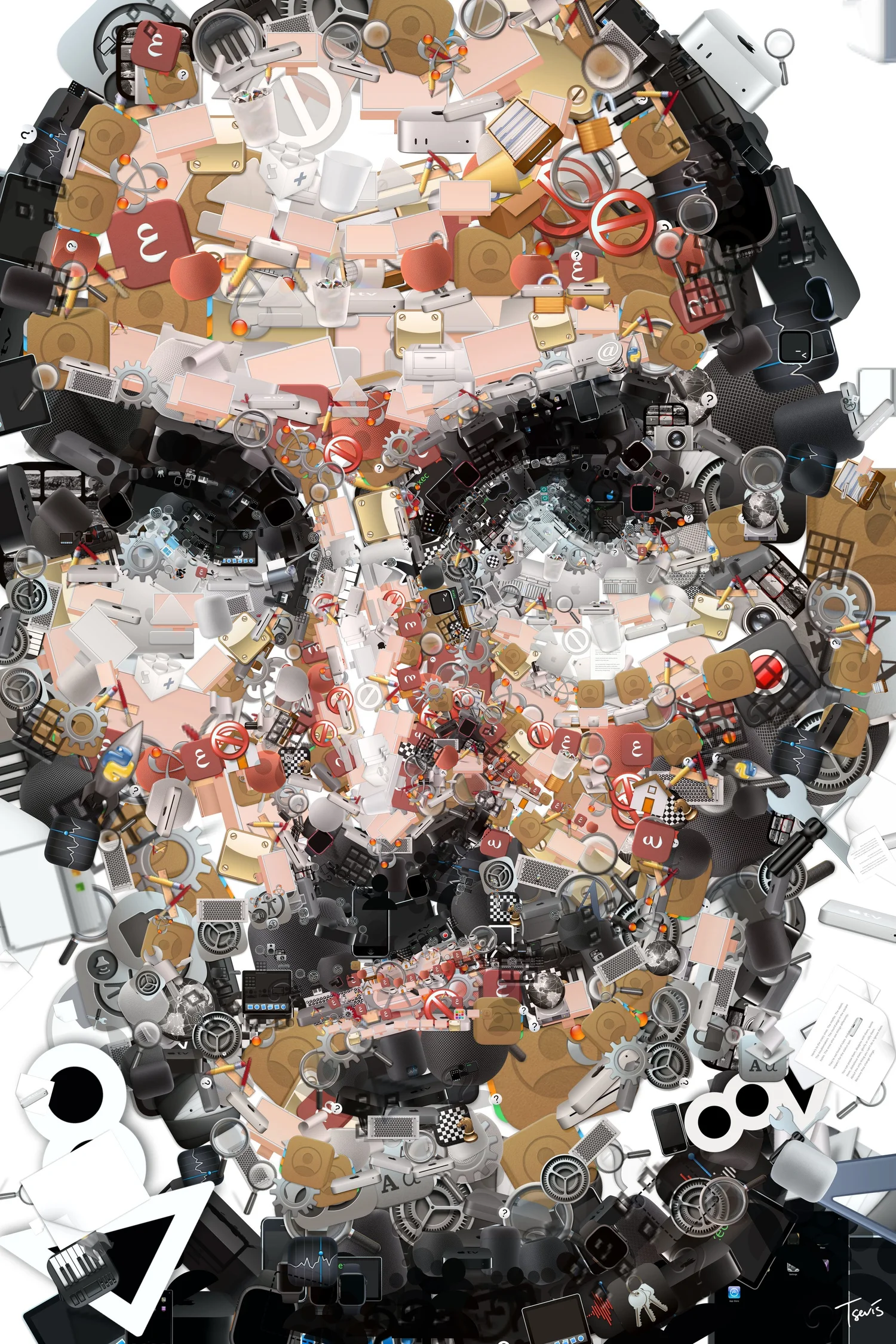
Steve Jobs, a second moment of the same moving portrait, closer.
Tim Cook
Tim Cook on white. His glasses are drawn by a line of blue icons, his silver hair by Mac minis, gears and network globes. At the edges his figure comes apart and the icons drift away like dust.
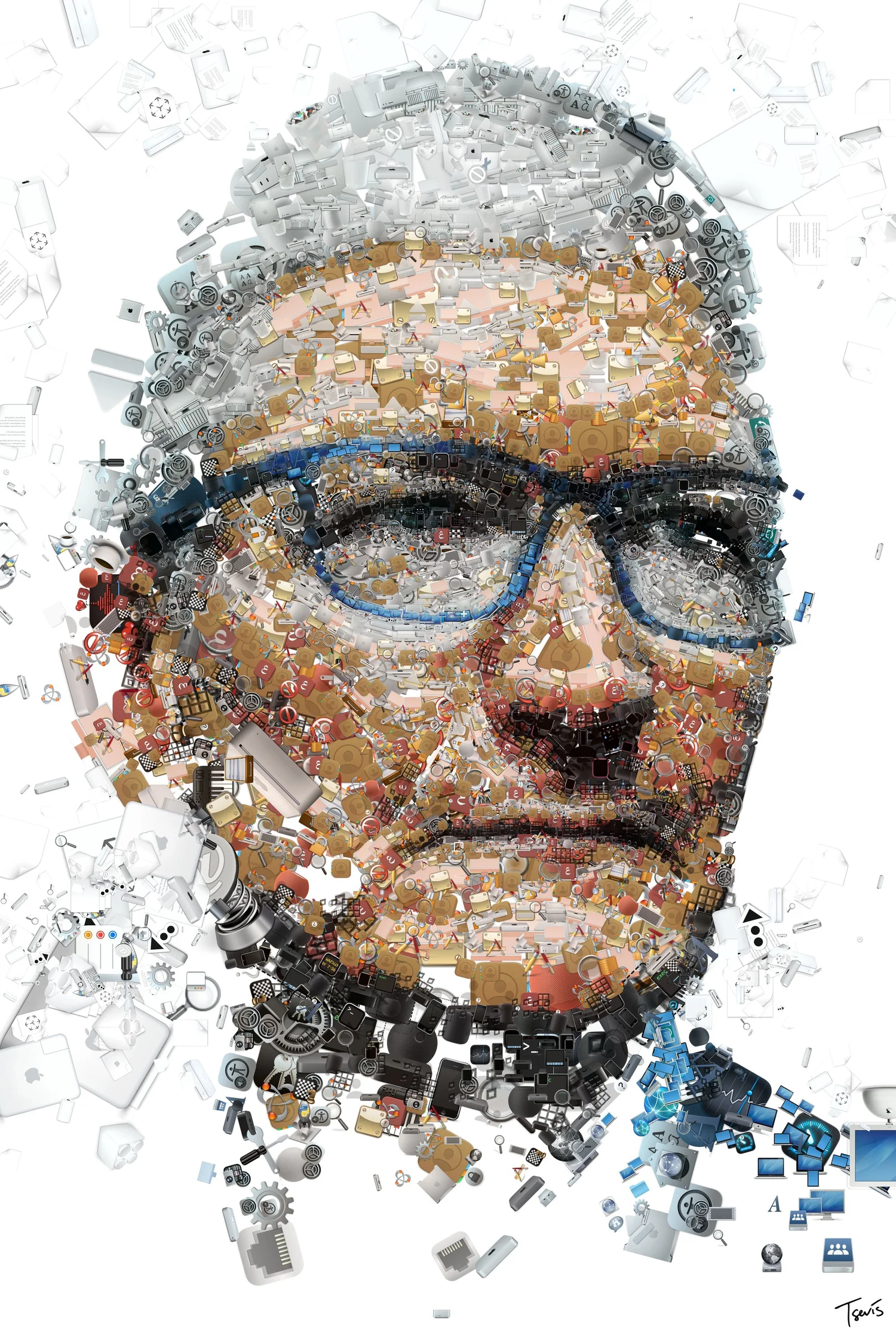
Tim Cook, 2026. Handoff series, 6827 × 10240 px.
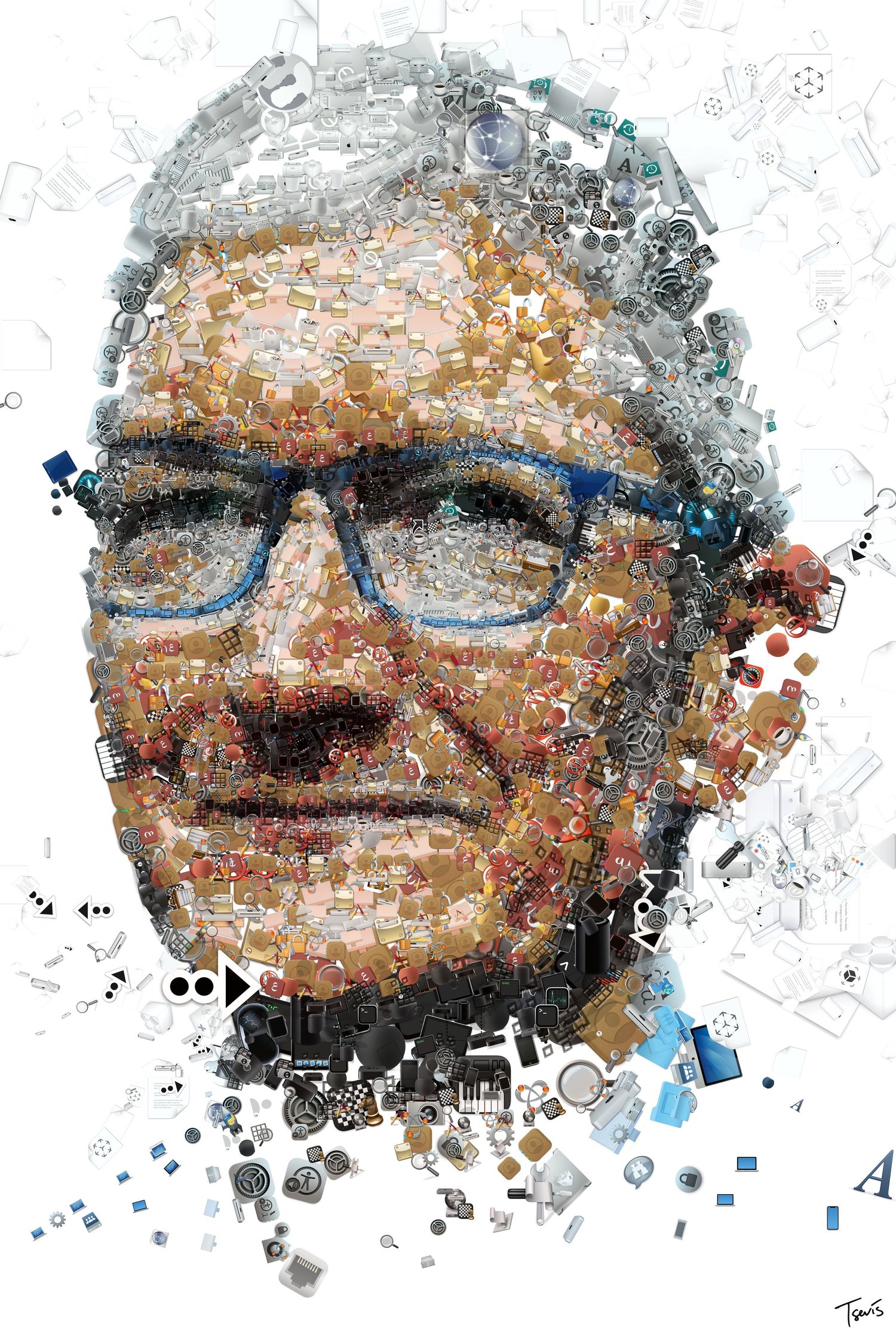
Tim Cook, a second moment: the head turns, the icons follow.
John Ternus
John Ternus, smiling. Below his collar the portrait does not fade into a blur. It thins out into single icons, one by one, as if the figure were letting go of its pieces for whoever comes next.
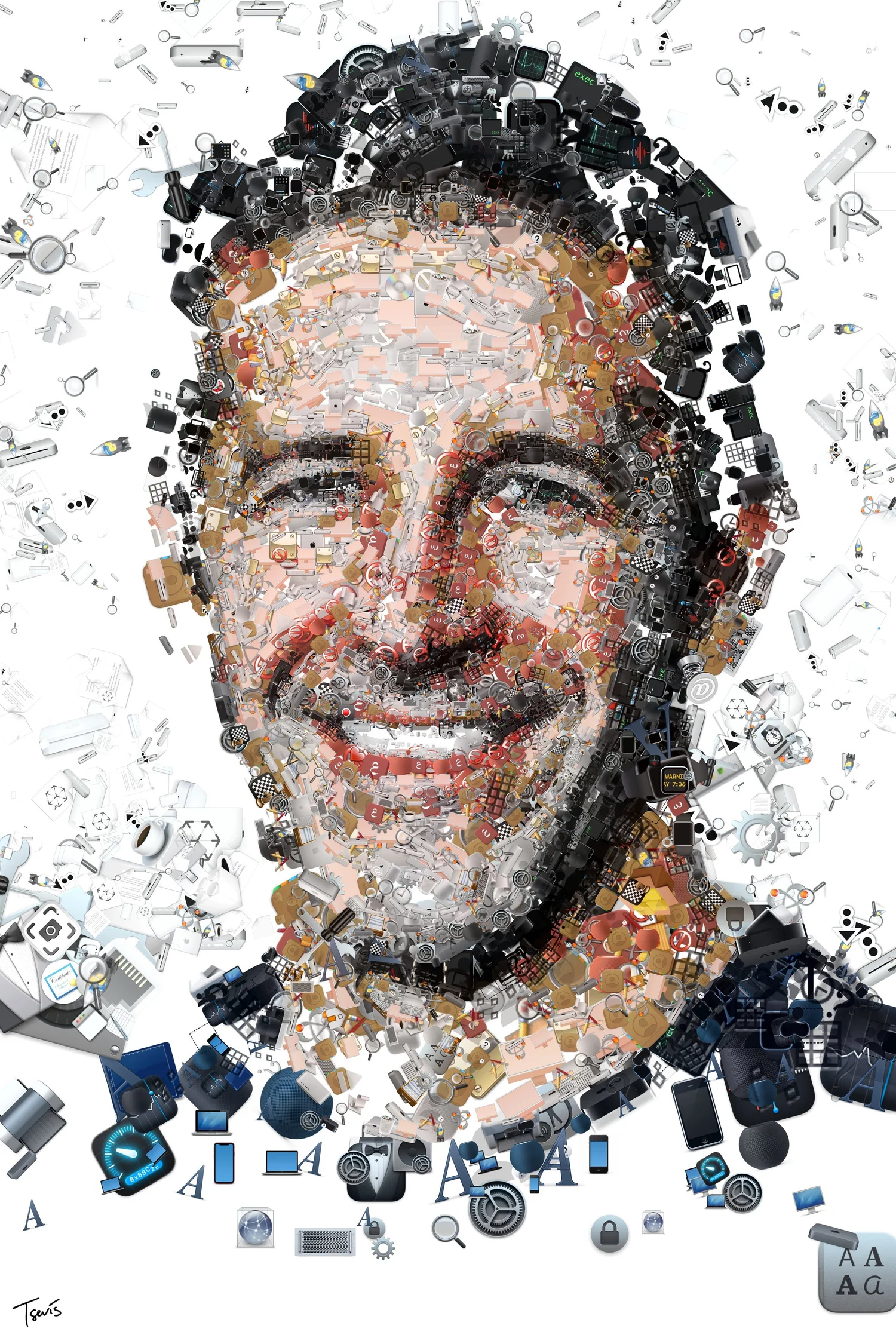
John Ternus, 2026. Handoff series, 6827 × 10240 px.
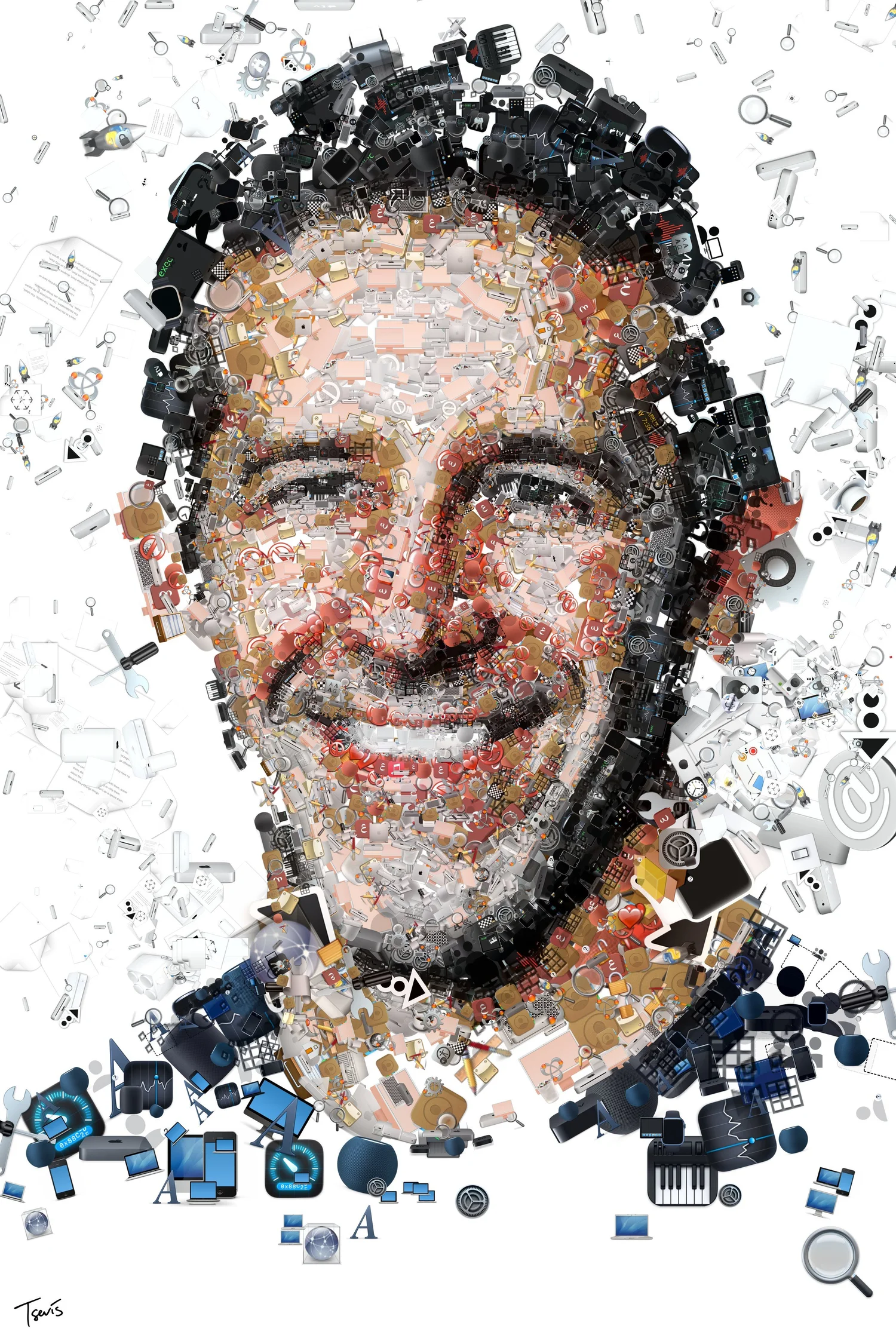
John Ternus, a second moment of the same smile.
Look closer
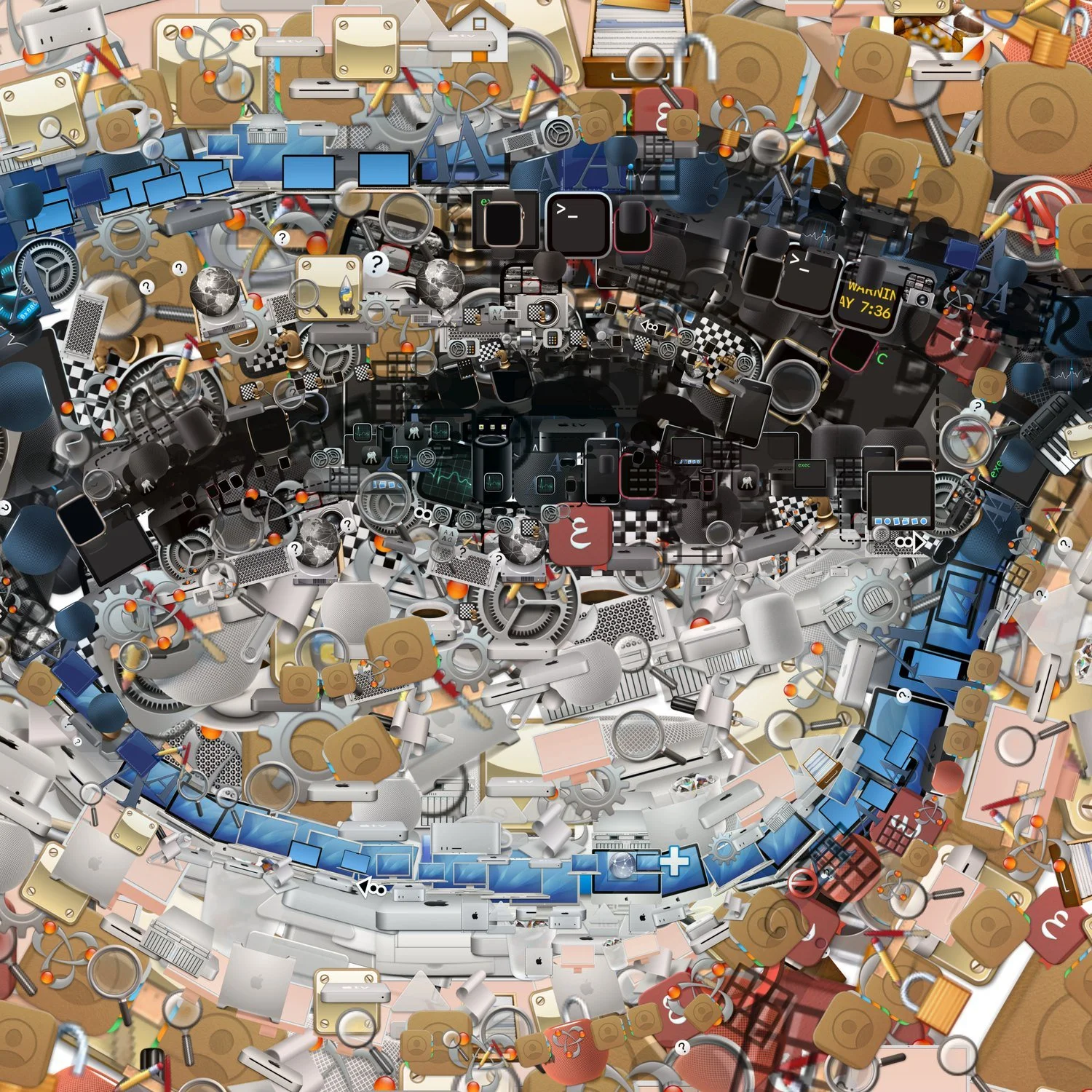
From a distance you see a face. Come closer and the face is gone: you see a chessboard, a padlock, a clock, a gear, a terminal window, a Mac Pro. Icons we have all clicked on for years without really looking at them.
How many can you name? The crops below are close to full size.
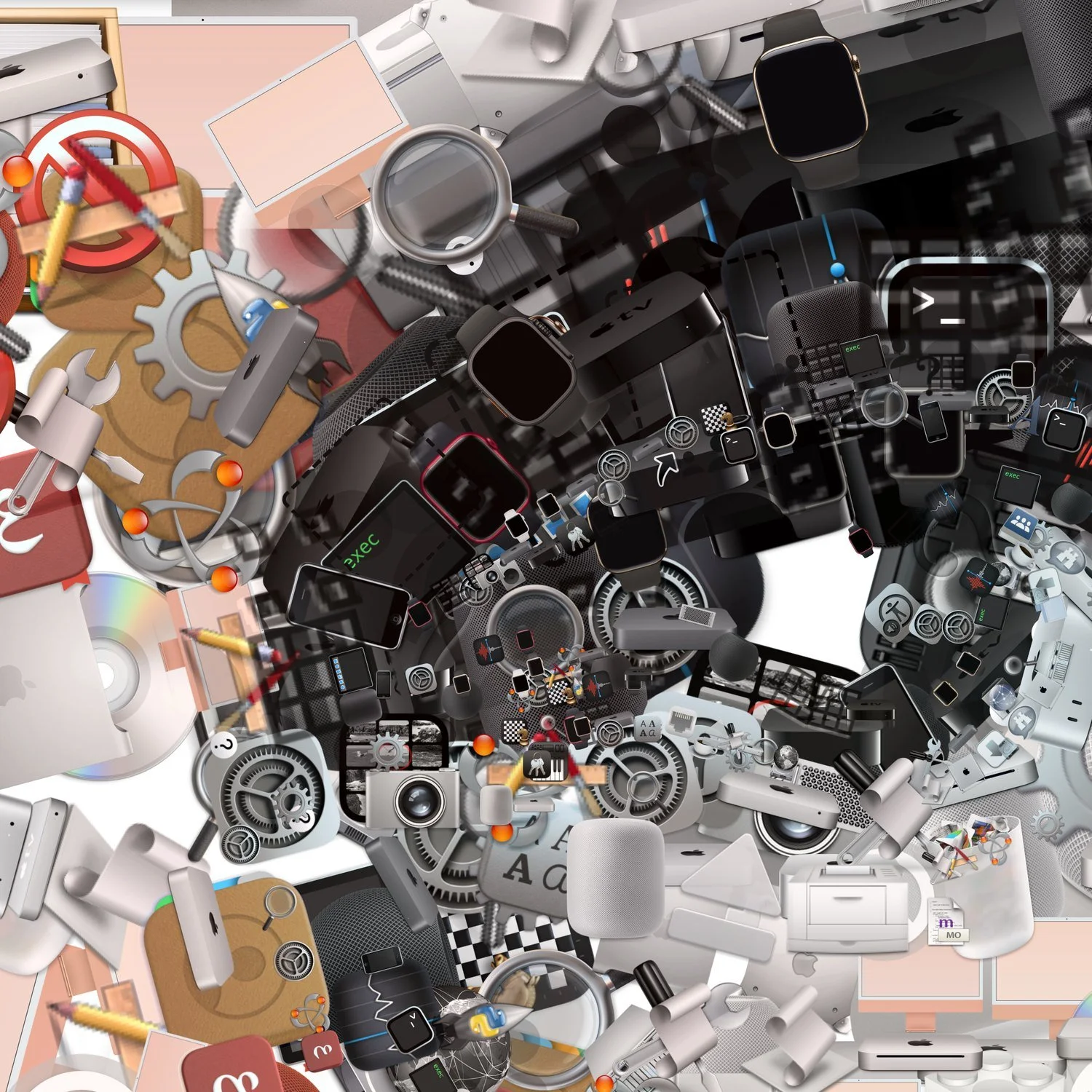
Steve Jobs, the eye. Look for the Apple Watch, the Terminal and the HomePod.
Tim Cook, the glasses. A line of blue icons follows the frame.
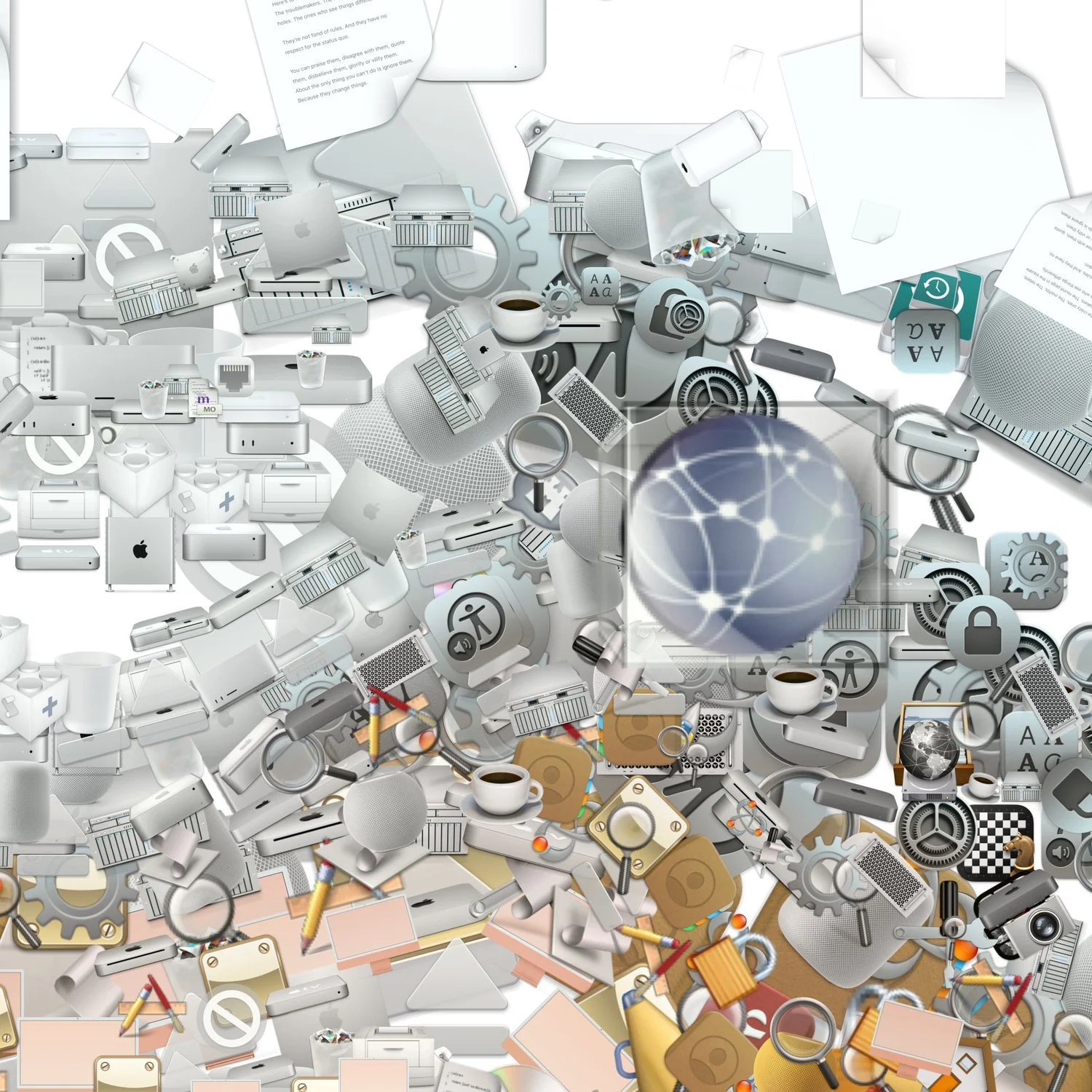
Tim Cook, the hair. Silver icons, and a network globe in the middle.
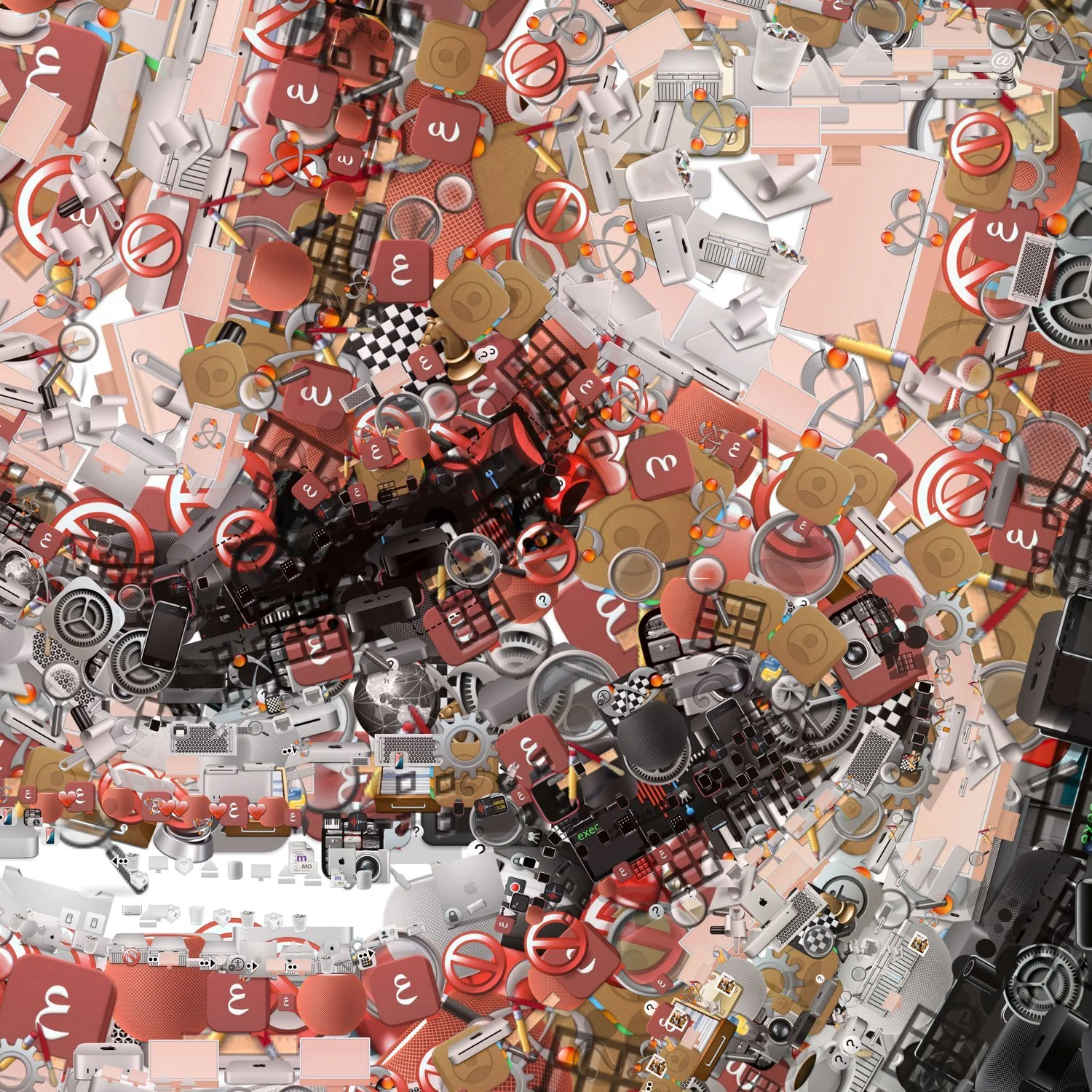
John Ternus, the smile. Red icons for the lips, white ones for the teeth.
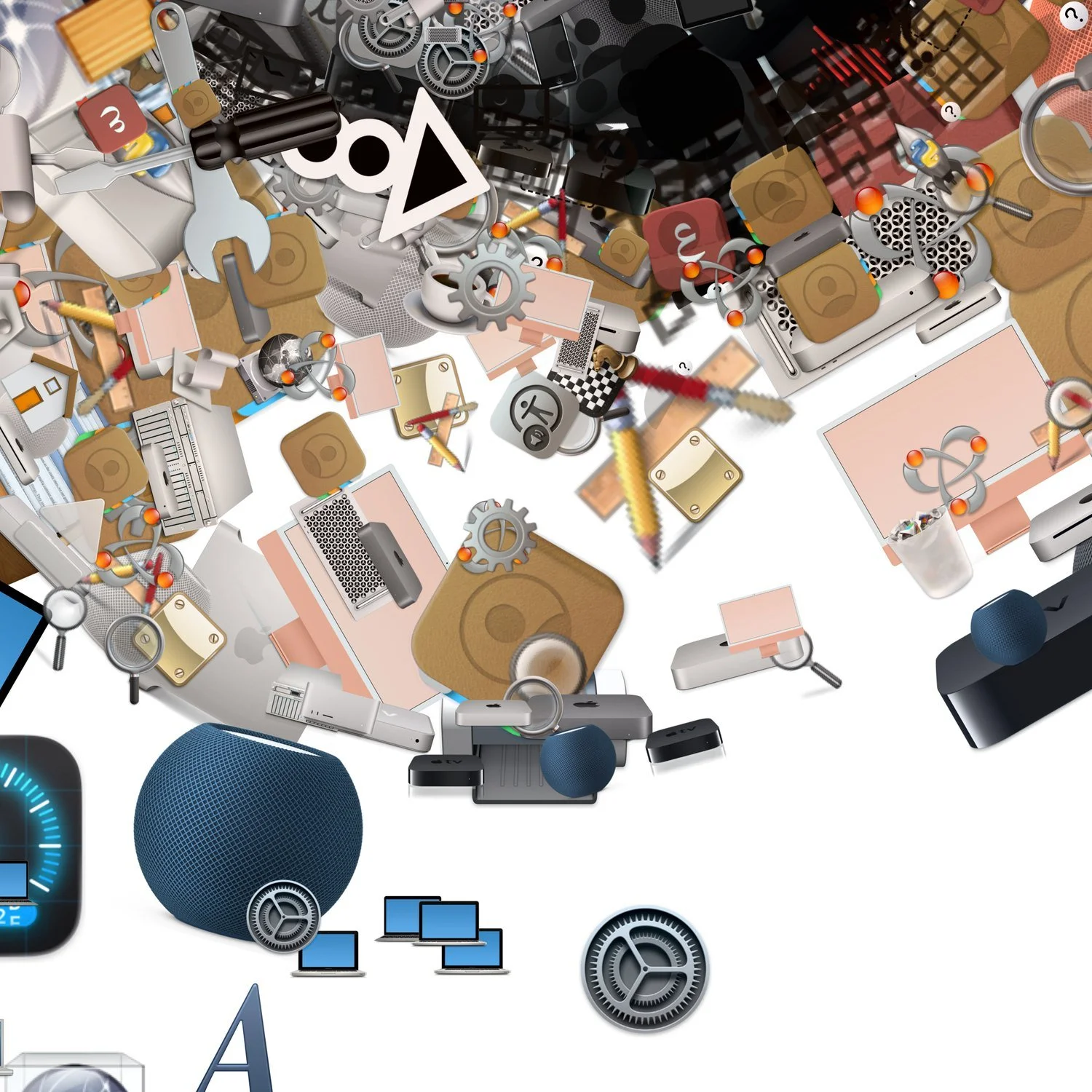
John Ternus, below the collar: the figure lets go of its icons.
How the portraits were made
The pieces
Every piece is a macOS icon: 585 of them, each with its own outline and its own colours. They are never recoloured. The software only nudges them lightly towards the tone of the face beneath, a quarter of the way, so that every icon still looks like itself.
Strokes, not a grid
Most mosaics are built on a grid: one cell, one piece. These are not. The icons are laid down the way a painter lays down brushstrokes. A stroke starts where the picture is still furthest from the face, and walks along the direction of the forms: around an eye, down a cheek, along the frame of a pair of glasses.
For every place along the stroke, the software tries a short list of icons and keeps the one that brings the whole picture closest to the face. The same icon is not allowed to repeat close to itself.
Seven layers
Each portrait is built in seven layers, from large to small, the way I would paint it by hand:
- Background: the ground the face sits on.
- Underpaint: the largest icons, the masses of light and shadow.
- Body: middle-sized icons that build the forms.
- Fine: small icons that sharpen them.
- Details: smaller icons where the face has detail.
- Features: the finest icons, only on the eyes and the mouth, found by a face-landmark model.
- Debris: the icons that break away at the edges and drift off like dust.
The layers stay separate in the final file, so every portrait can still be edited by hand. Each one is 6827 × 10240 pixels, large enough to print at gallery size, and took a few minutes to compute.
How the film was made
Every icon follows the face
My first moving versions solved the mosaic again every few frames. They flickered. The icons jumped from place to place, and between the jumps they stood still. A face does not move like that.
So in the final film each icon is placed once and then lives on. It follows the motion of the part of the face beneath it, measured frame by frame. Each icon follows that motion a little differently, so the mosaic moves like a living surface, not like a sheet of paper.
Every eight frames, the icons that no longer fit are retired and new ones are placed in the gaps. They never fade in or out: transparency made it look like a slideshow. They grow in and shrink out, in a quarter of a second. In a single frame of John Ternus there are more than 11,000 icons.
Steve Jobs to Tim Cook
This is the handoff in the title. Every icon in the last frame of Steve Jobs is paired with an icon in the first frame of Tim Cook: large with large, small with small. Then each one travels to its partner along a gentle arc, in a wave across the face, and changes its picture halfway. Both men keep moving while it happens. It takes five seconds.
Tim Cook to John Ternus
The second handoff is different on purpose. Tim Cook's icons slide away and shrink, a few at a time. John Ternus's icons arrive in groups and grow into place. For about two seconds they share the frame.
The ending
John Ternus's icons leave slowly while he is still moving, until only white is left. Then my signature writes itself in the middle of the frame, as if by hand.
The film is 1,414 frames long, 24 frames per second, 1500 × 2250 pixels. Rendering the three moving portraits took 53 minutes for Steve Jobs, 44 for Tim Cook and 100 for John Ternus.
What would your pieces be?
The icons are only the beginning. The method does not care what the pieces are. It needs pieces with their own shapes and colours, a few hundred of them, and a face or an image they can become.
Think of what your pieces could be:
- A founder made of every product the company ever shipped.
- A football club's captain made of the club's crests, shirts and tickets through the decades.
- A city made of its street signs, its tiles, the letters of its shop fronts.
- A singer made of every album cover, setlist and poster of a career.
- A school made of the photographs of every class that ever graduated.
- A grandmother made of a hundred years of family photographs.
- A brand made of its own archive: every bottle, label and advertisement.
- A game hero made of the sprites, items and maps of the games themselves.
And the pieces can move. A logo can turn into a face. A founder can hand over to a successor. One product can dissolve into the next. Whatever you can collect can become a picture, and whatever can be a picture can be handed on.
If you have a collection that wants to become an image, or an image that should be made of a collection, write to me. I would like to hear what your pieces are.
Sharing
You are welcome to share the images and the film, with the credit Charis Tsevis and a link to this page.
Handoff is a self-initiated work. It was not commissioned by Apple and is not affiliated with Apple. Apple, Mac and macOS are trademarks of Apple Inc.
Questions
Who made Handoff?
Charis Tsevis, a Greek visual designer and mosaic artist, in 2026, as a self-initiated project.
What are the portraits made of?
Of 585 macOS icons, placed one by one in seven layers, from large to small, without a grid.
How was the film made?
Every icon is placed once and then follows the motion of the face beneath it. In the transitions each icon of one face travels to a partner icon in the next face.
Is this an Apple project?
No. It is a self-initiated work, not commissioned by or affiliated with Apple.
Can I commission a mosaic made of my own pieces?
Yes. Products, logos, photographs, archives or anything else that can be collected. Write through the contact page.
One more thing…
Steve Wozniak never ran Apple. He co-founded it with Steve Jobs in 1976 and designed the Apple I and the Apple II, the machines everything else grew from. Every handoff in this story begins with him.
So the last portrait is his. The other Steve, made of the same macOS icons, smiling, in the same seven layers as the others. And in the film below, every icon follows his face as he moves.
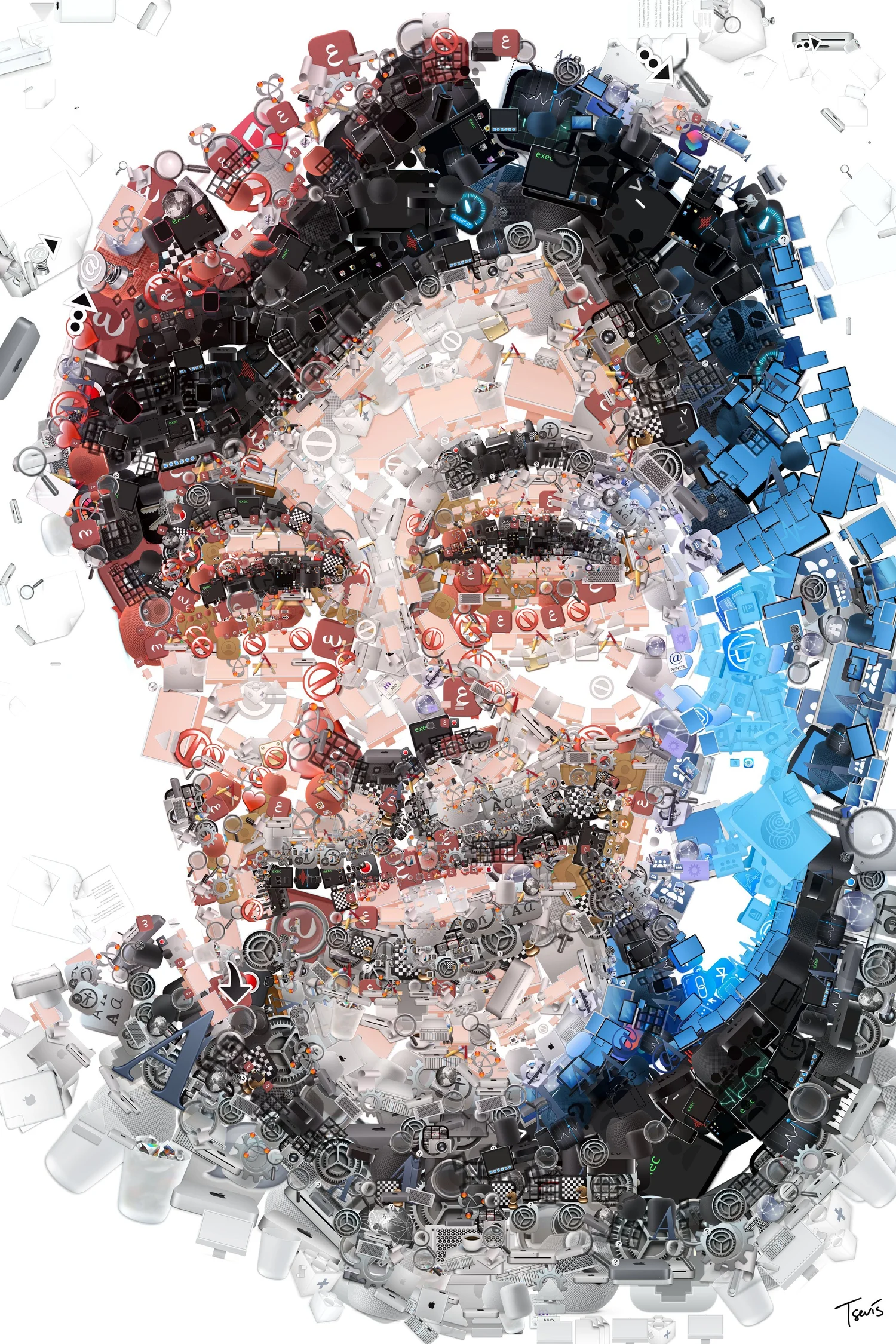
Steve Wozniak, 2026. Handoff series, 6827 × 10240 px.
Steve Wozniak, 2026. 16 seconds, 393 frames, every piece a macOS icon. Also on Vimeo.